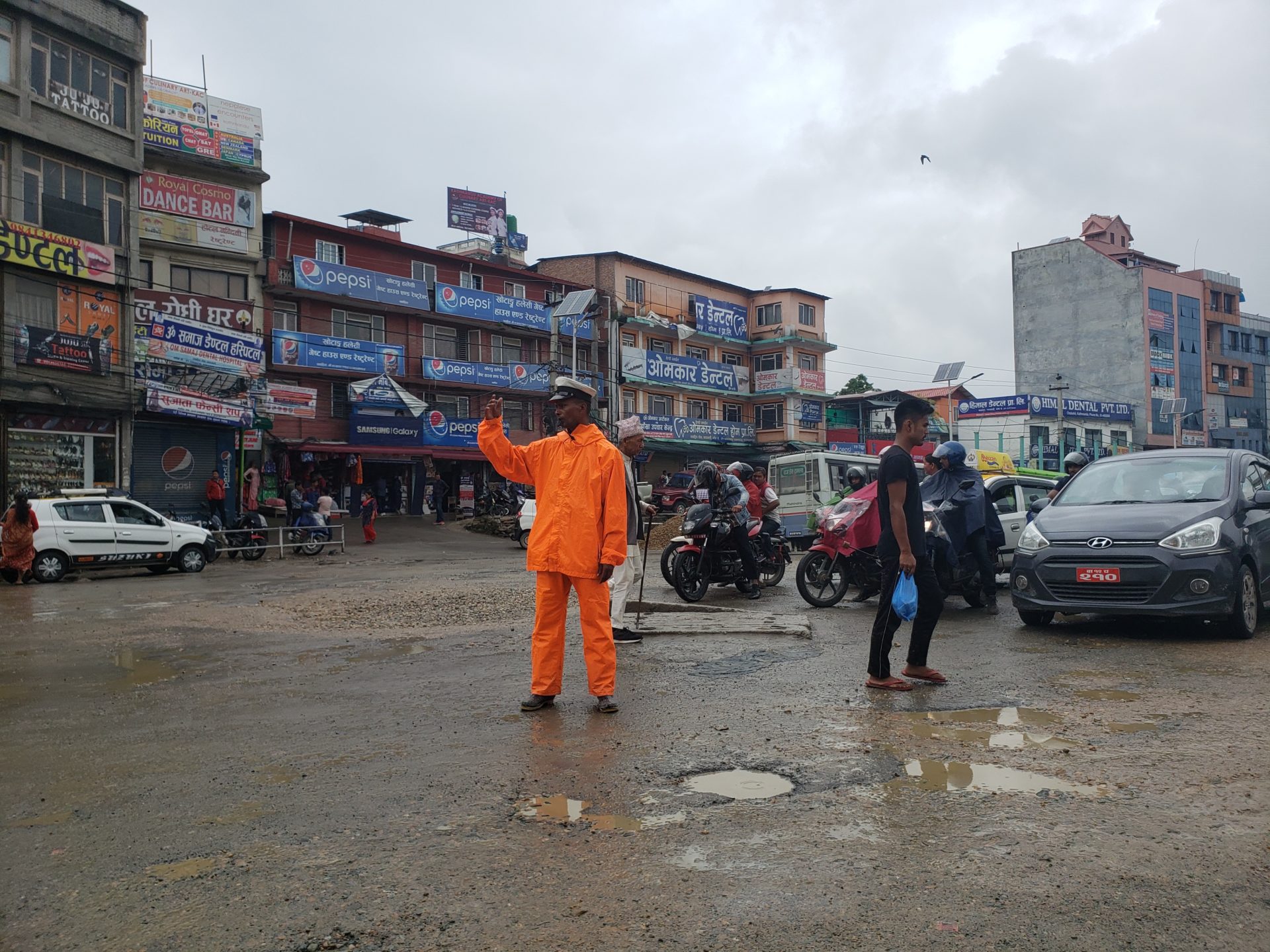
I wrote about how stupid daylight savings is (see No Daylight Savings in Puerto Rico! Literally, When Will the US Catch Up?). I struggle with time zones all the time. I call clients in the US at 11AM, 11PM in Shanghai, (see TPOL in Shanghai) only to hang up thinking it is also night there. Obviously, that makes no sense. I get confused if I’m too early or if I’m too late when I schedule phone conferences when someone is in Pacific time and I’m in Puerto Rican time. Welcome to Kathmandu, where the time difference is X + 45 minutes. What purpose does this serve but to specifically mess with me? It may not create jet lag but it is certainly confusing.
TPOL’s Update: Originally I said it was X + 30. It’s actually X + 45. This further proves how stupid and confusing it is.
TPOL’s Guns & Butter Travel Guide is the best way to see as much as you can in as little time as possible. Here’s how it works – A trip is composed of two factors: Labor And Lazy. The opportunity cost (what is given up) for relaxing and being Lazy is gained by being adventurous in the form of Labor and vice versa. The guide includes inefficient activities i.e., tourist traps that should be avoided and aspirational activities that are worth doing but may be impossible to see given the constraints of time and resources.
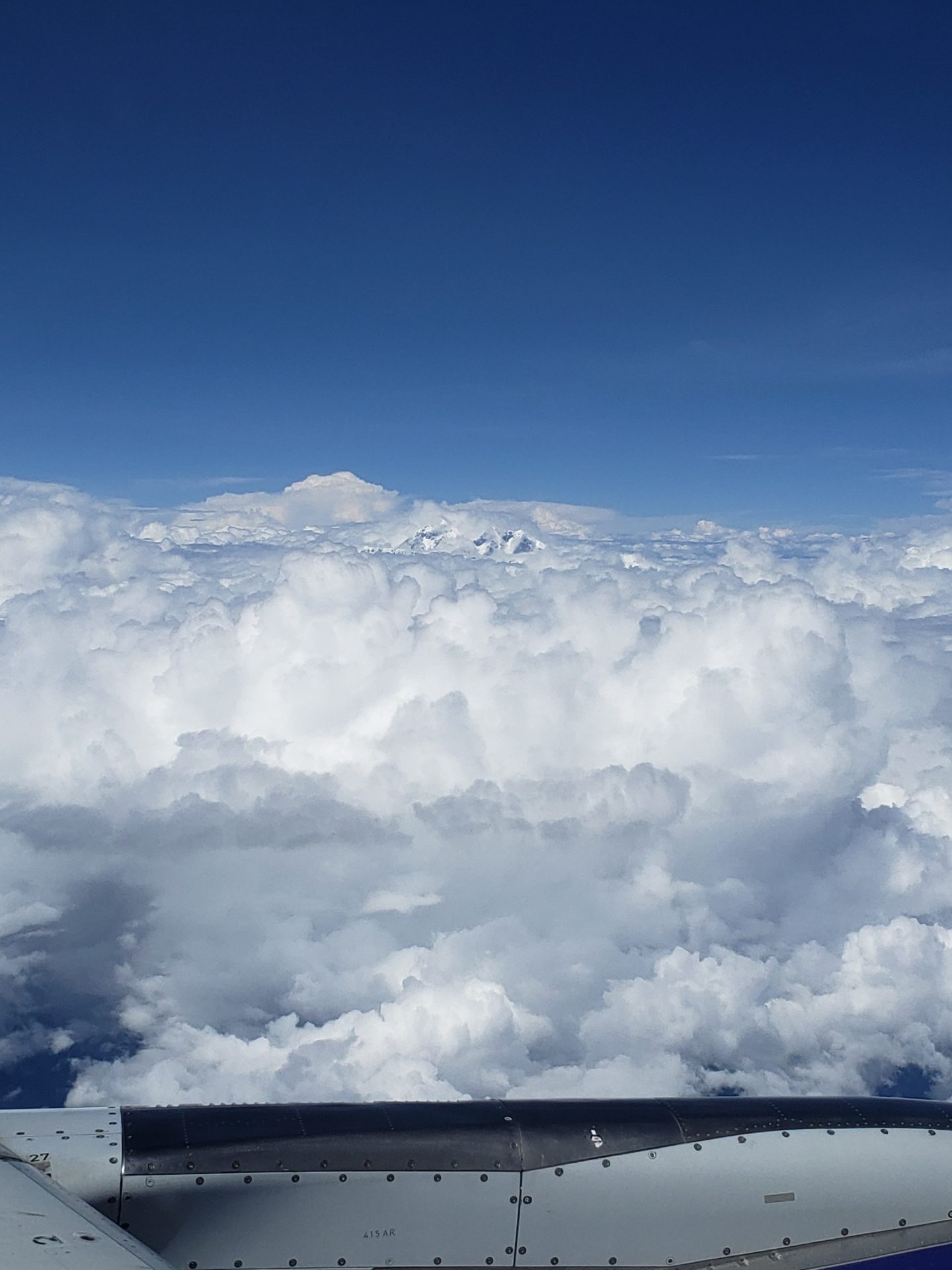
TPOL’s TIP: To see Everest, sit on the left if you’re flying from KTM to Paro. Sit on the right on the way back.
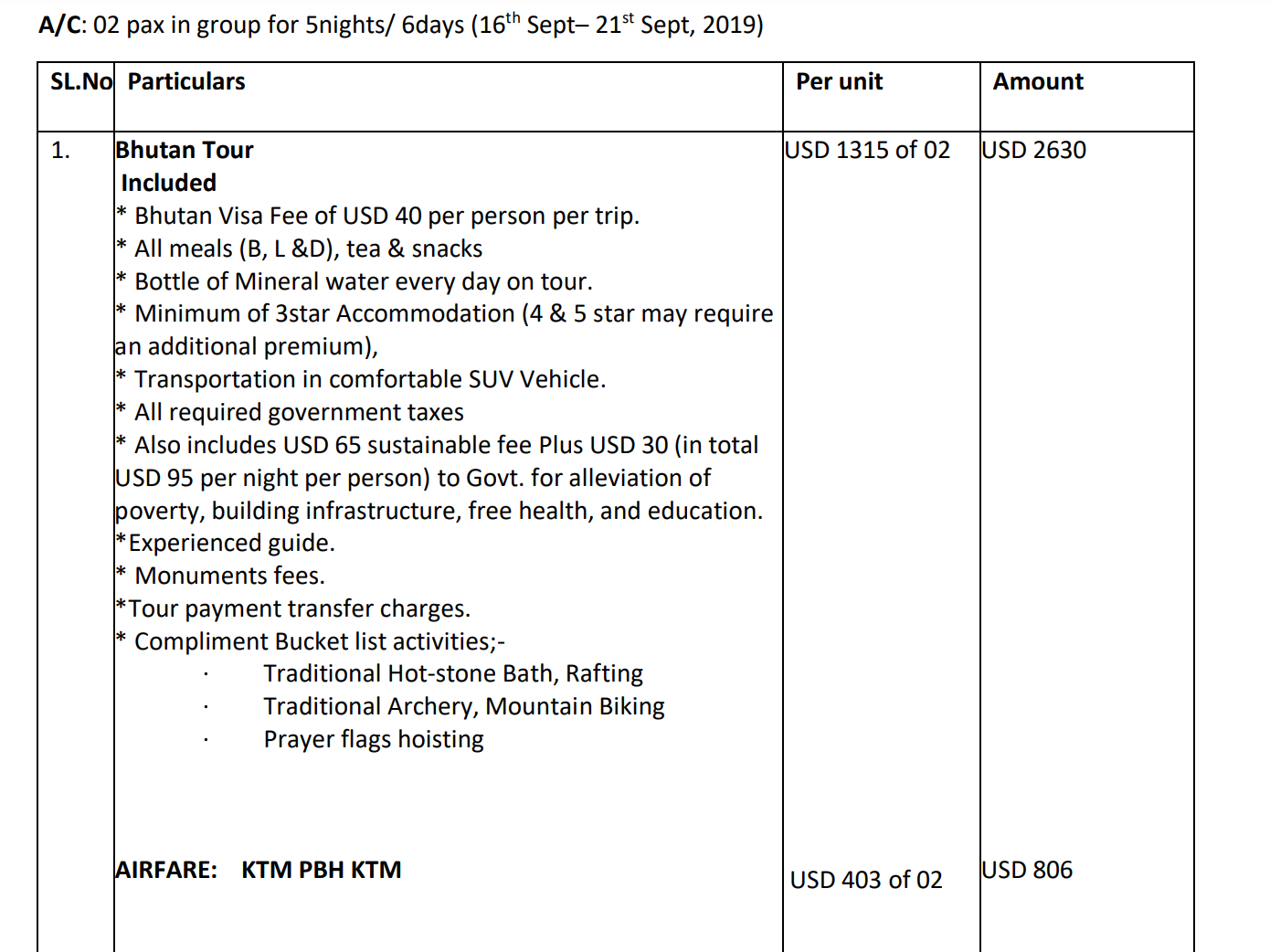
Searching for happiness? Everyone says go to Bhutan. What they don’t detail is how to book a trip to get there, what it will cost, and what tour guide to select. Let’s start with the price.
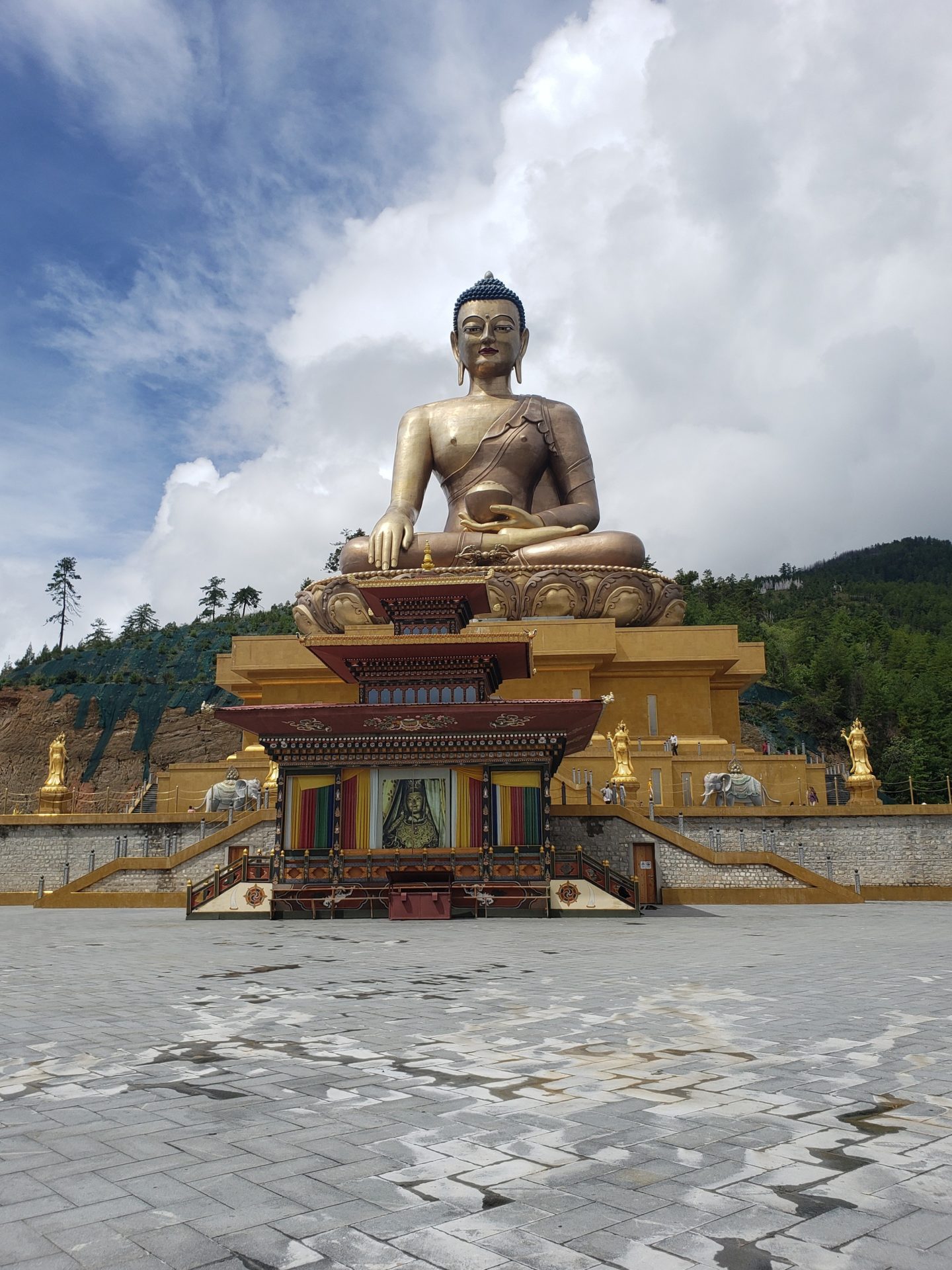
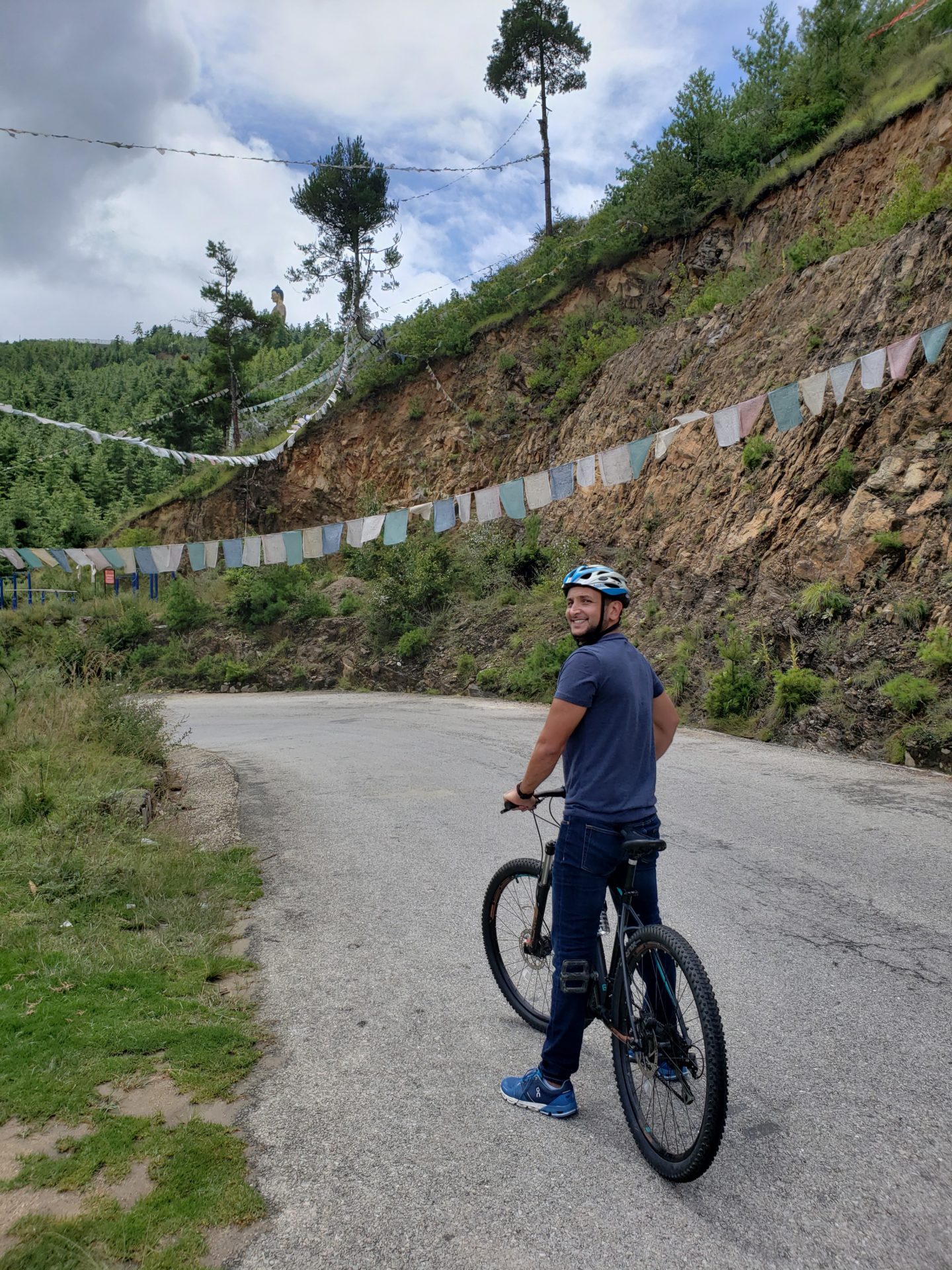
If you aren’t a cyclist, you won’t enjoy biking down from the Big Buddha.
Avoid #4
Too many temples, not enough adventure. TPOL isn’t always one with nature, but Bhutan is naturally beautiful. Don’t spend all your time visiting temples (see Finding Happiness: Bhutan Day 1).
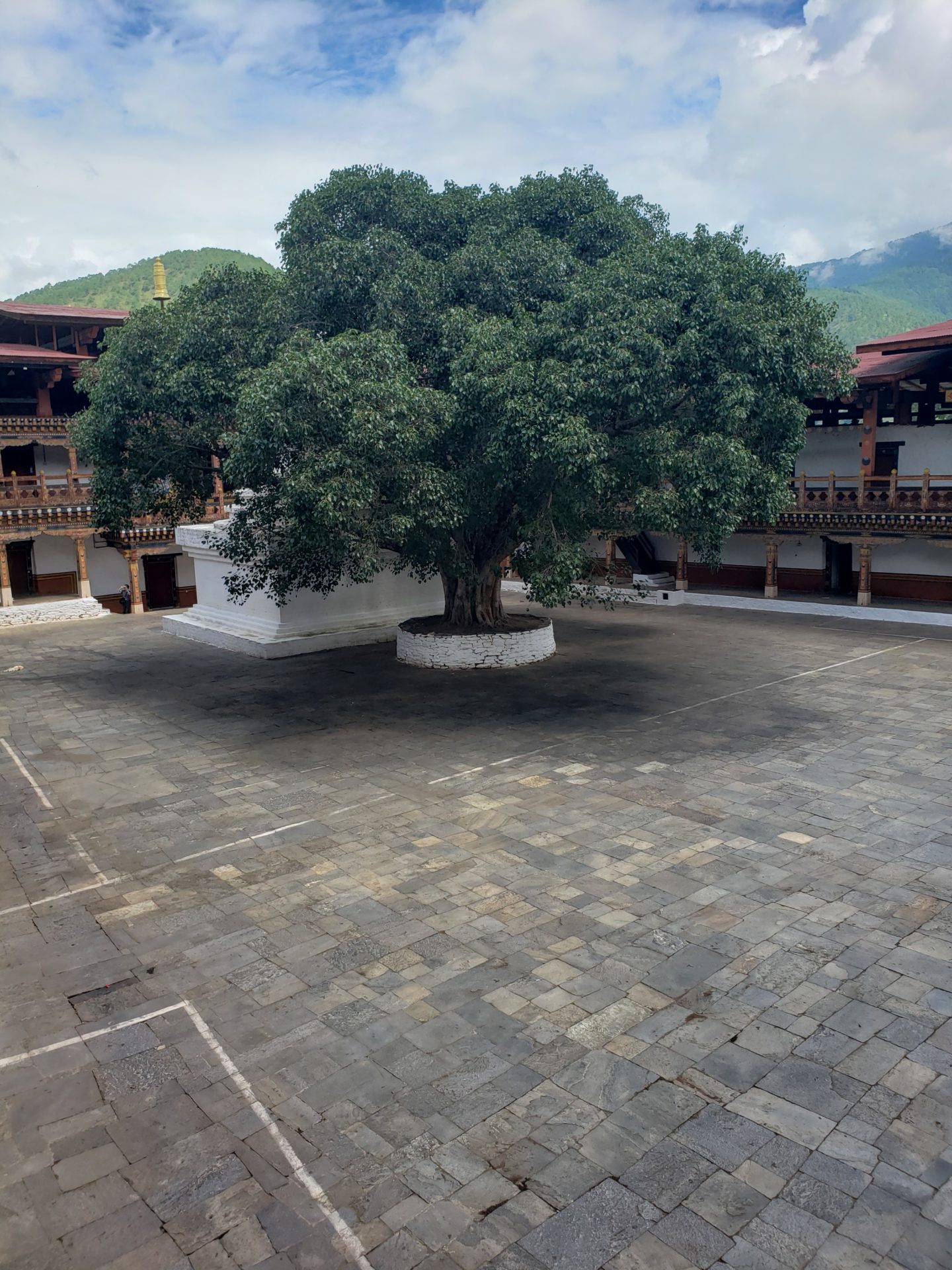
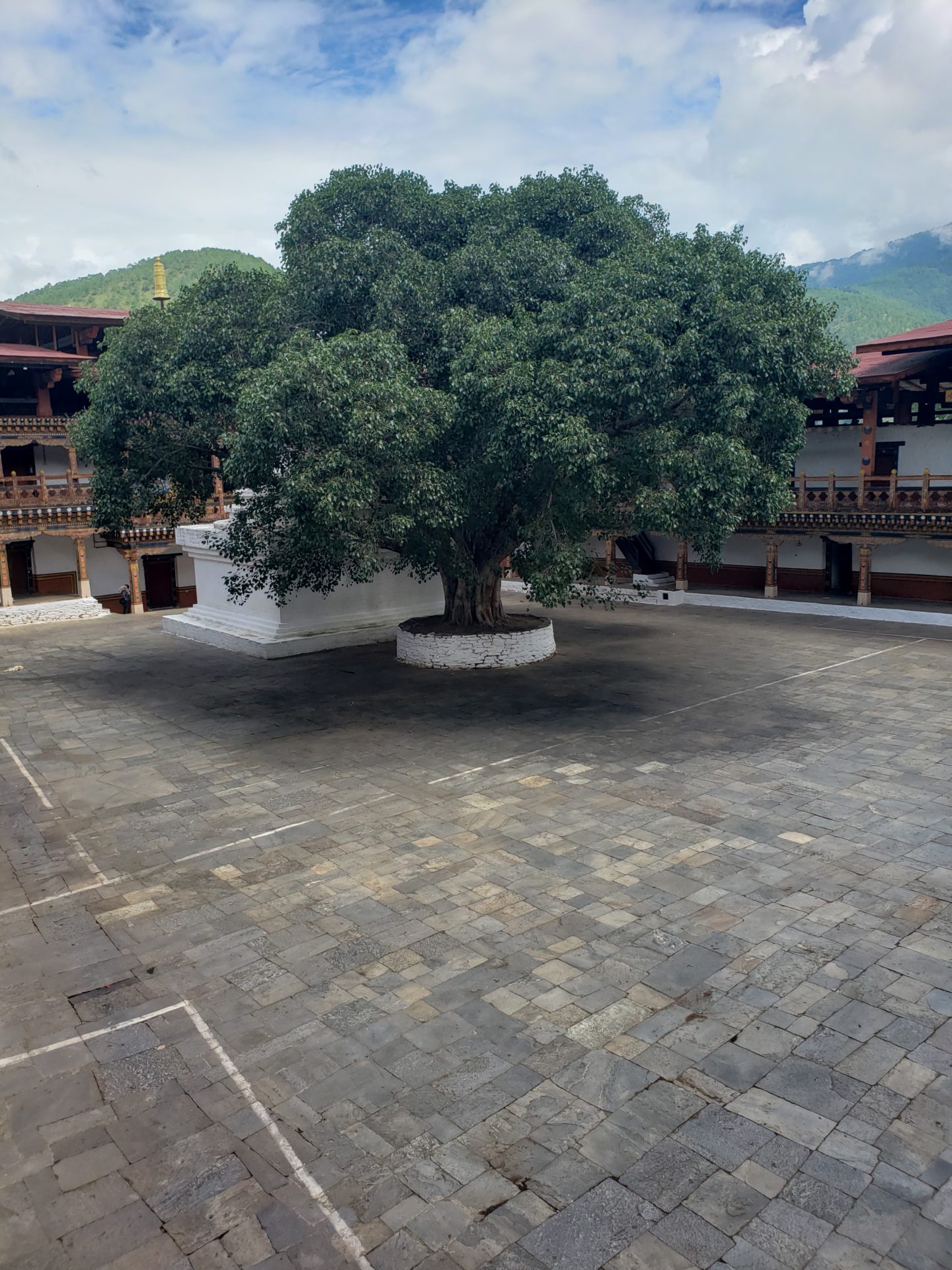
The tree in the Palace of Great Happiness where Buddha found enlightenment.
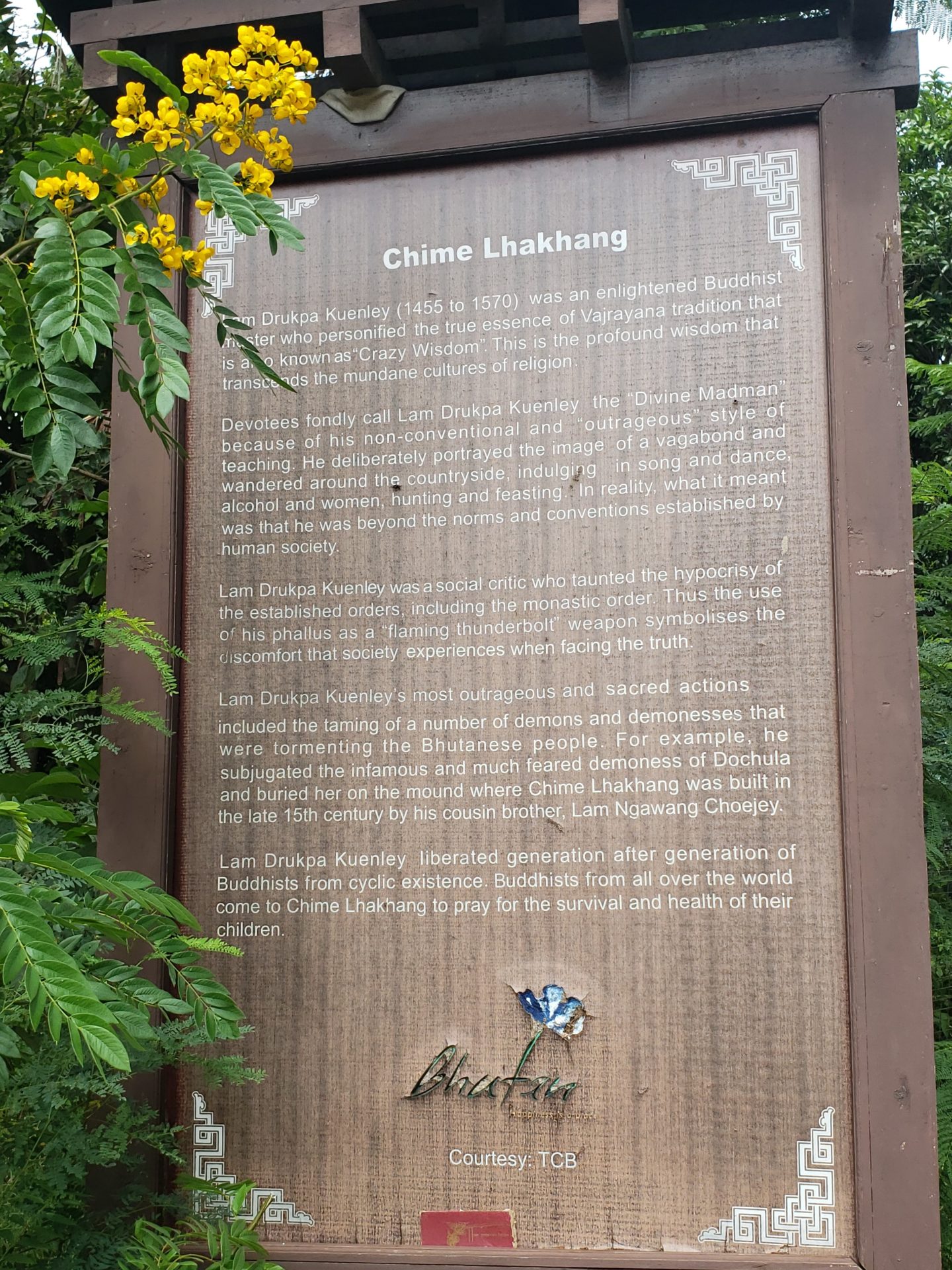
By far the most interesting is Chime Lhakhang which was built in tribute of Lam Drukpa Kuenley, the Divine madman, who “deliberately portrayed the image of a vagabond and wandered around the countryside, indulging in song and dance, alcohol and women, hunting and feasting.” Kuenley, a social critic, “taunted the hypocrisy of the established orders, including the monastic order. The use of his phallus as a ‘flaming thunderbolt’ weapon symbolizes the discomfort that society experiences when facing the truth.”
I don’t think I will visit Bhutan again. It’s not because there isn’t more I could do like festivals or explore the eastern part of the country. It’s because I had such a perfect time and want to remember it that way.
Before going to Bhutan, I thought my quest for happiness was incompatible with the teachings of Buddha. I still enjoy smut and establishments of ill repute (see Since I cannot personally go to SE Asia with Mikey and show him the ladyboy bars in Bangkok…). I thought that zen masters had reached a higher level of consciousness whereby pleasures of the flesh are superficial and that those, like myself, that live in a dark underbelly of humanity were forever lost and eternally irredeemable.
“Give me shot!”, “Give me a line!”, “Give me a punch to the face!” I need something to feel alive. How else can I explain my erratic behavior? How can I know happiness if I’m never sad? How can I feel alive unless I’m on a hangover deathbed from bad choices?
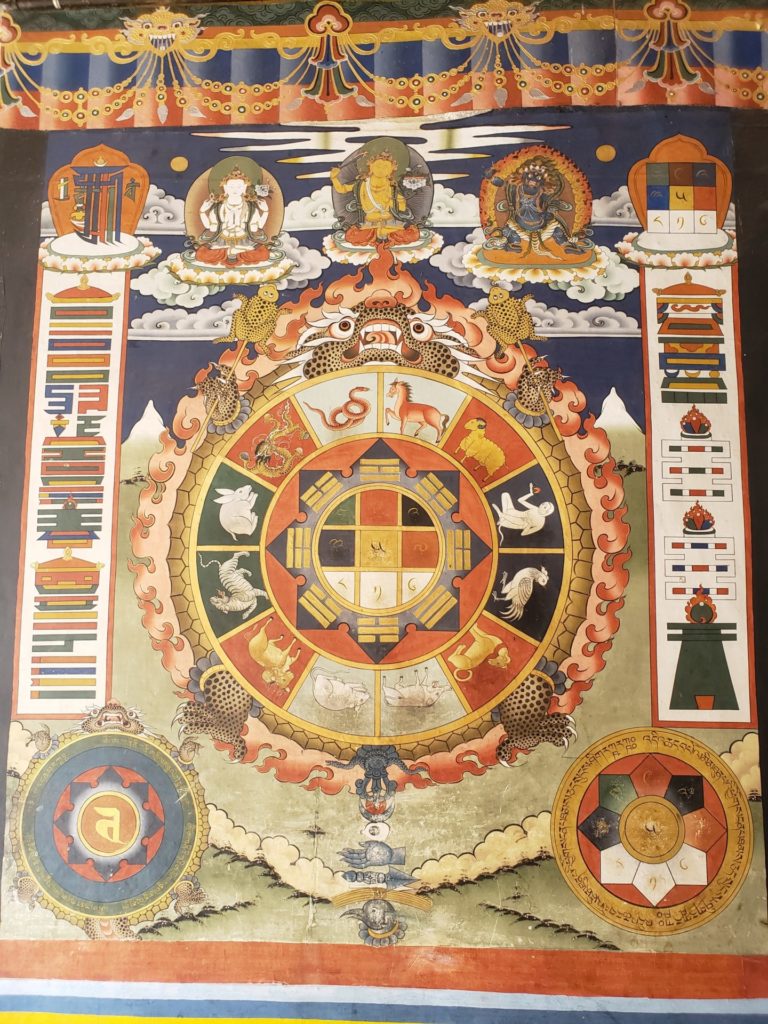
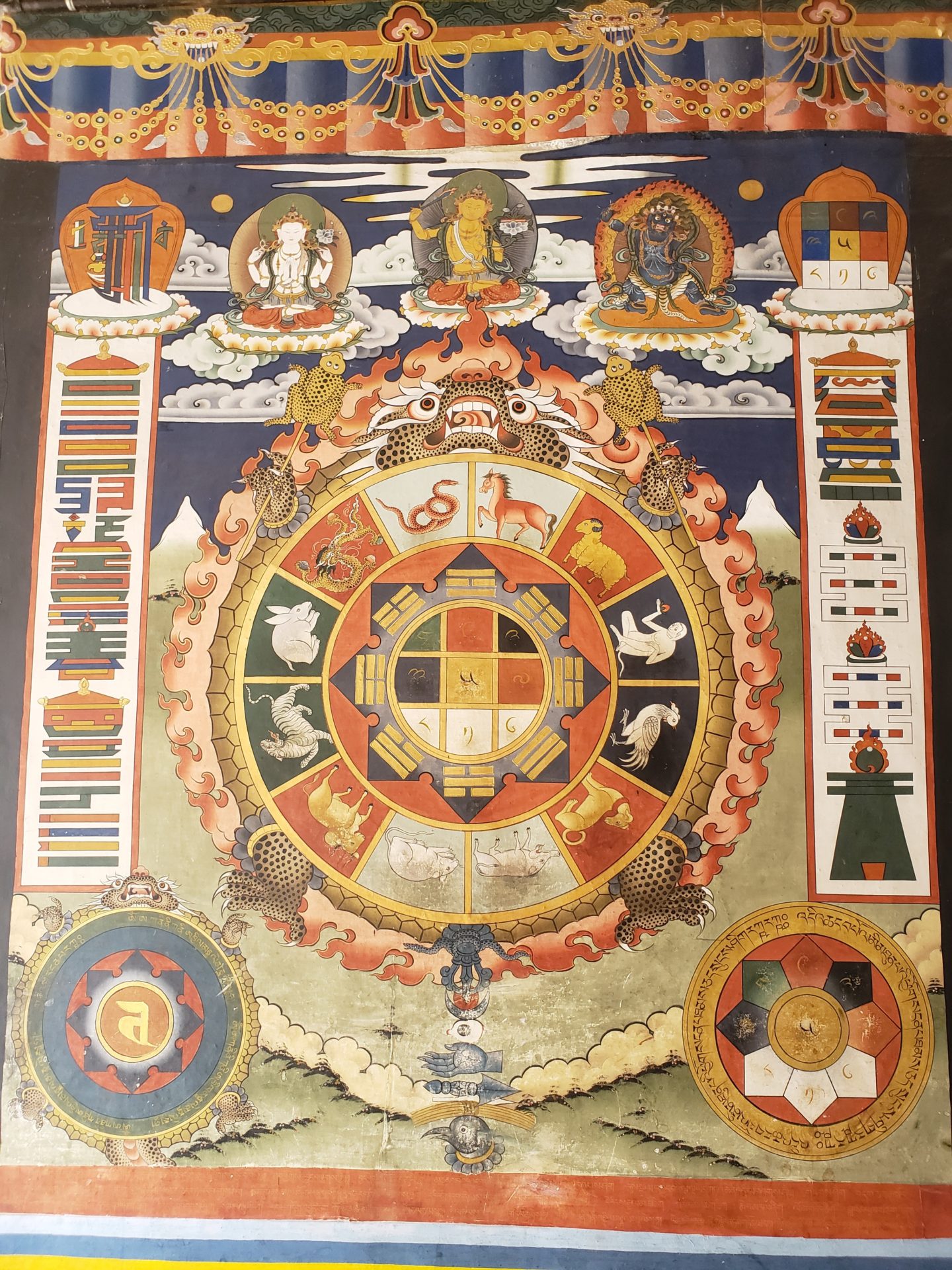
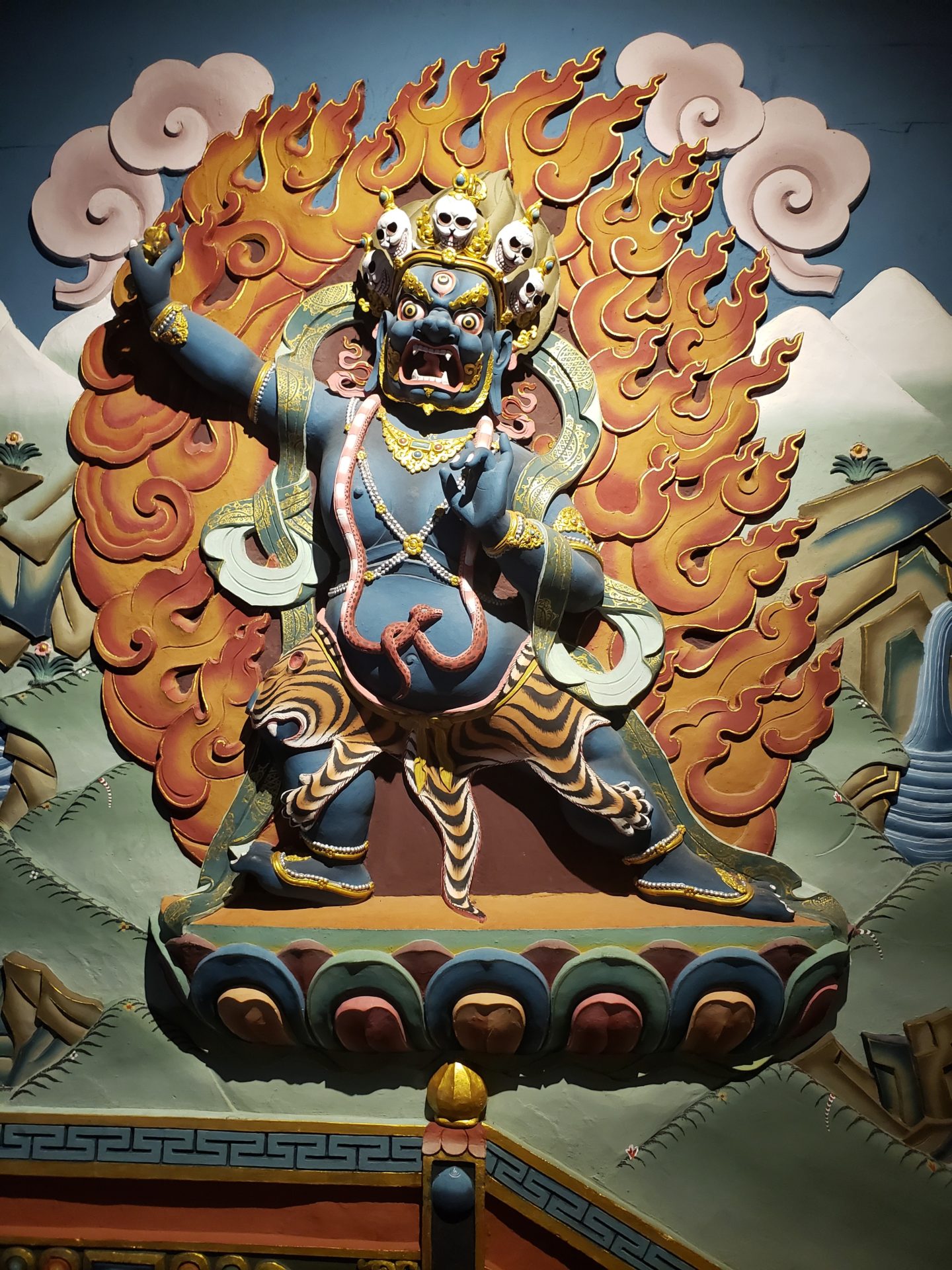
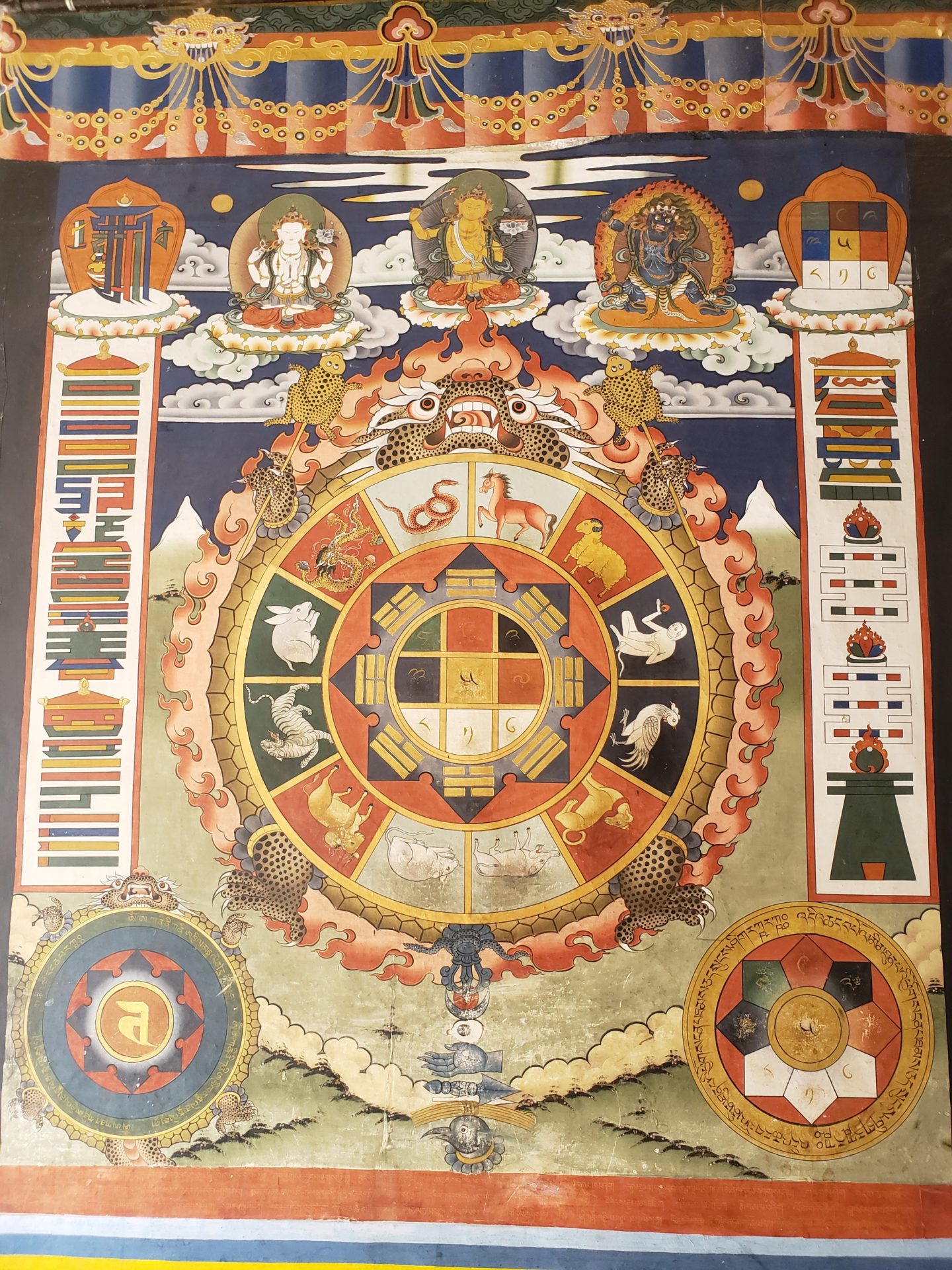
As it turns out, Buddhism accounts for the weaknesses of man. The Wheel of Life explains the Buddhist teachings:
The pig, rooster and snake in the hub of the wheel represent the three poisons of ignorance, attachment and aversion.
The second layer represents karma.
The third layer represents the six realms of Samsara.
The fourth layer represents the twelve links of dependent origination.
The fierce figure holding the wheel represents impermanence. It is also Yama, the god of death.
The moon above the wheel represents liberation from Samsara or cyclic existence.
The Buddha pointing to the white circle indicates that liberation is possible.
There’s a realism to Buddhist teachings, an authenticity that comes from accepting the inevitability of extreme behaviors manifesting themselves while nevertheless providing another opportunity for redemption, an opportunity for liberation.
My happiness comes from the pursuit of happiness. When I finally get it, whether consciously or unconsciously, I sabotage it if for no other reason than to find it again. That for me is the teaching of Buddha. That to me is happiness. That to me is the point of life.
I was skeptical about booking my trip to Bhutan because the only way to go if you’re American is to hire a tour guide. If you know TPOL, you know that I hate tours (see Amalfi Coast: A Beautiful Tourist Trap). I was also skeptical that the only way to pay for the trip was by wiring cash (see How to Book a Trip to Bhutan) as credit cards are not accepted.
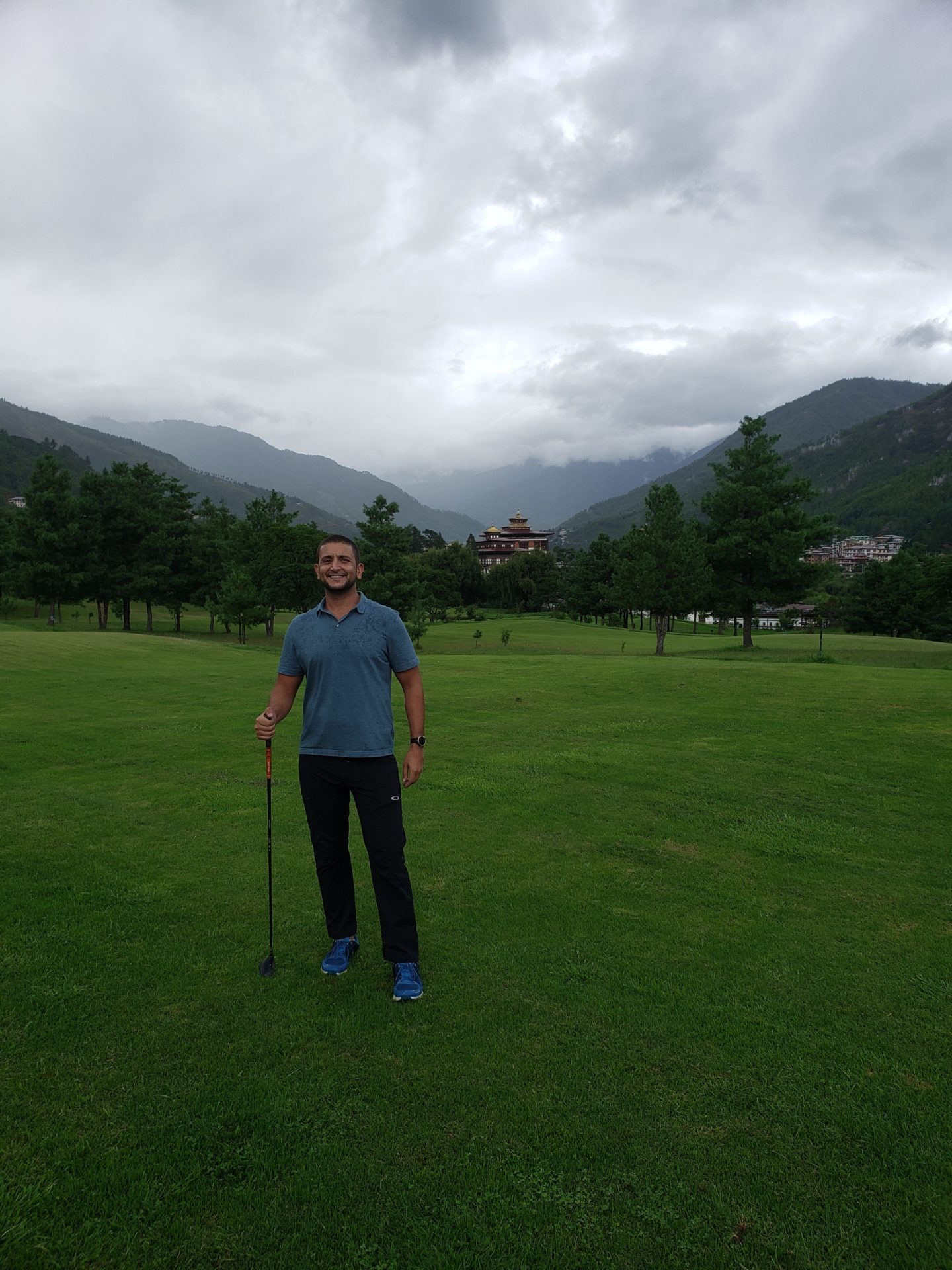
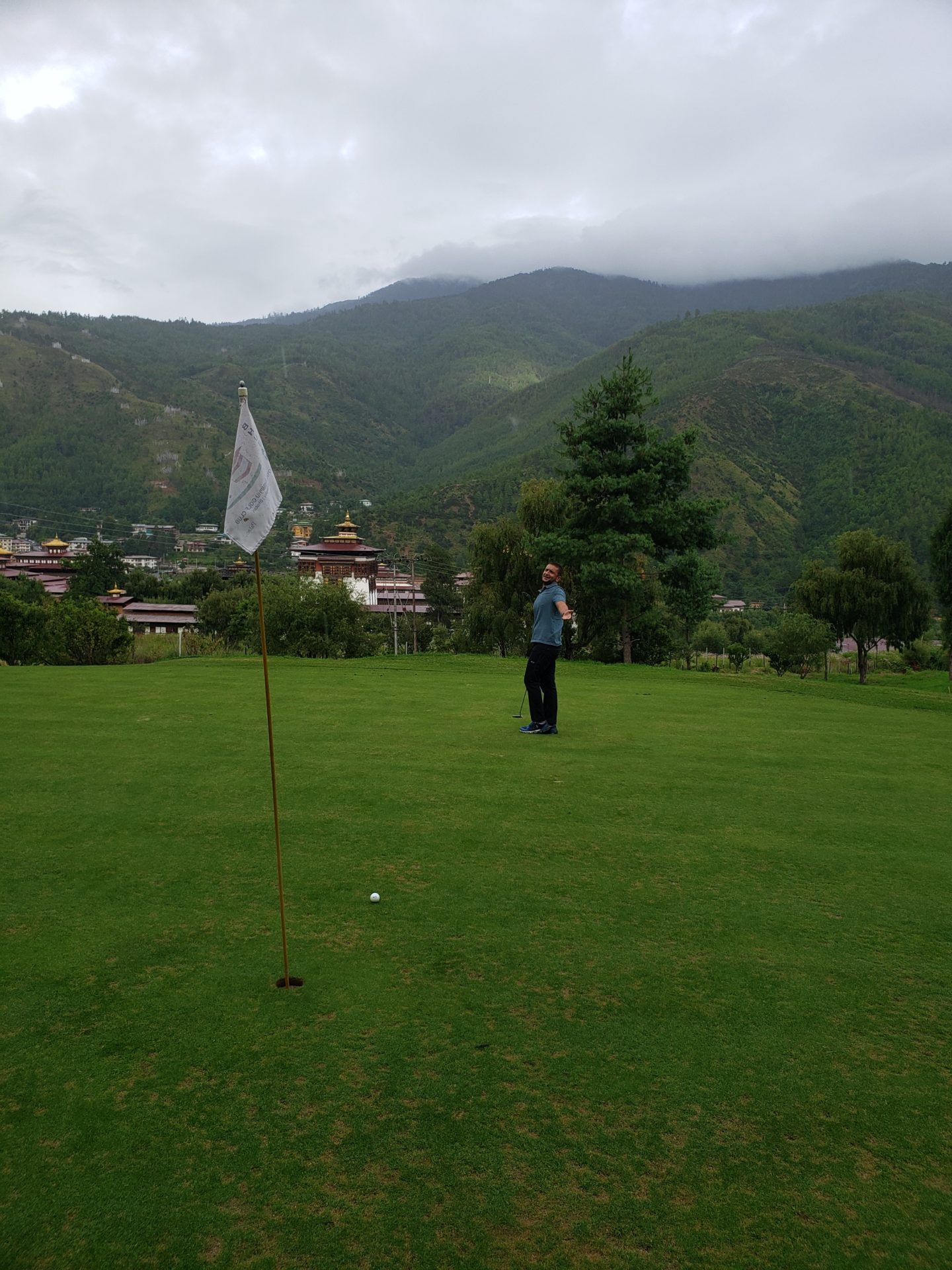
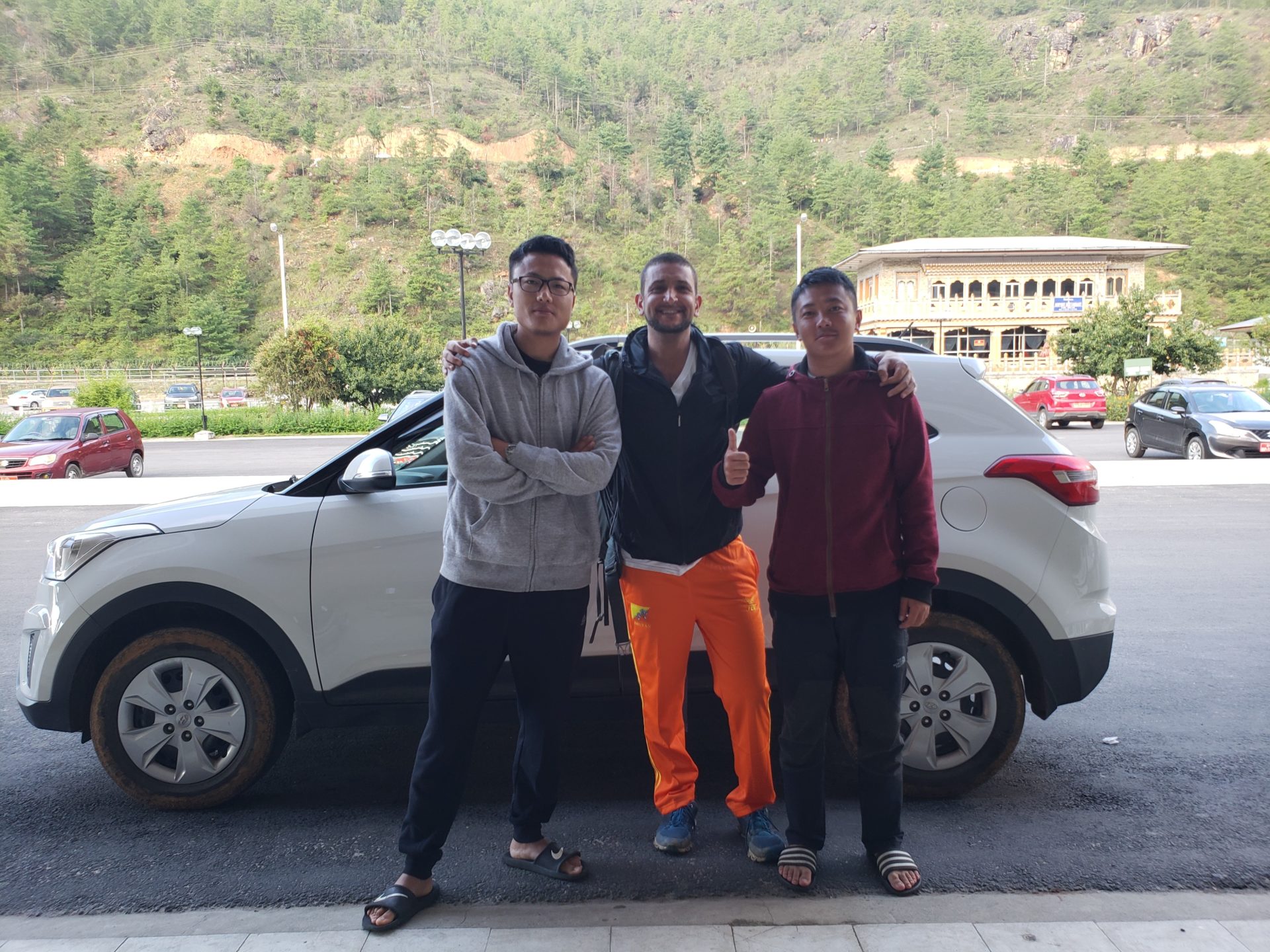
I am happy to write that the company I contacted, Bucket List Adventure, was awesome. They did everything to make our trip enjoyable. This includes major things like letting me change the itinerary to play golf (see Total Consciousness: Golfing in Bhutan) to indulging me by taking me on an extended trek of Tiger’s Next. I cannot overlook the smaller things either. They were always on time, knowledgable, very patient with my numerous questions, cautious when driving, funny, and genuinely interested in getting to know us. (My only complaint is that we went to too many tourist restaurants that did not serve traditional Bhutanese food. Even that point can be excused based on the final meal of Day 5.) The owner also went out of his way to meet and give us souvenirs as a gesture of thanks. Even though I still hate tours, I am glad that I went on this one (Guided Tours: Like Attending Class, It’s Boring But Sometimes Useful).
Visiting Bhutan was one of my favorite trips of all time. If you go, contact the nice people at Bucket List Adventures. Tell them Alex the Lion, aka TPOL, sent you.
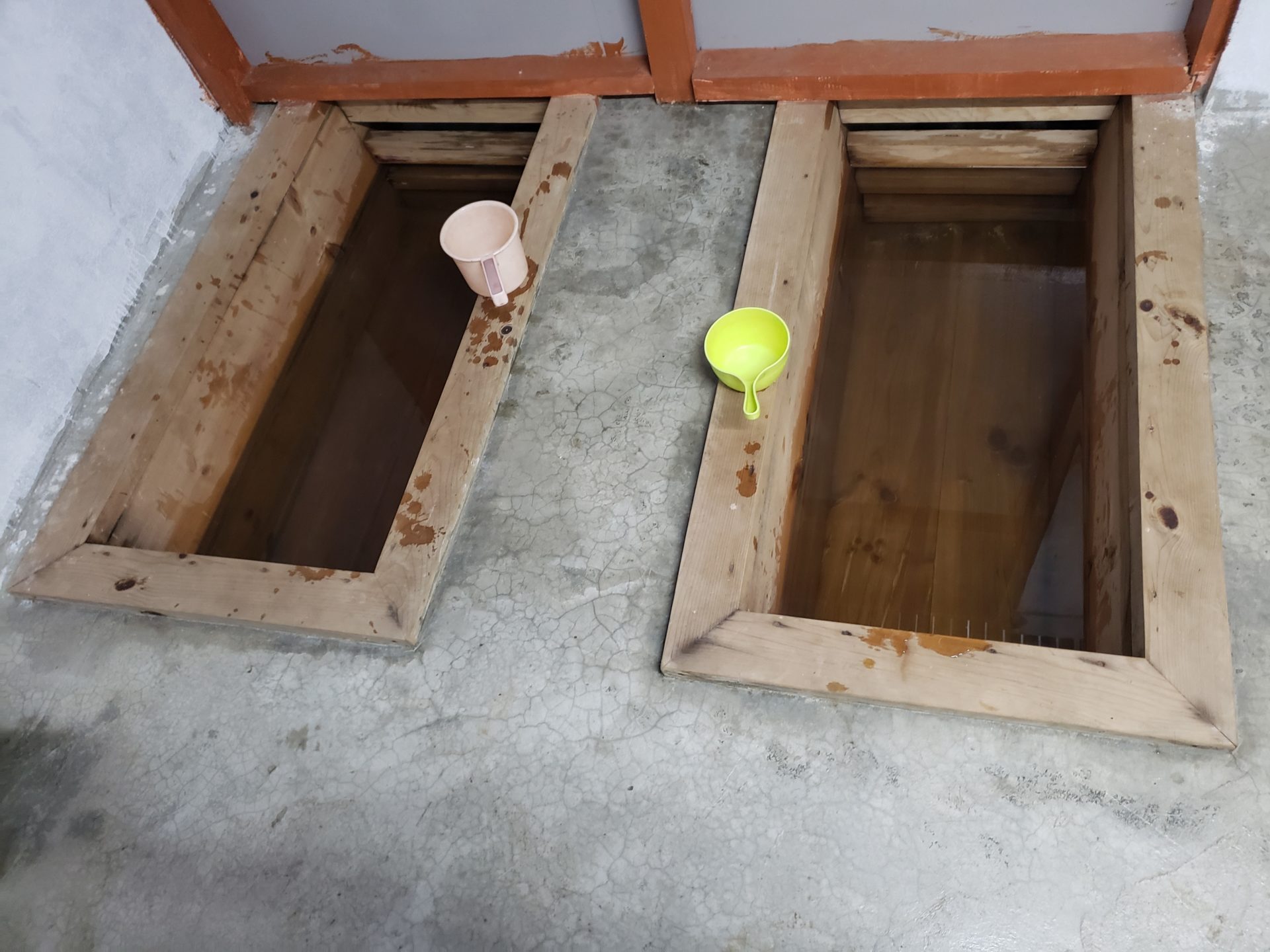
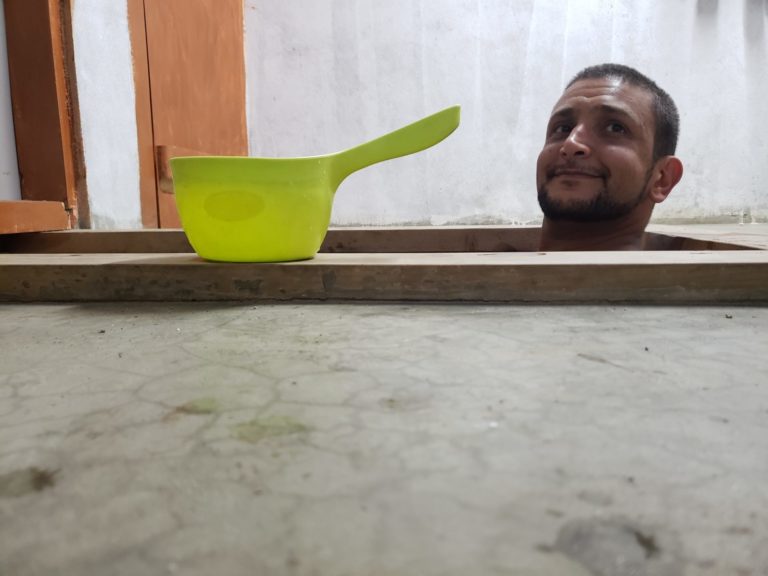
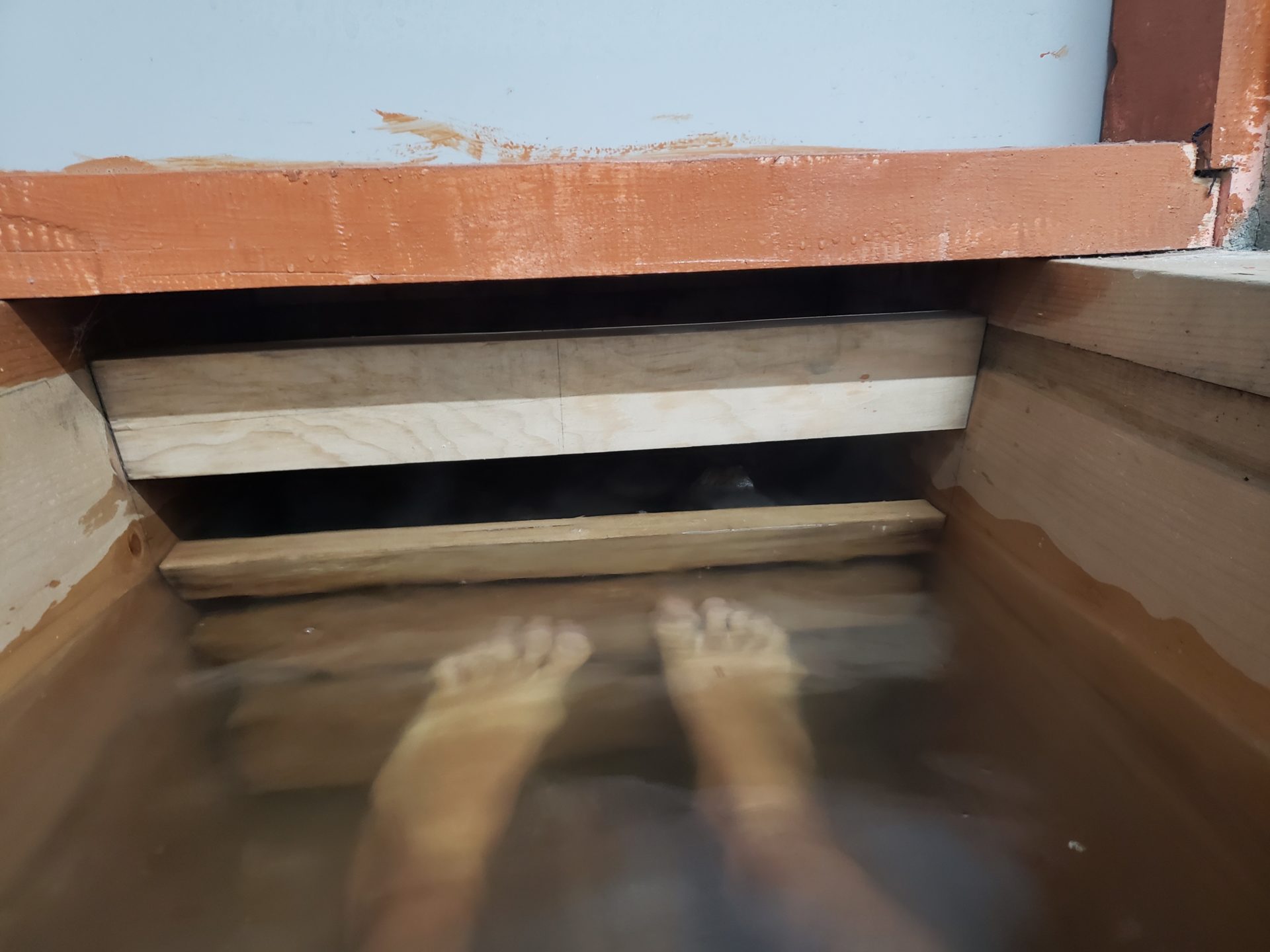
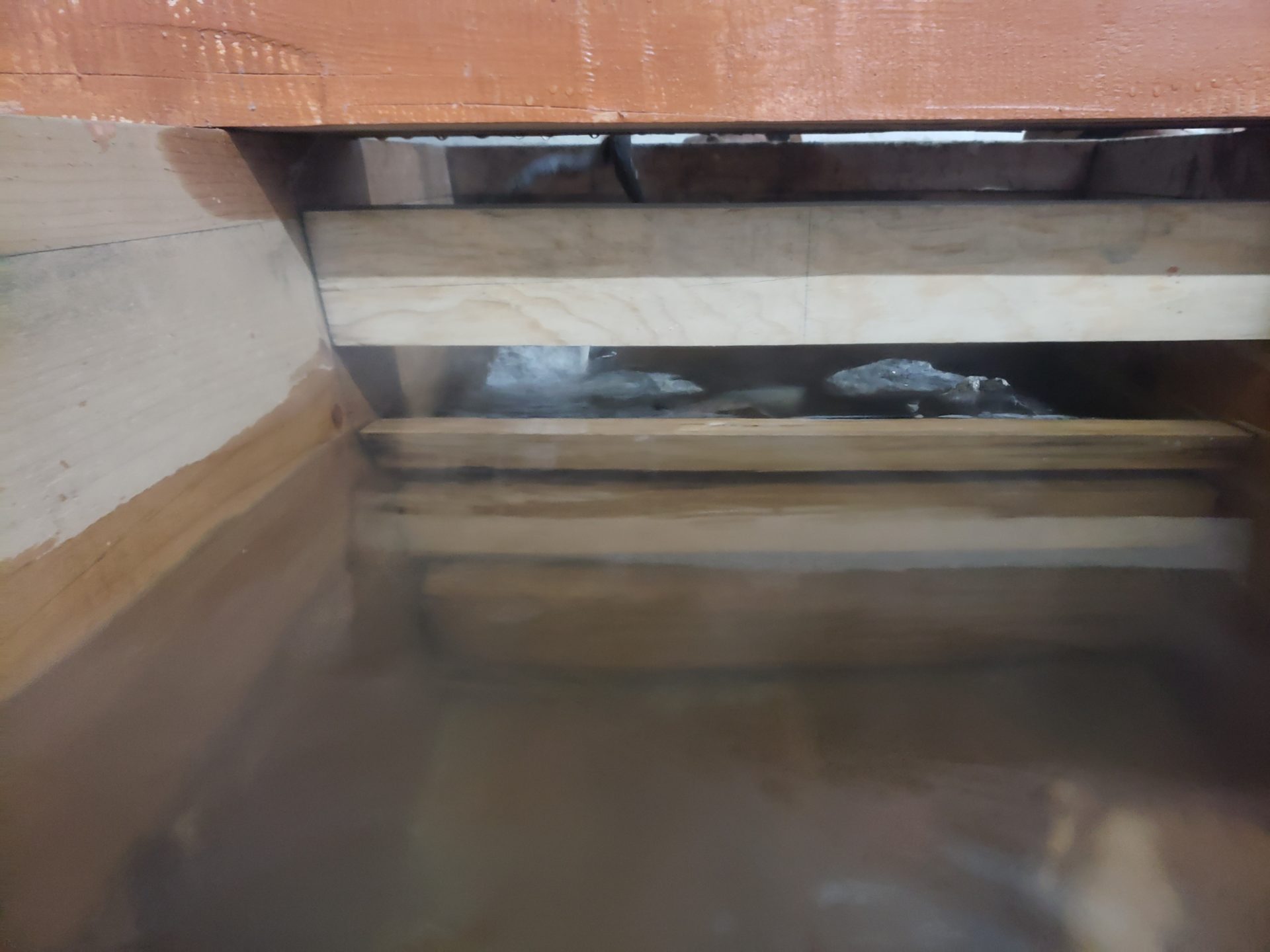
What do you do after you declare victory over life? You go to a hot stone bath. Following the trek up to Tiger’s Nest and beyond (see Finding Happiness: Tiger’s Nest (Bhutan Day 5)), my left knee was sore. The remedy was rest and relaxation. This wasn’t a spa at a resort, nor was it in a commercial building (see New Star Spa Shanghai: It’s a Lounge Without the Flight). It was part of a family house in a remote part of town.
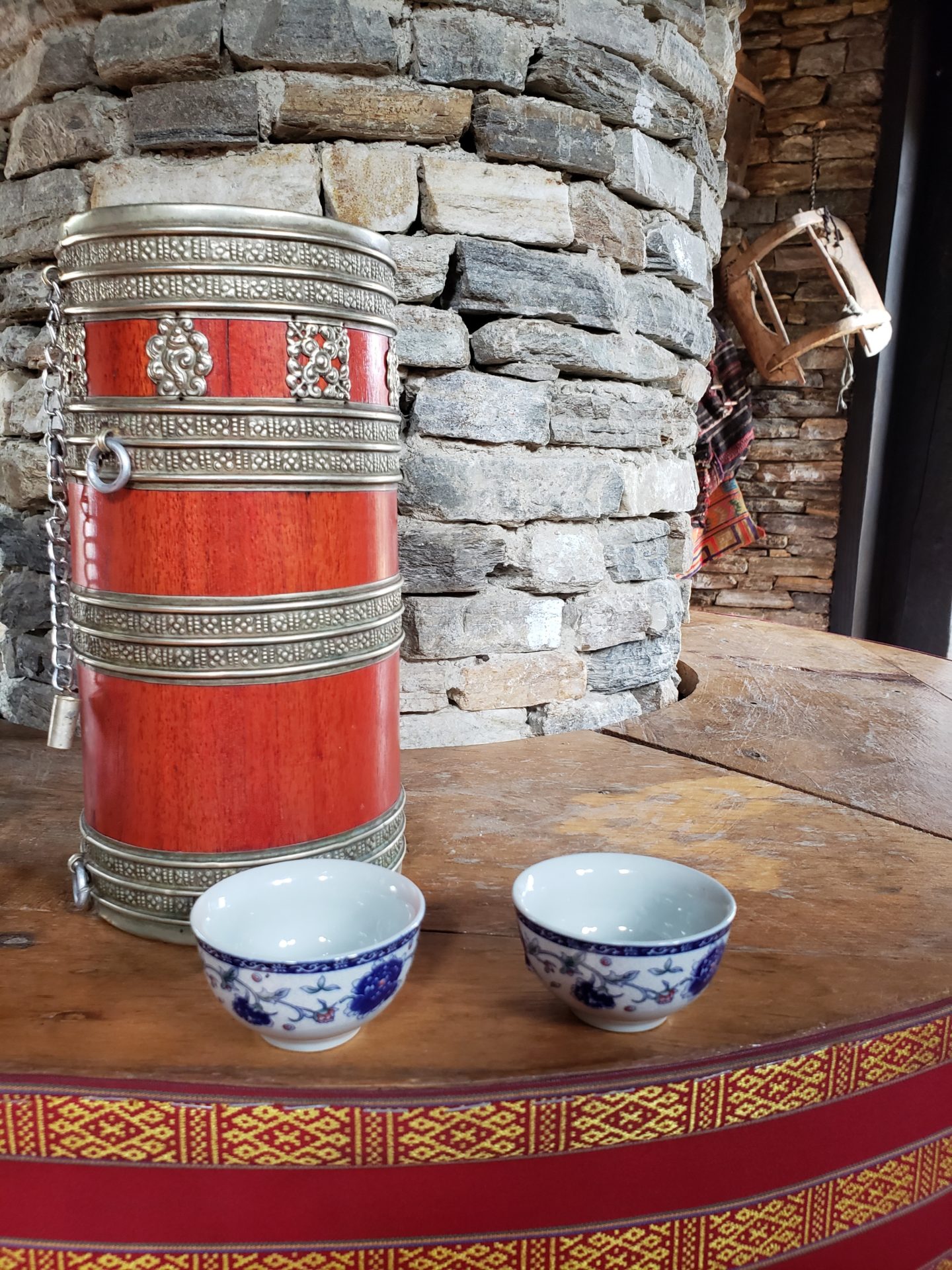
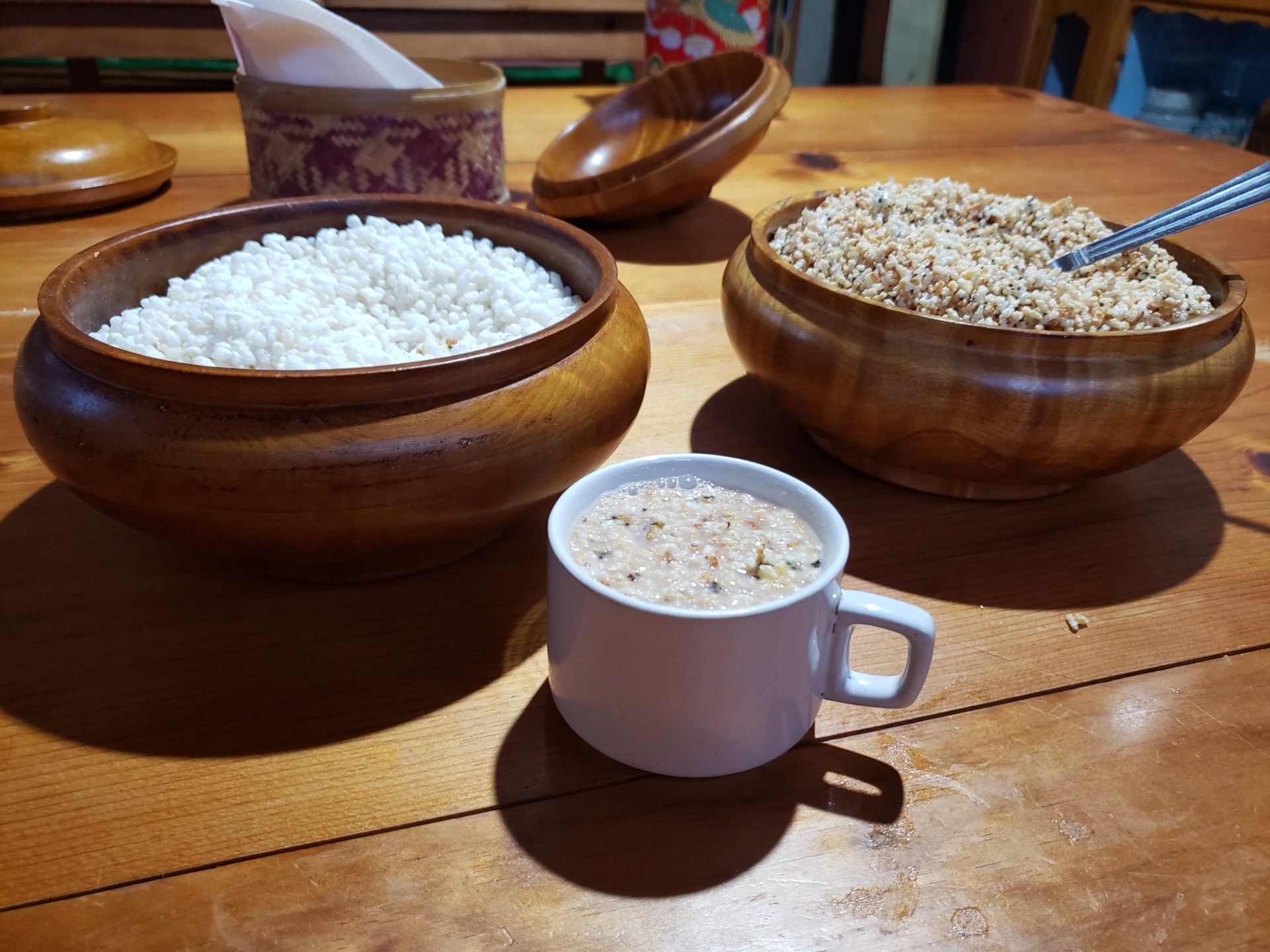
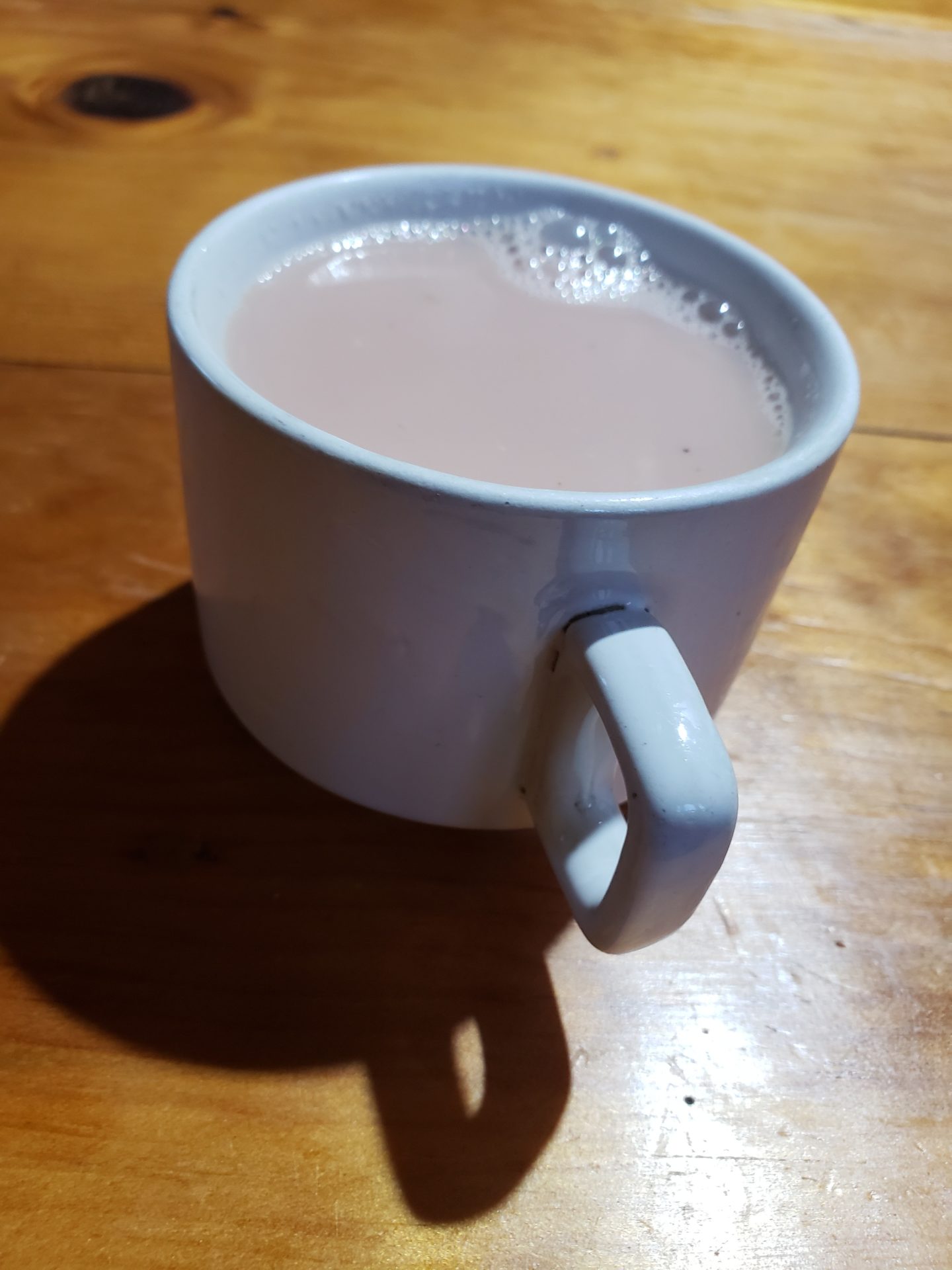
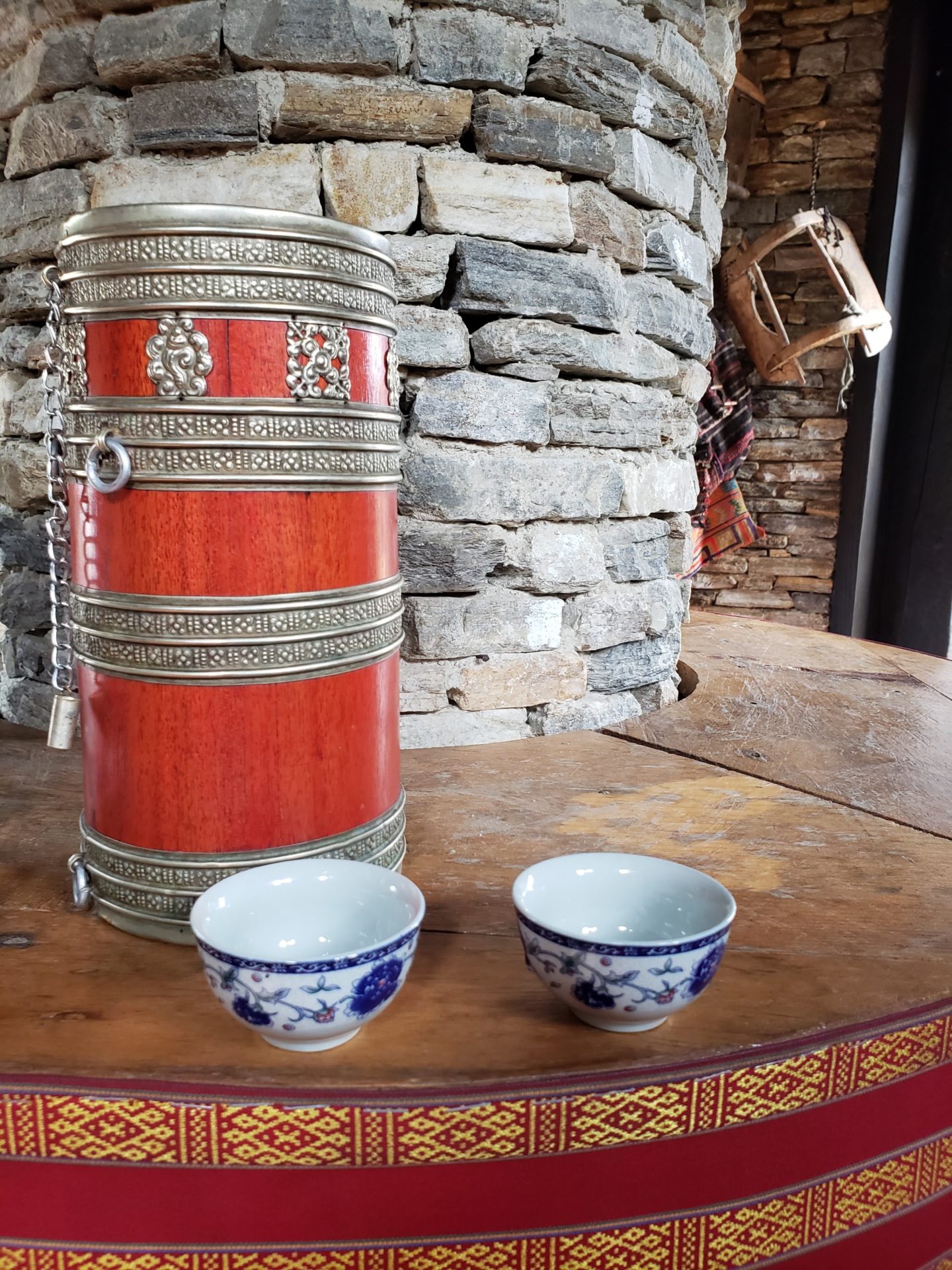
Butter Tea
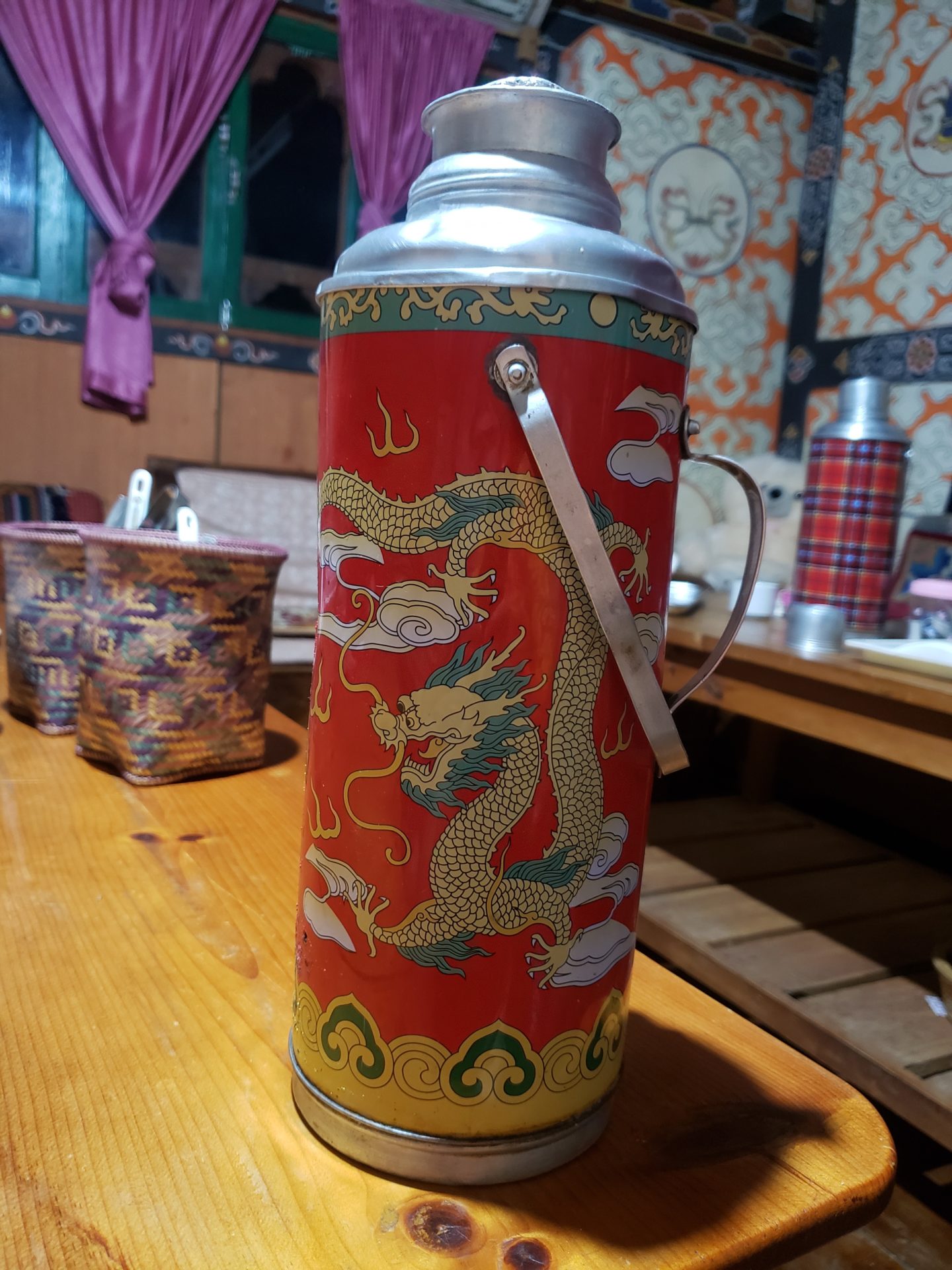
Before the bath we had butter tea, an interesting concoction. It was relaxing following a long day of trekking.
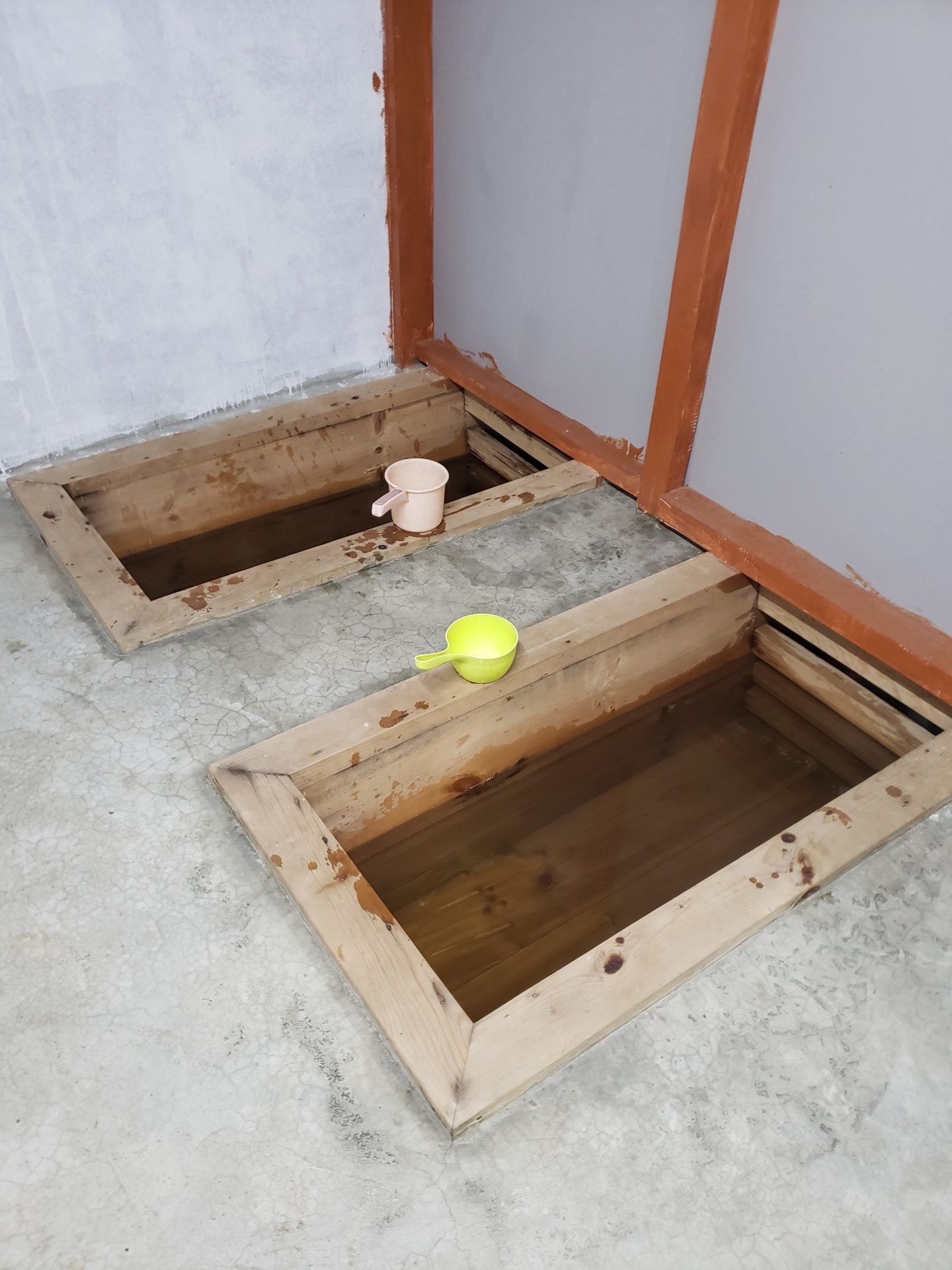
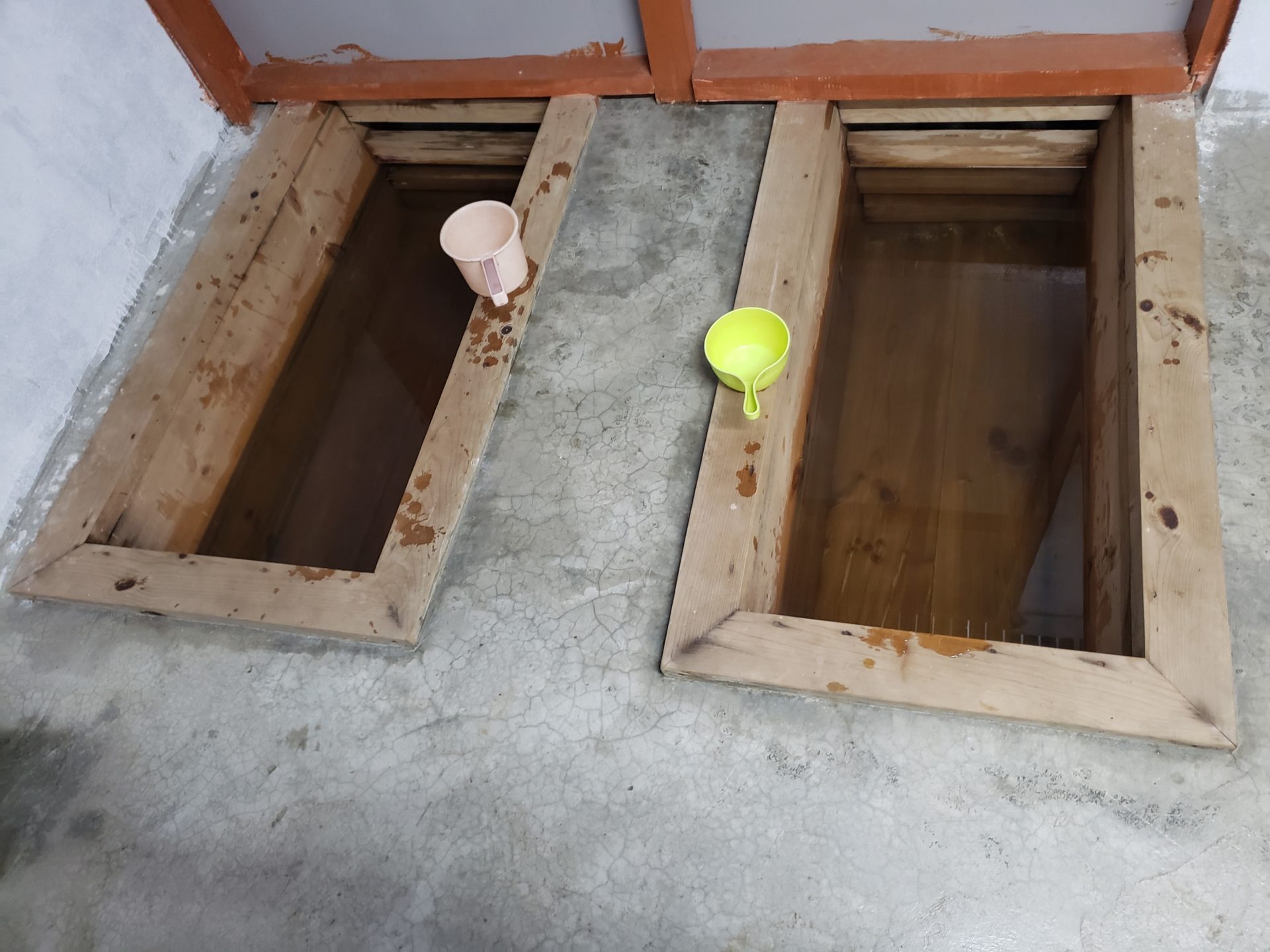
Bath
I was a little trepidatious when I entered the room with the baths. It looked like a scene out of Saw. I imagined the lights being cut and some nefarious game being played by the man with the hot stones. Perhaps I have seen one too many scary movies.
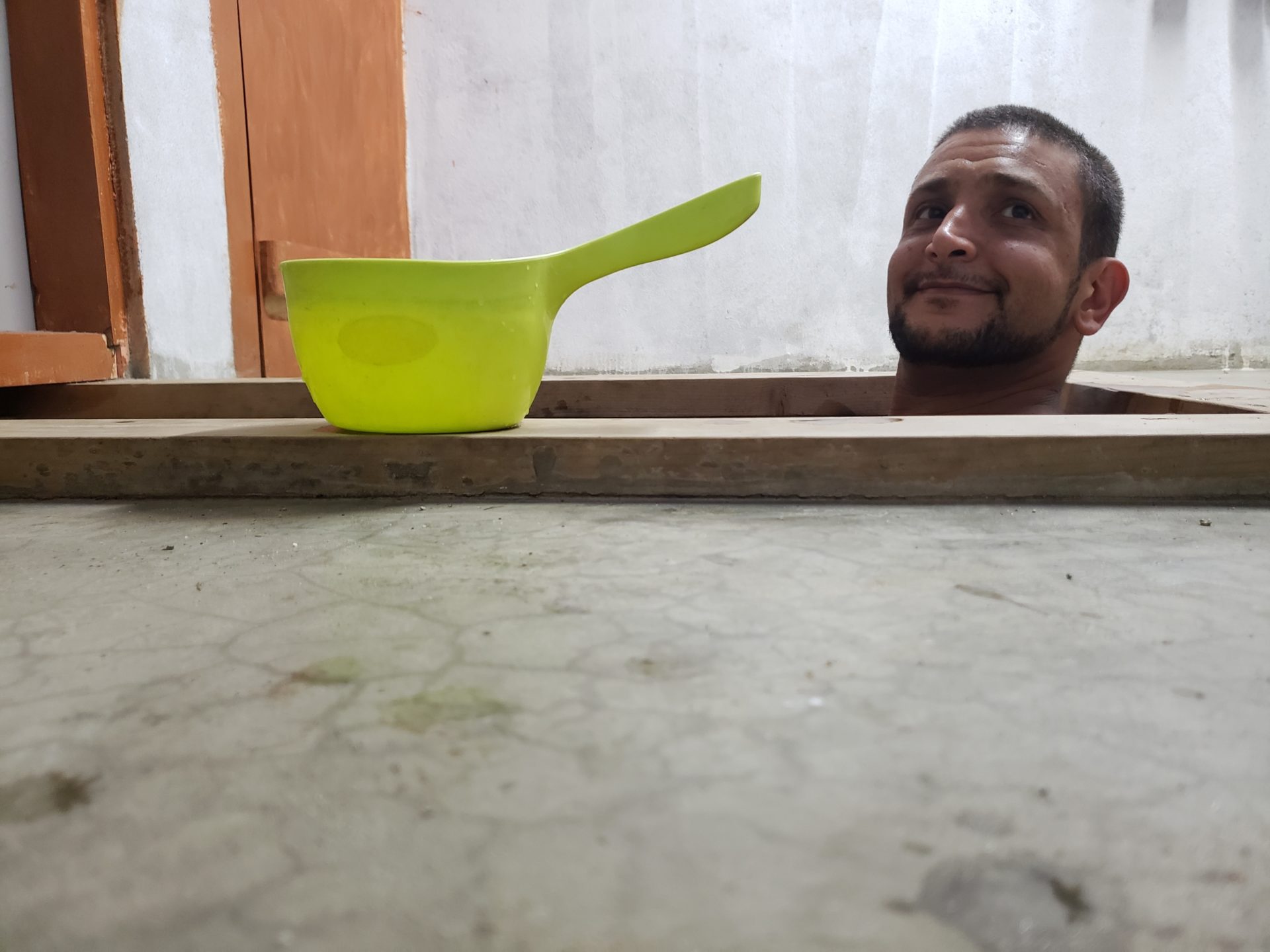
Instead of having a freak-out, I relaxed and entered the bath. The water was warm and soothing. When it began to cool, the man would open the board on the outside and place hot stones in the water. It reminded me of the hookah man coming around with fresh coals.
After a few refills, I was refreshed and ready to go.
Dinner
I didn’t know that I would be eating dinner here as well. It really could be a scene from a horror movie. Instead, it was the best dinner of the trip.
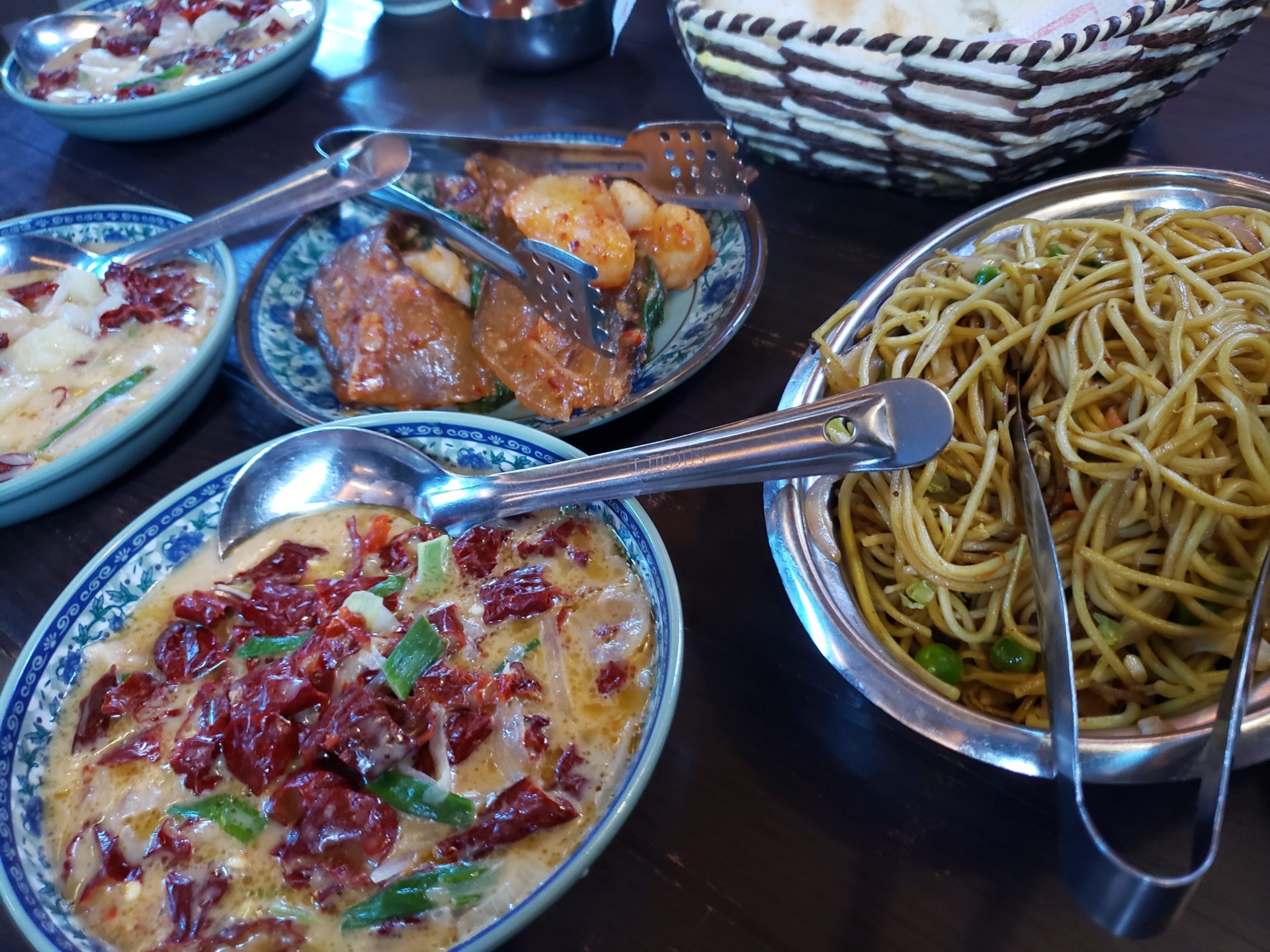
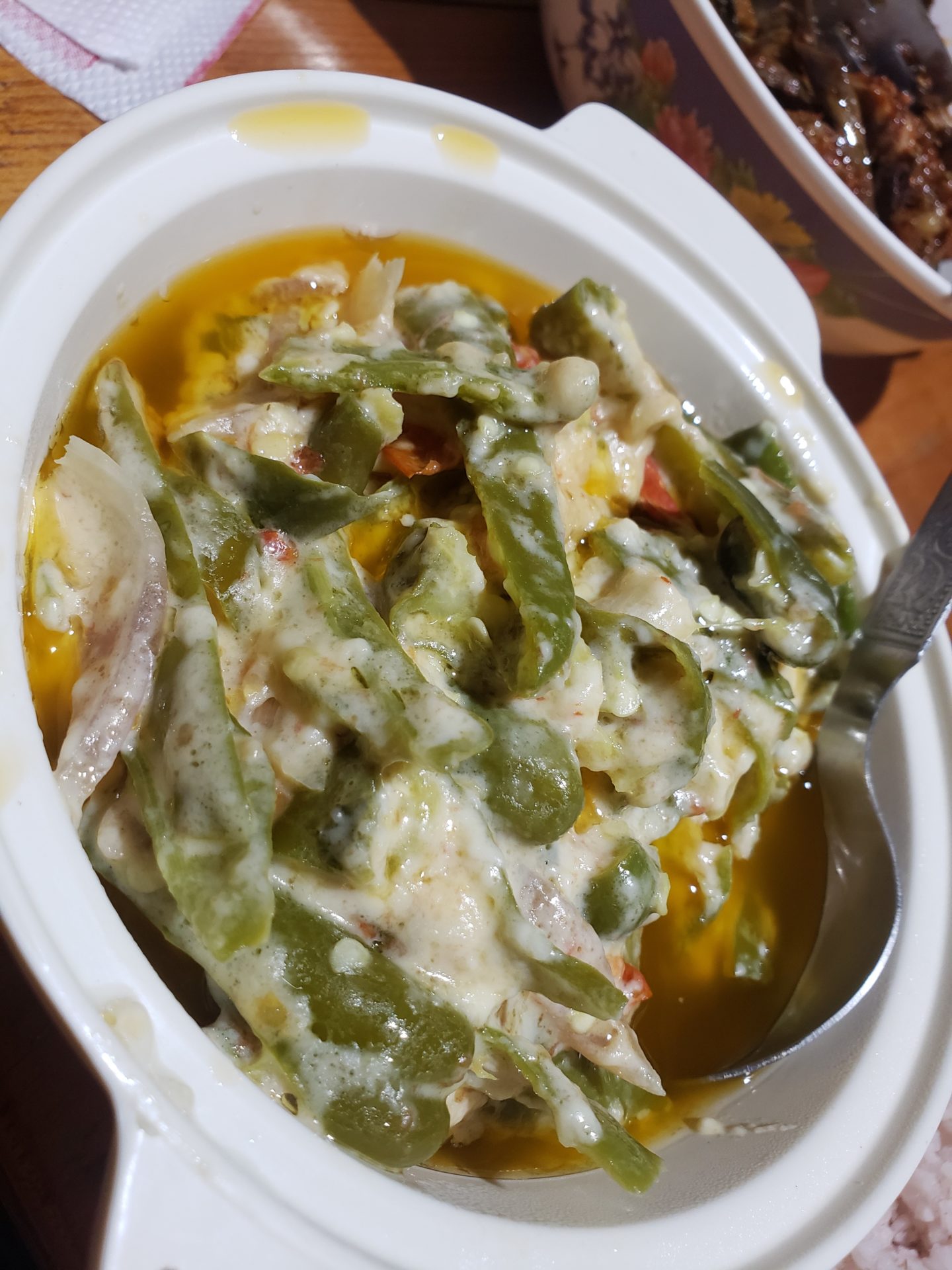
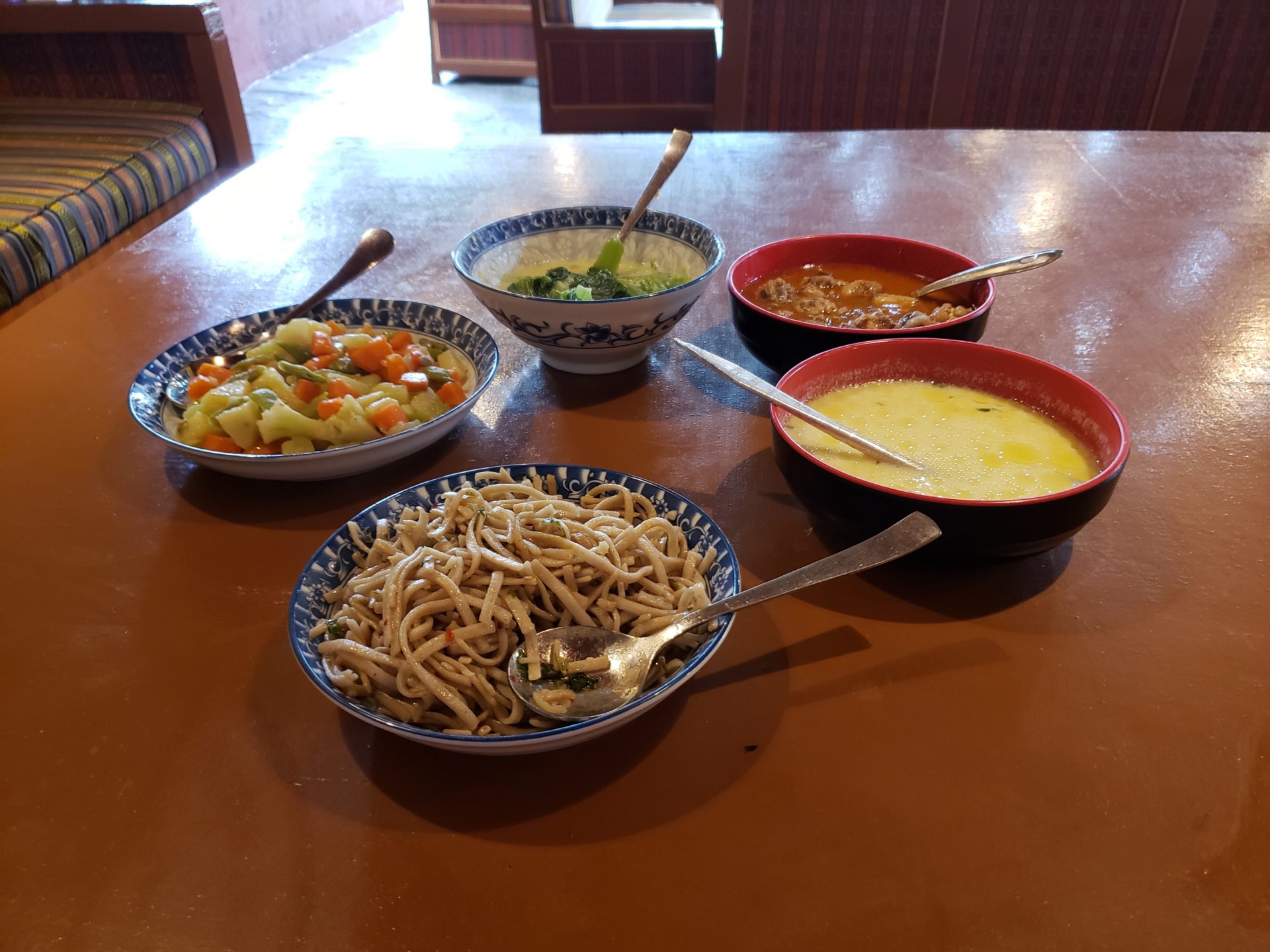
Chili Cheese: Besides beef momo (see Finding Happiness: Bhutan Day 2) chili cheese is my favorite Bhutanese dish. Add chili to the chili cheese on top of rice and you have a meal that should never end.
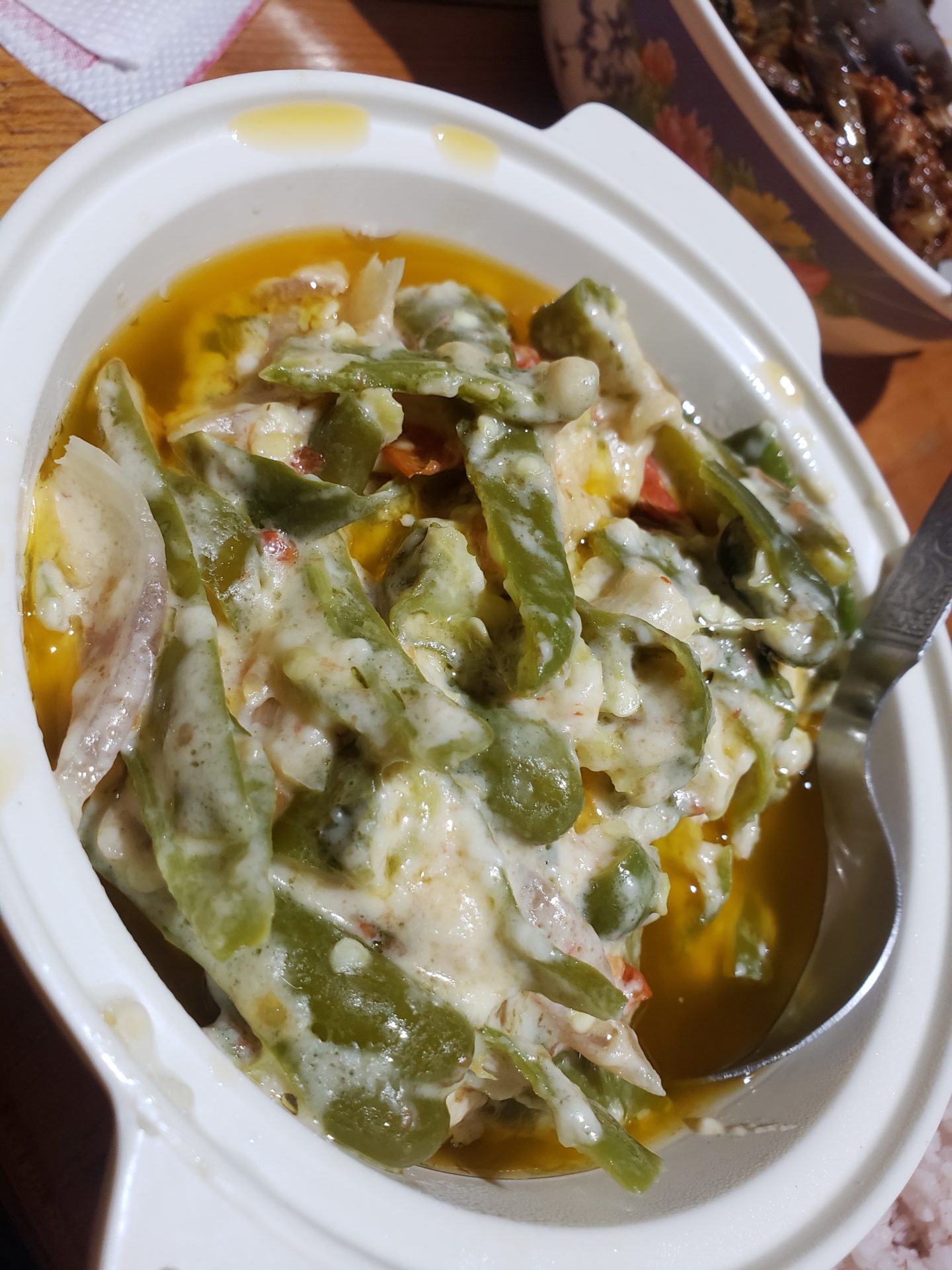
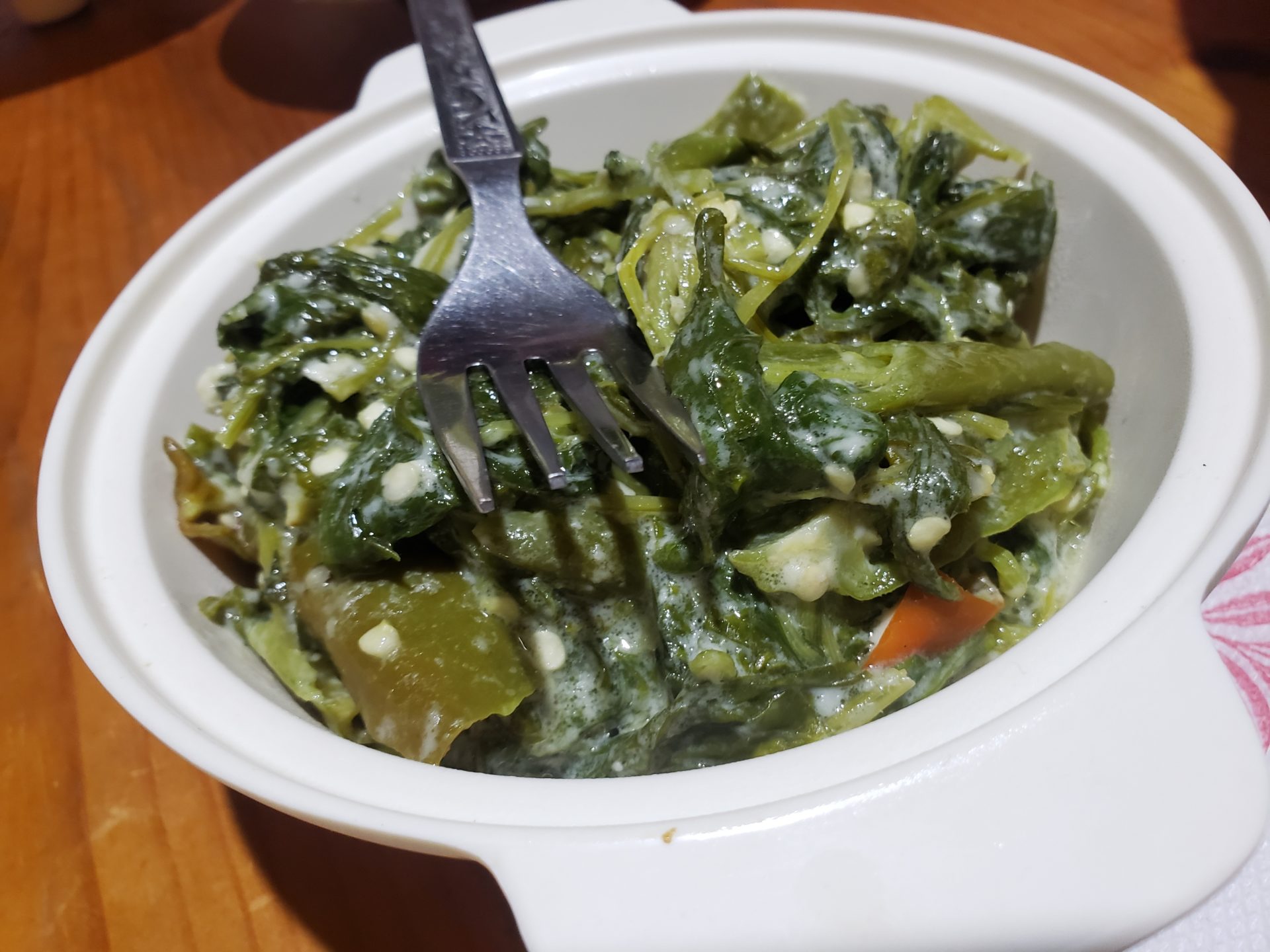
Spinach Cheese: Bhutanese cheese is like high-quality nacho cheese. I am not talking about the kind from the ballpark either.
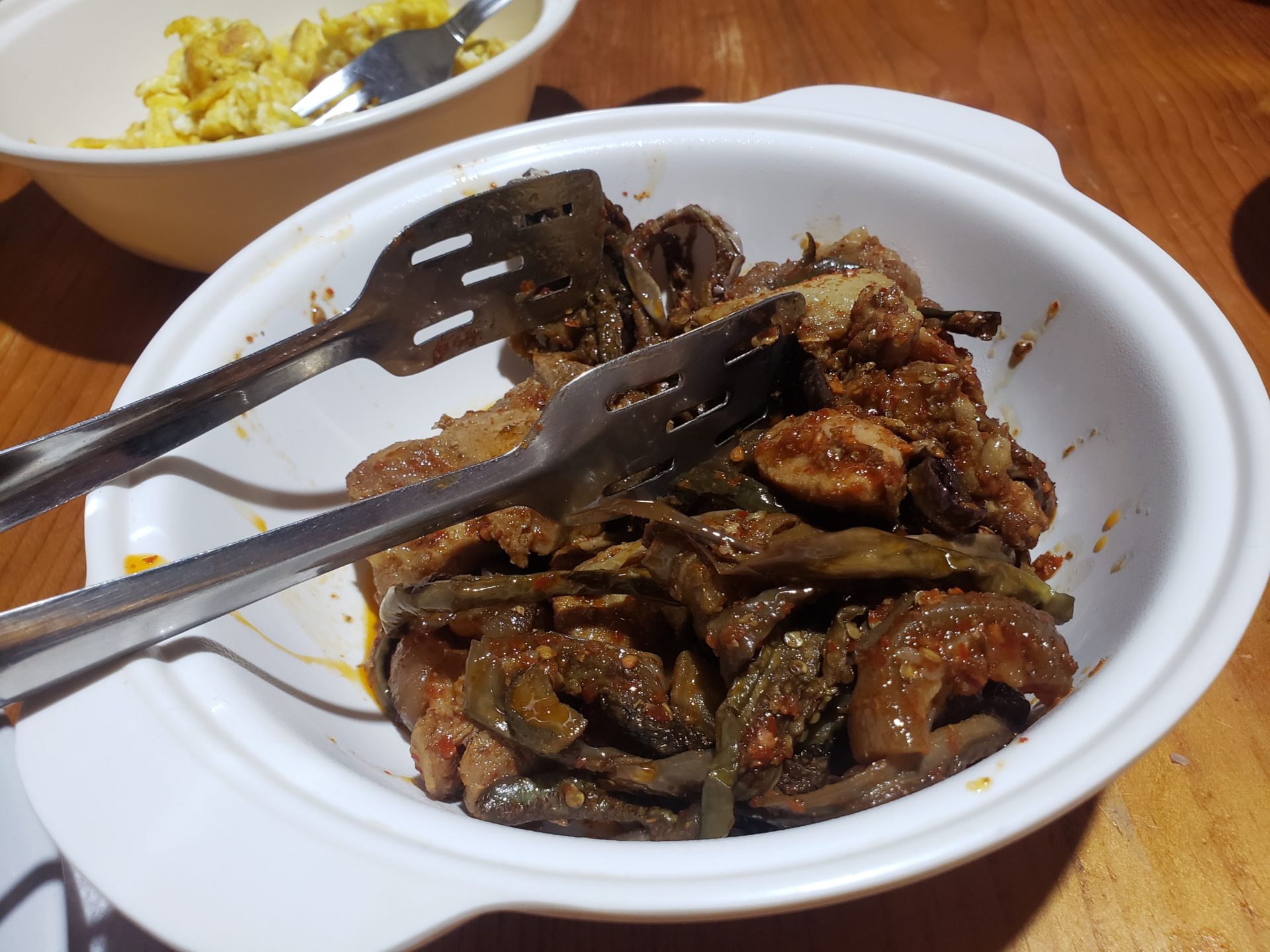
If that wasn’t enough there were plenty of other dishes including egg and pork.
You’re a Kid!
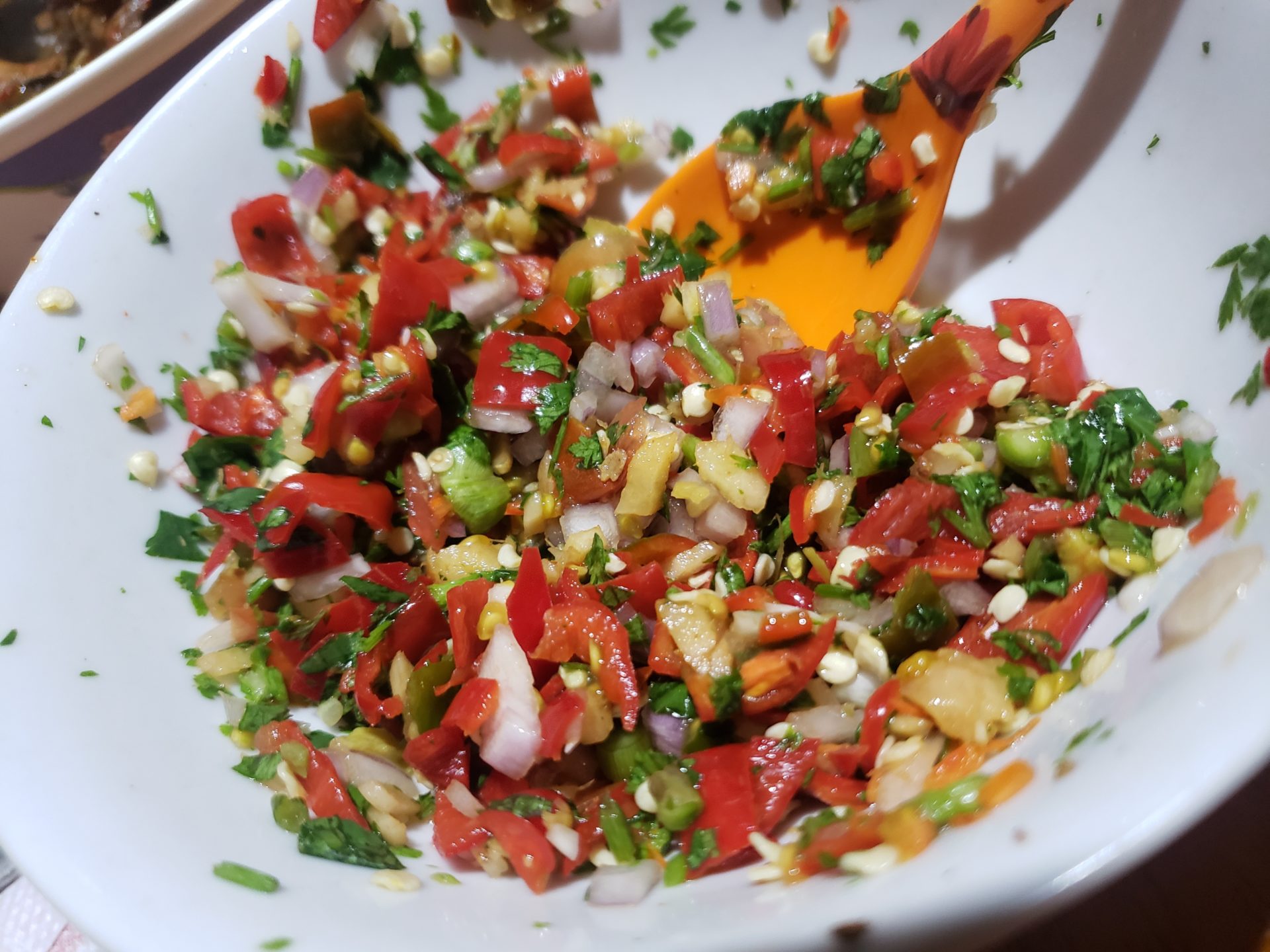
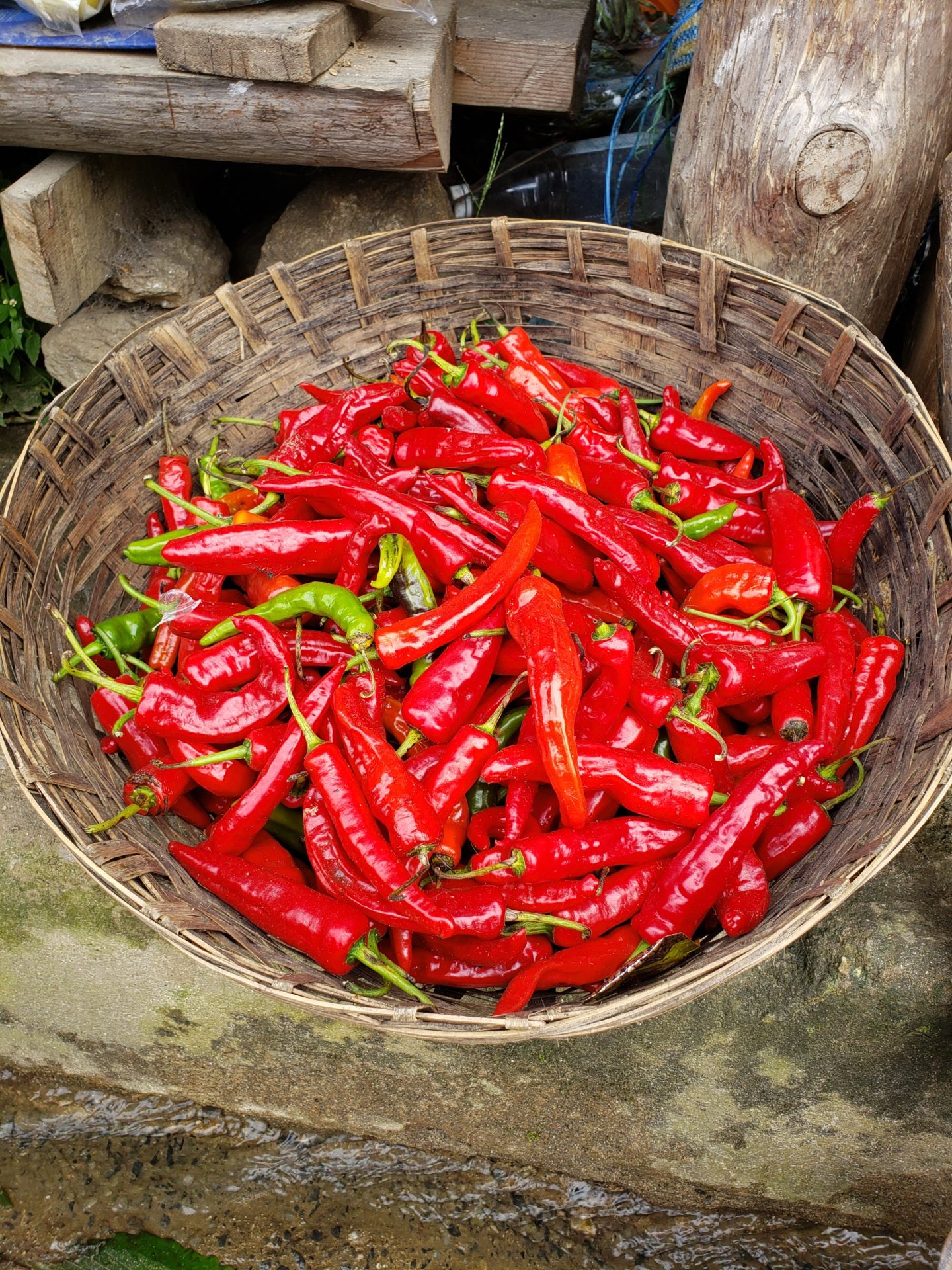
I love spicy chilis. Bhutan has a pico like salad with chilis that will make you sweat.
At the guesthouse, there was a strange fellow who claimed to be from Barcelona but spoke with a British, Irish, and Australian accent simultaneously. He said he did not like chili which drew a gasp from the locals. One remarked that if someone from Bhutan goes to a small village and says no to chili, they will be heckled with the line, “You’re a kid!” I dared the Spaniard who we all suspected to be a spy, to eat some chili. He refused. And the heckling began.
It’s not funny that people die from taking selfies but my first reaction is why do people put themselves at risk for a photo?
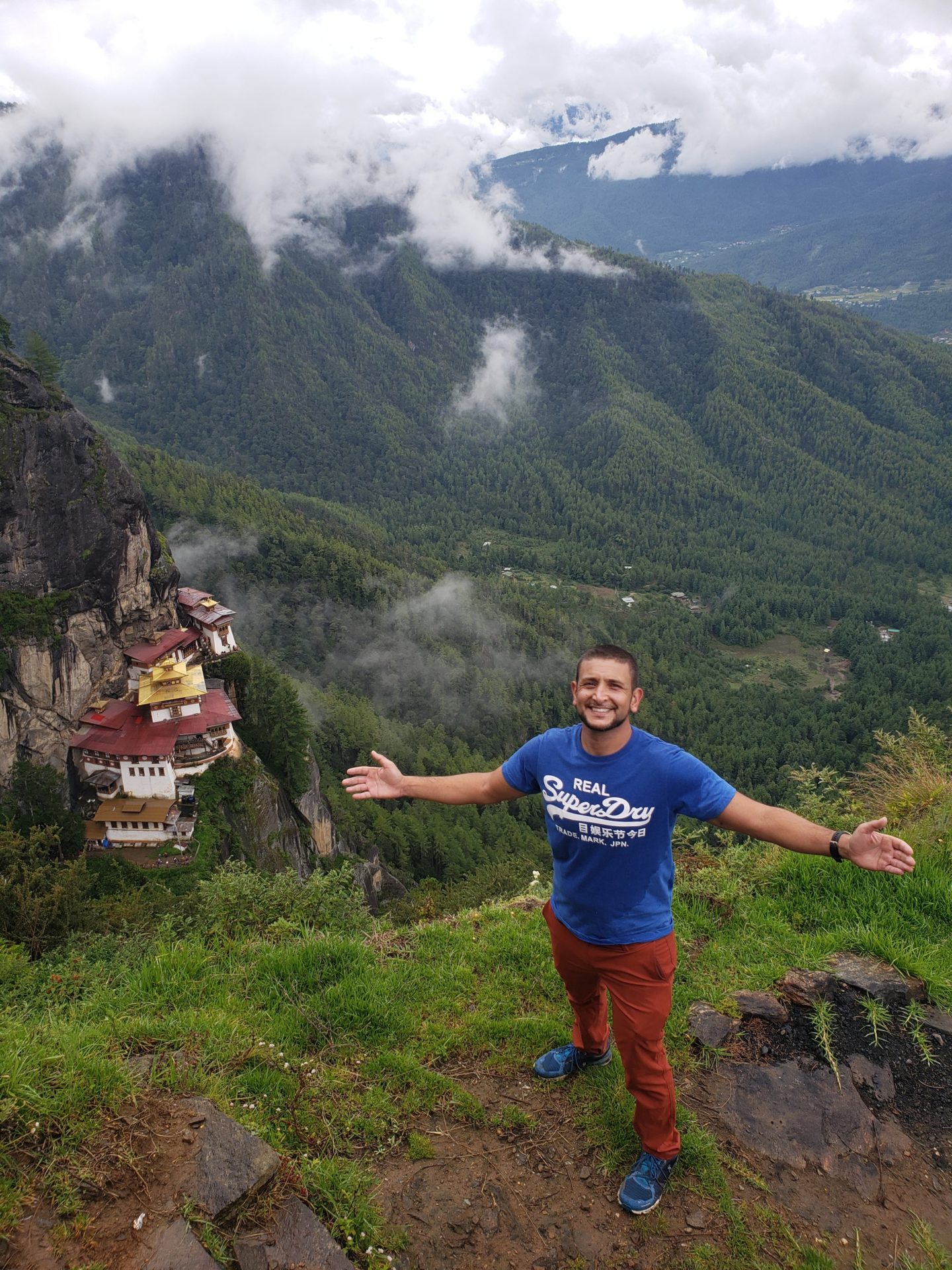
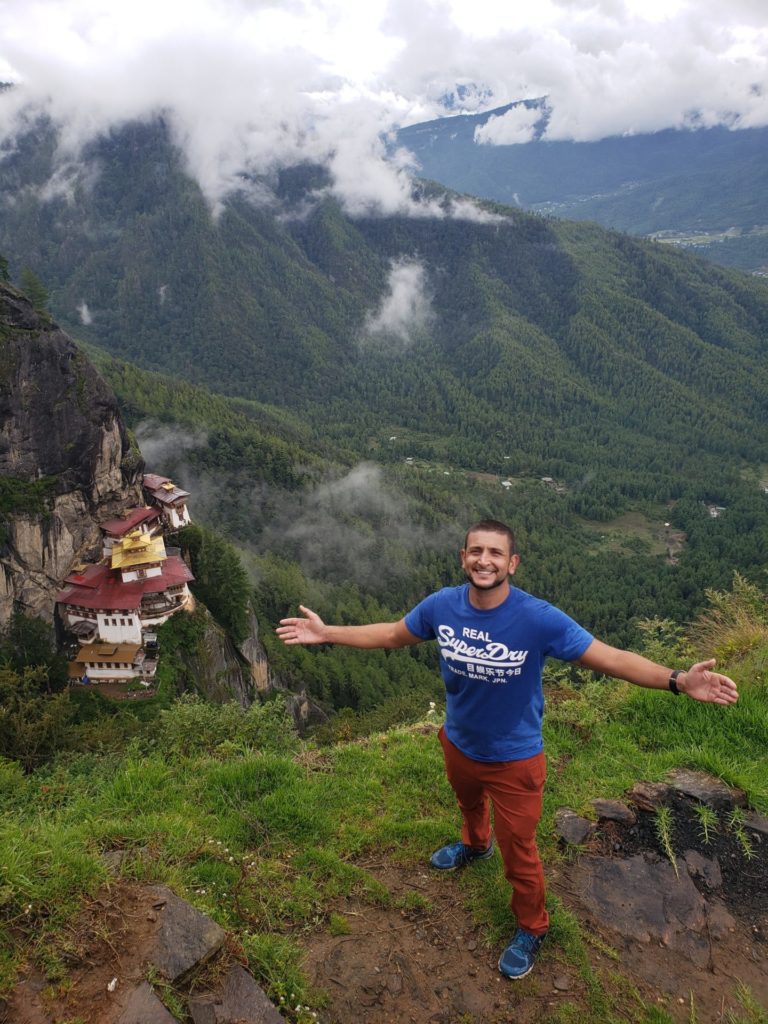
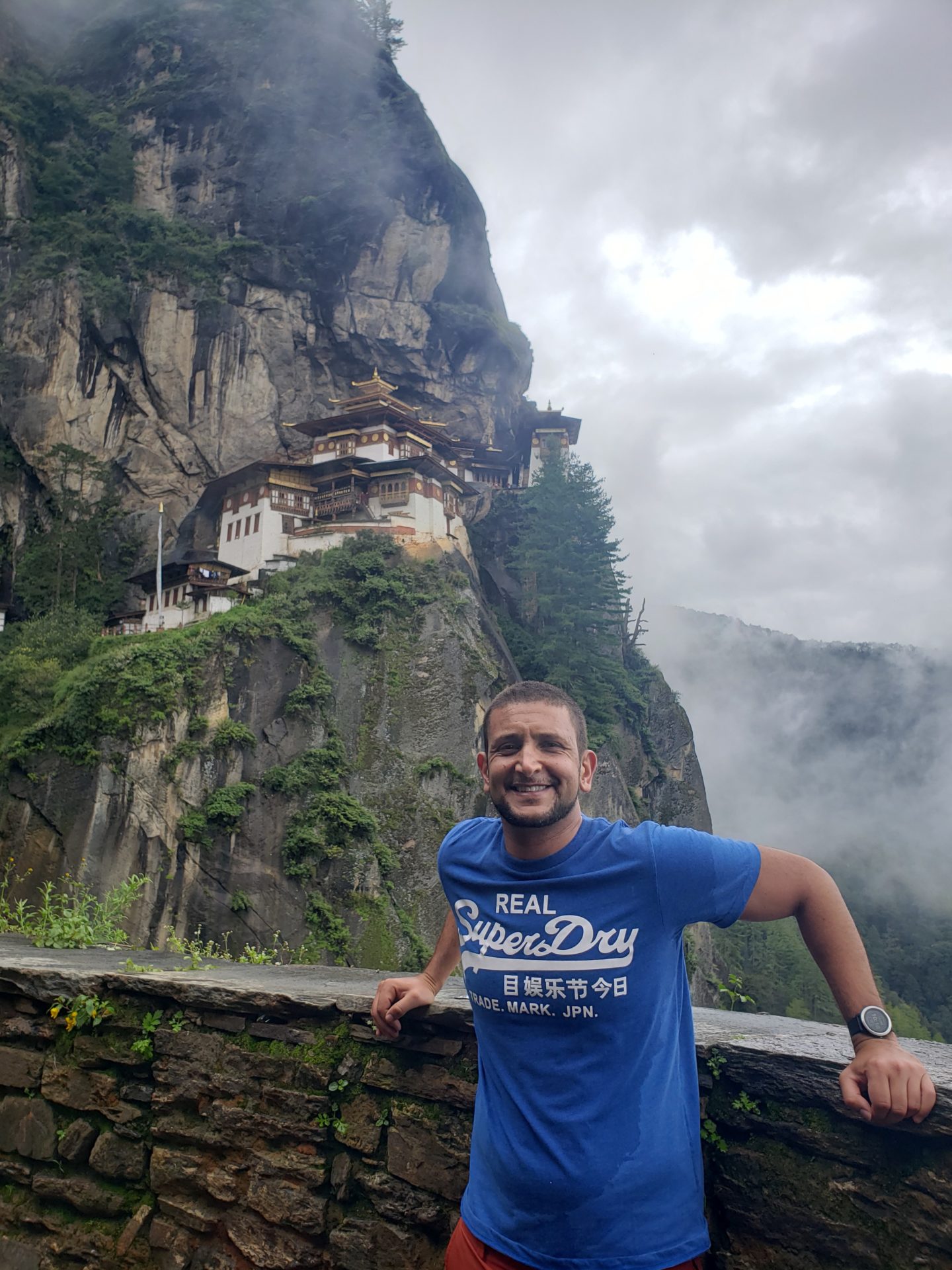
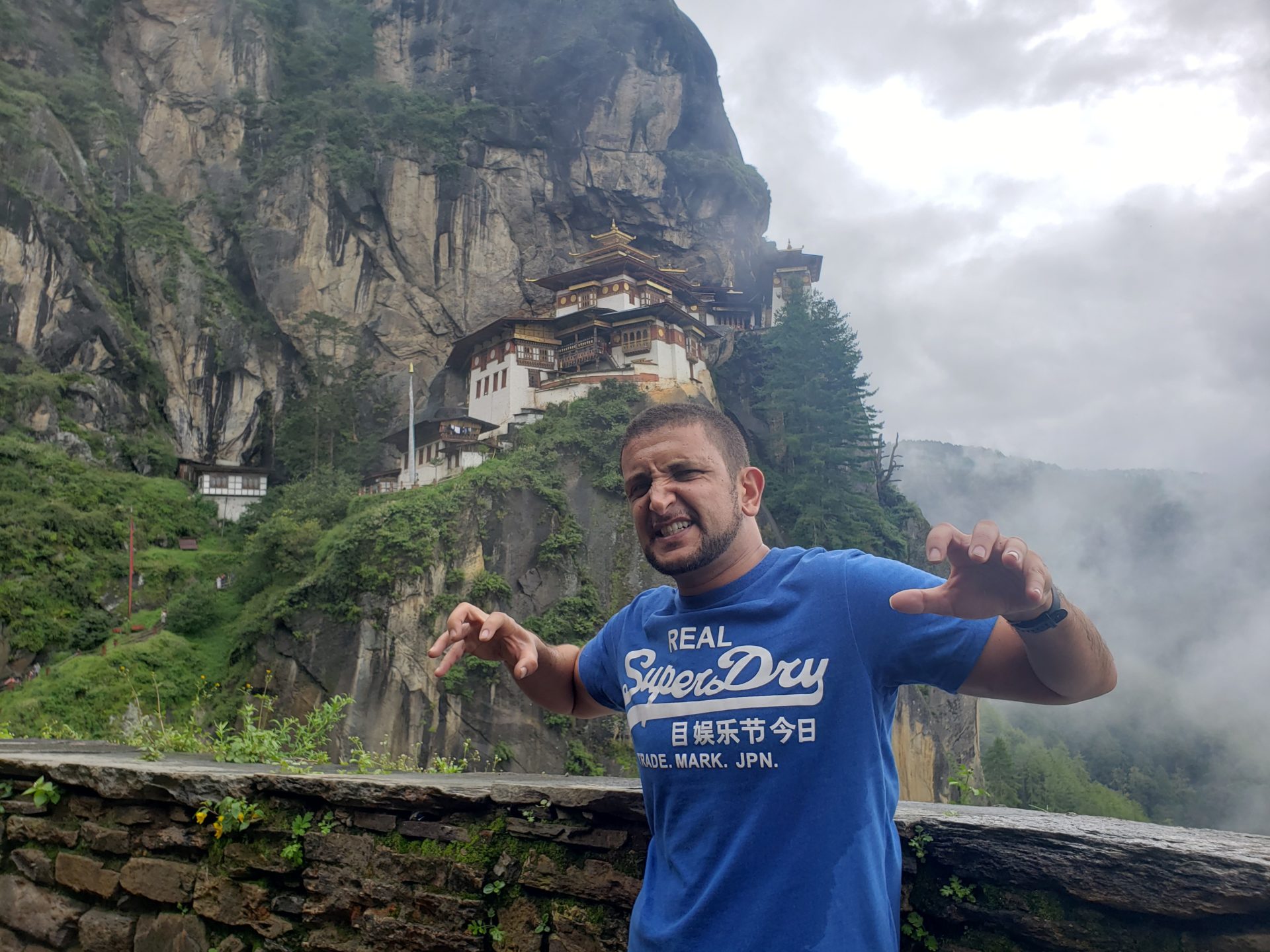
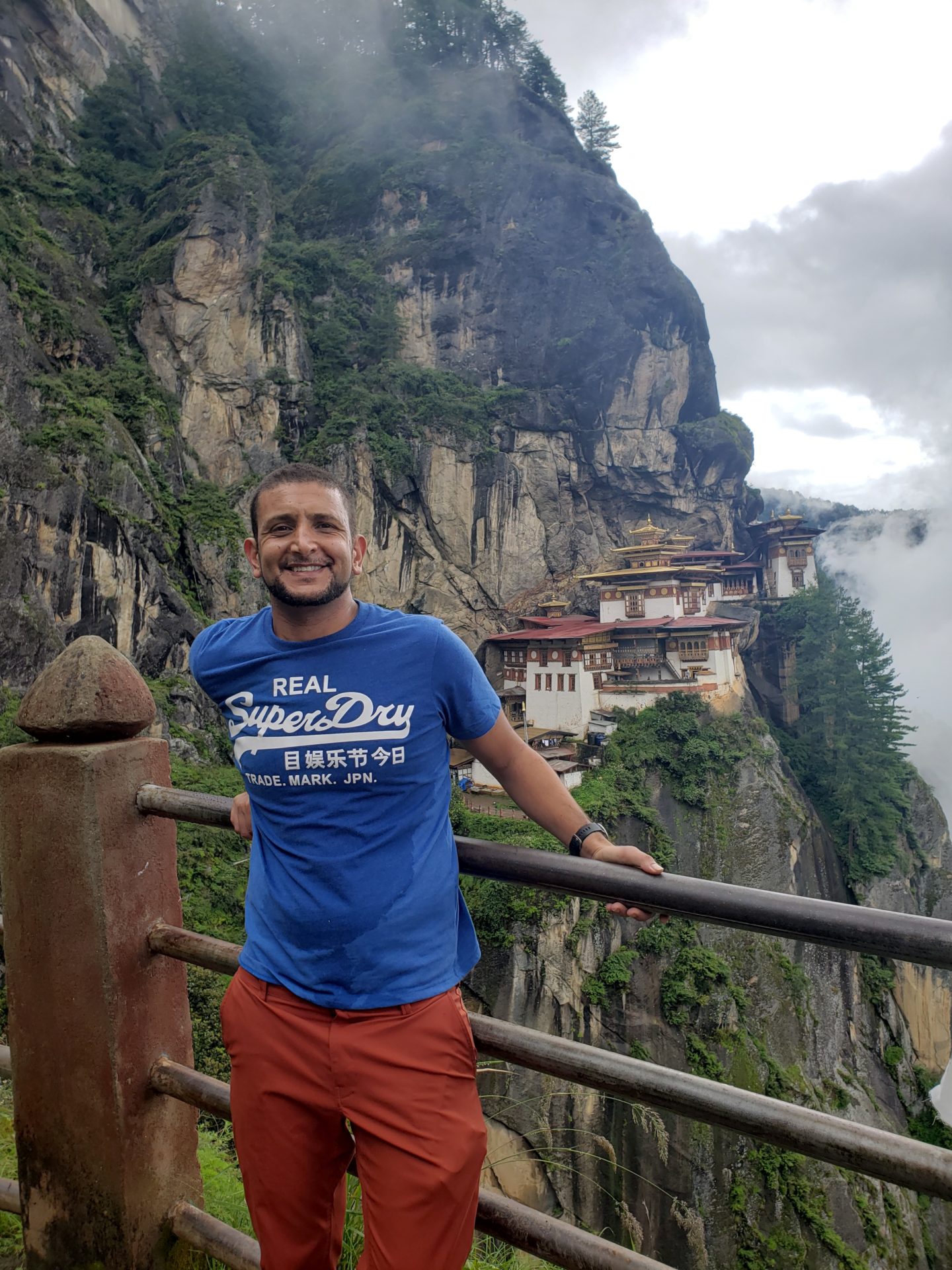
I rarely take selfies because they are stupid. I did it this time in above Tiger’s Nest because literally there wasn’t anyone else around to take a group photo. While adjusting the shot to get as much of the temple as possible, I noticed a gap in the fencing. I wasn’t near the gap and had I fallen, I would’ve landed in a patch of grass directly below. Still, it’s troubling to think about what could have been. More importantly, it is another travel lesson to add to my Travel Nightmares page.
Day 5 started with me worrying about the weather for the epic trek to the Tiger’s Nest. The rain started early in the morning and didn’t show signs of stopping. I was worried, given the fog in the Dochula pass (see Day 3), that my climb to the Tiger’s Nest would end in disappointment. The downpour reconfirmed my travel rule that venturing out during rainy season is a bad idea (see Would You Travel During the Rainy Season?).
Breakfast
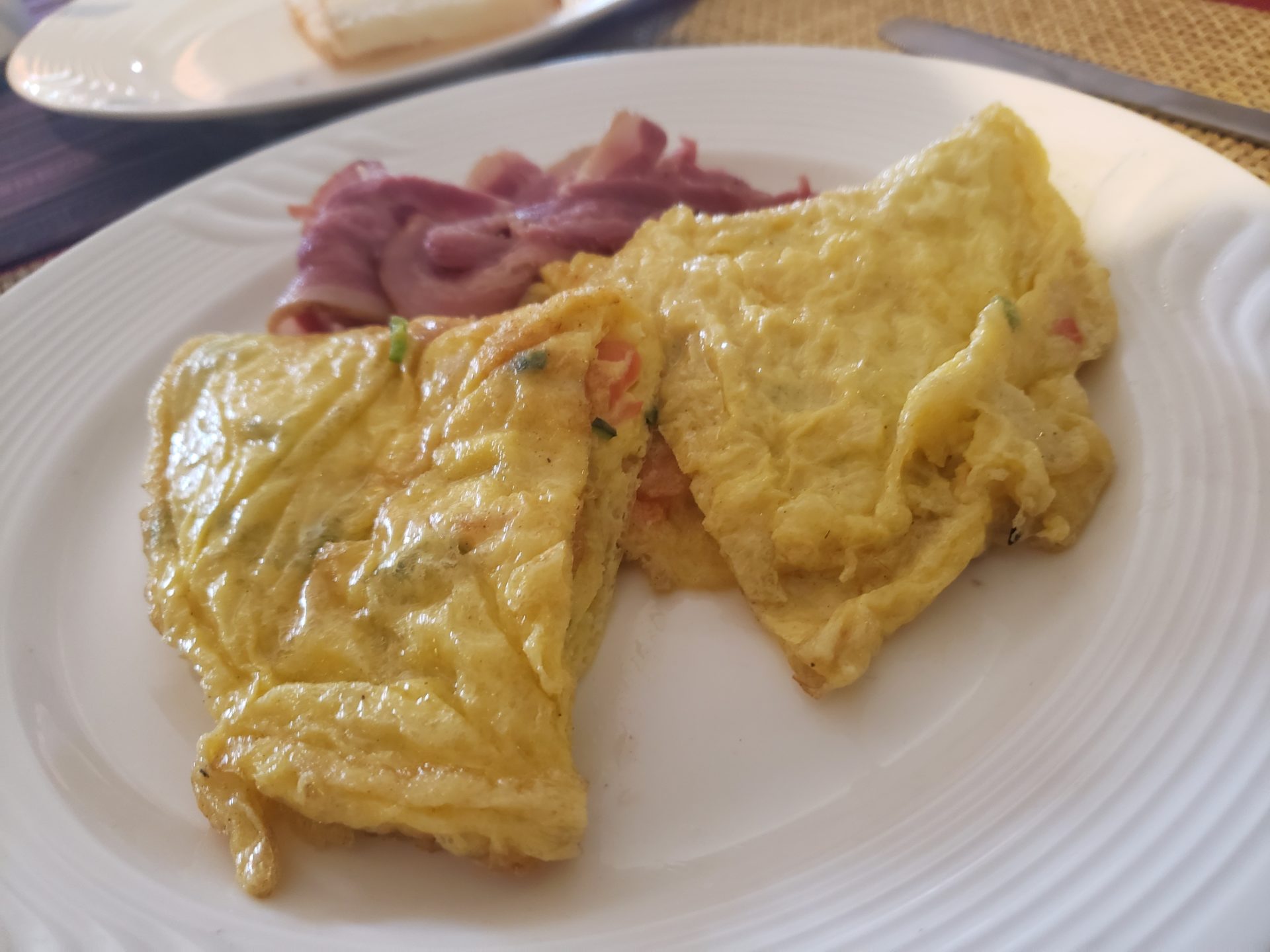
In order to make the trek, I needed sustenance. I ordered a masala omelet that had flavor compared to most hotel/planned meals I ate at hotels this trip.
We began the trek around 7:30AM. At that time, it was very foggy and wet. At that point, I wasn’t fixated on the weather.
Like the Alaska Marathon, I was very excited and started running up the path. My energy was well and my breathing, in spite of a starting altitude of 10,000 feet, was excellent. A few minutes into the trek, I began to feel the after-effects of the chili from the night before (see Day 4) and the masala omelet from the morning. Instantly, I regretted my food choices and began to helplessly and hopelessly dream up solutions. To paraphrase Costanza, I wonder how I could “extricate myself from the proceedings and relieve this unstoppable force.”
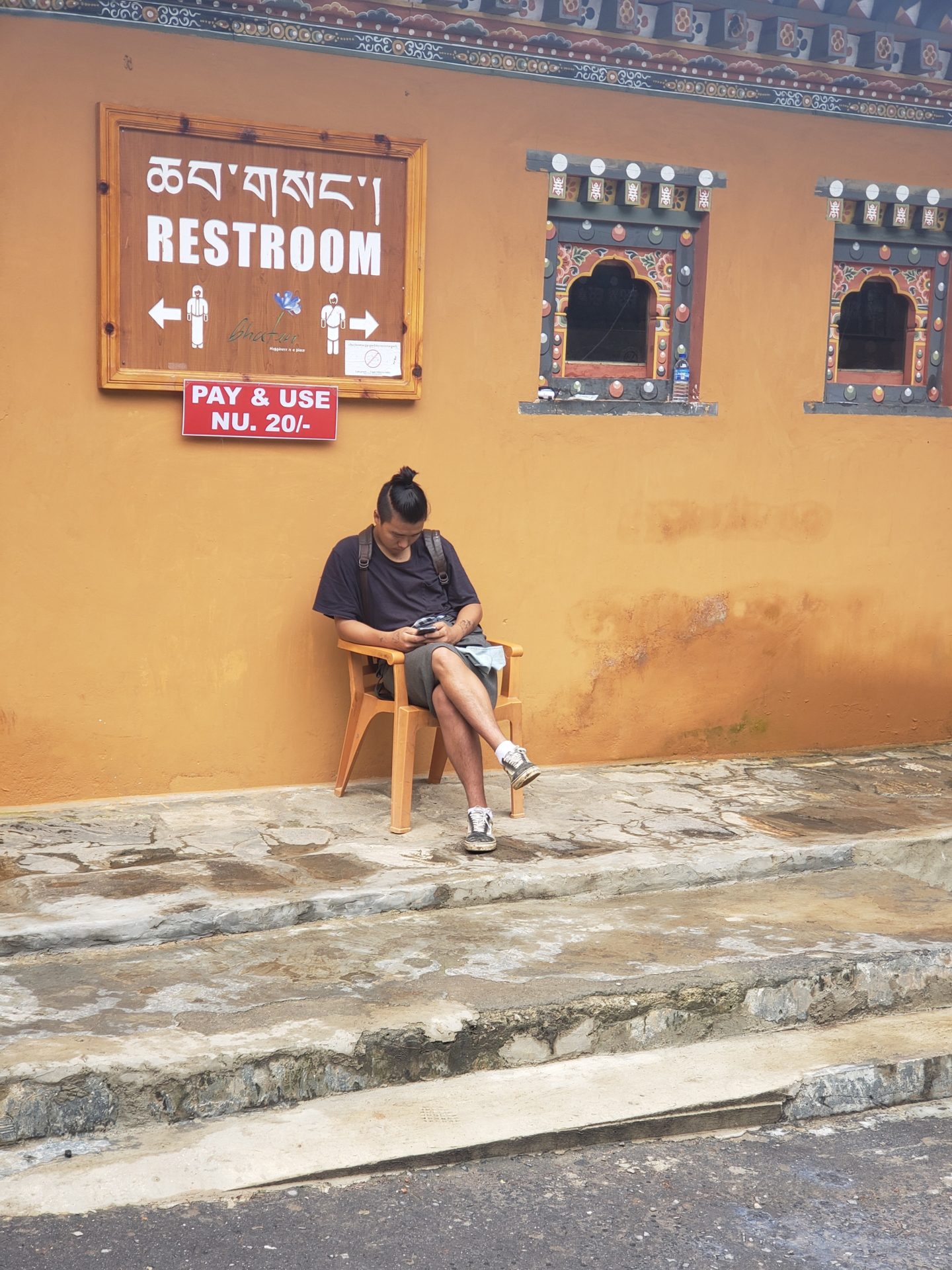
TPOL’S Tigers Nest Bhutan TIPS: Pay for the bathroom and use it to its fullest extent before trekking.
Like the Athens Marathon, I tried to stay mentally strong despite my dire situation. The discomfort would pass and I would resume running. Going faster cut down the time to the halfway point but that proved counterproductive. Much like trying to drive fast when you’re almost out of gas, no joke intended, this strategy only made matters worse.
Having left my guide behind, I didn’t know the best route to take or if I was going the right way.
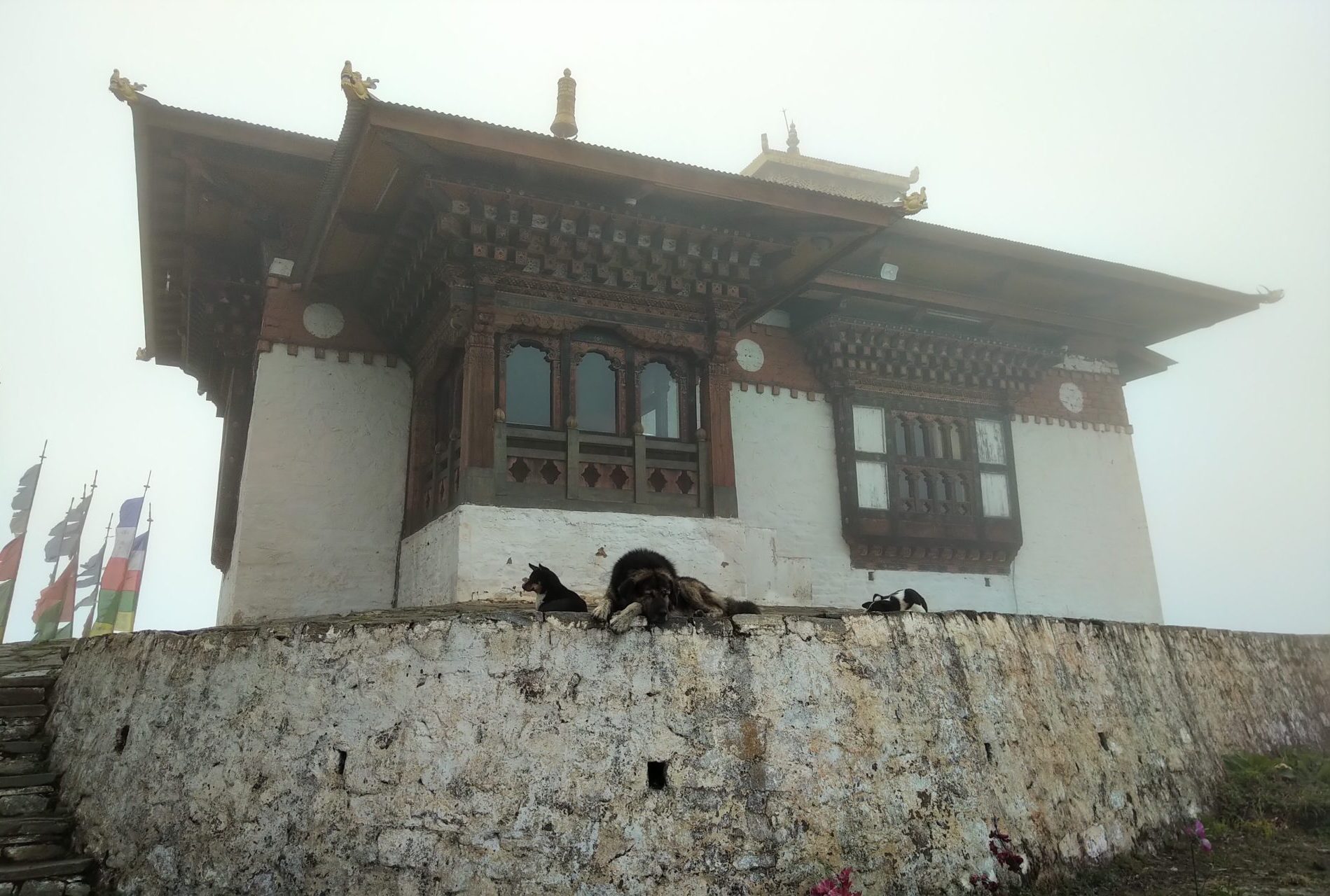
TPOL’s TIP: Follow the dogs, they know the way.
At one point, I was confused. I found myself going up a steep hill on all fours. That probably wasn’t correct but I managed to crawl back to the path.
Halfway Point
After a half-hour, I reached the midpoint.
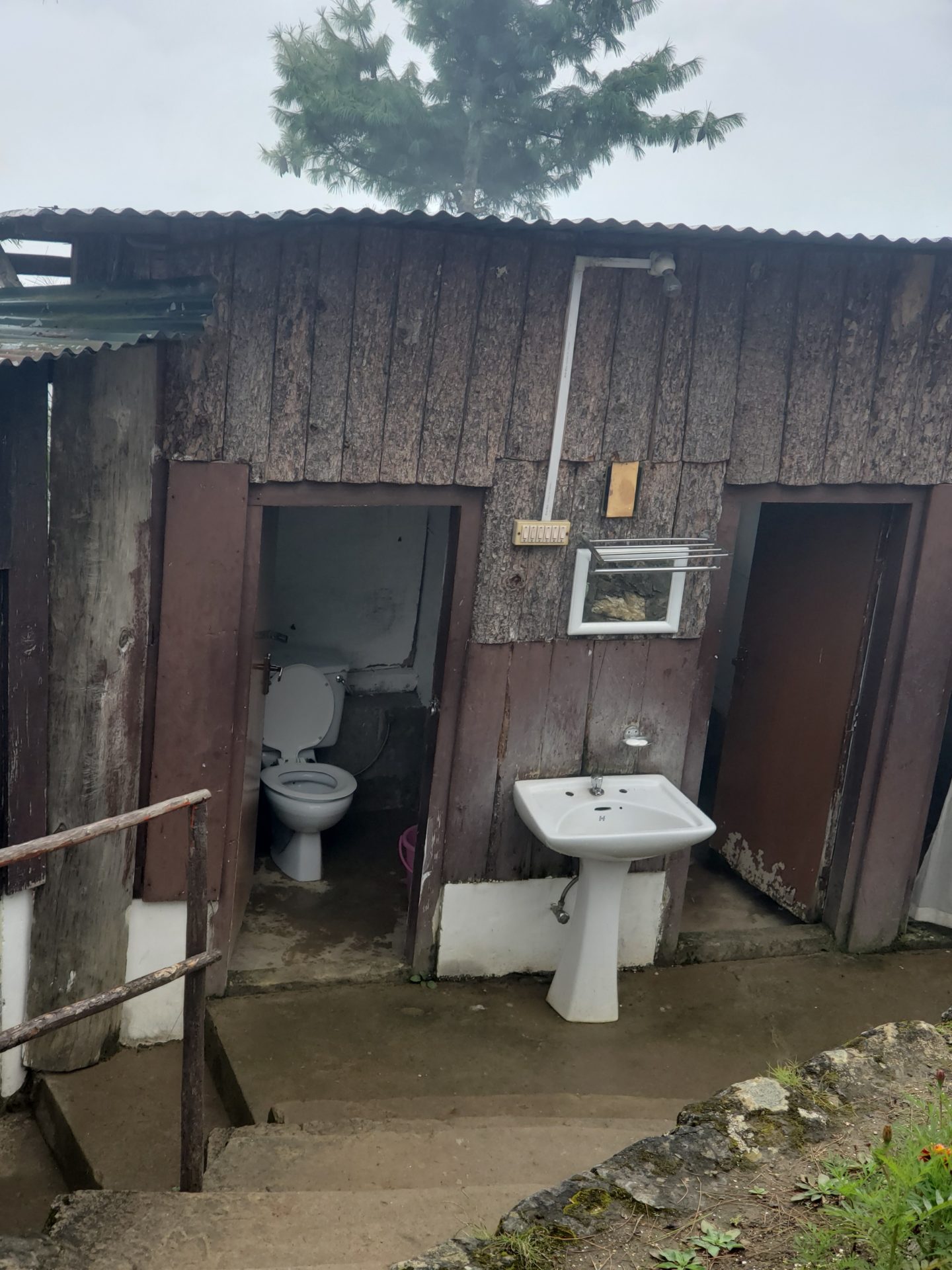
Trainspotting flashed through my head as I gingerly went to use the facilities. There was no charge but I would’ve paid the toll nonetheless.
Happiness
I found happiness. And that’s all I have to say about that.
Second half
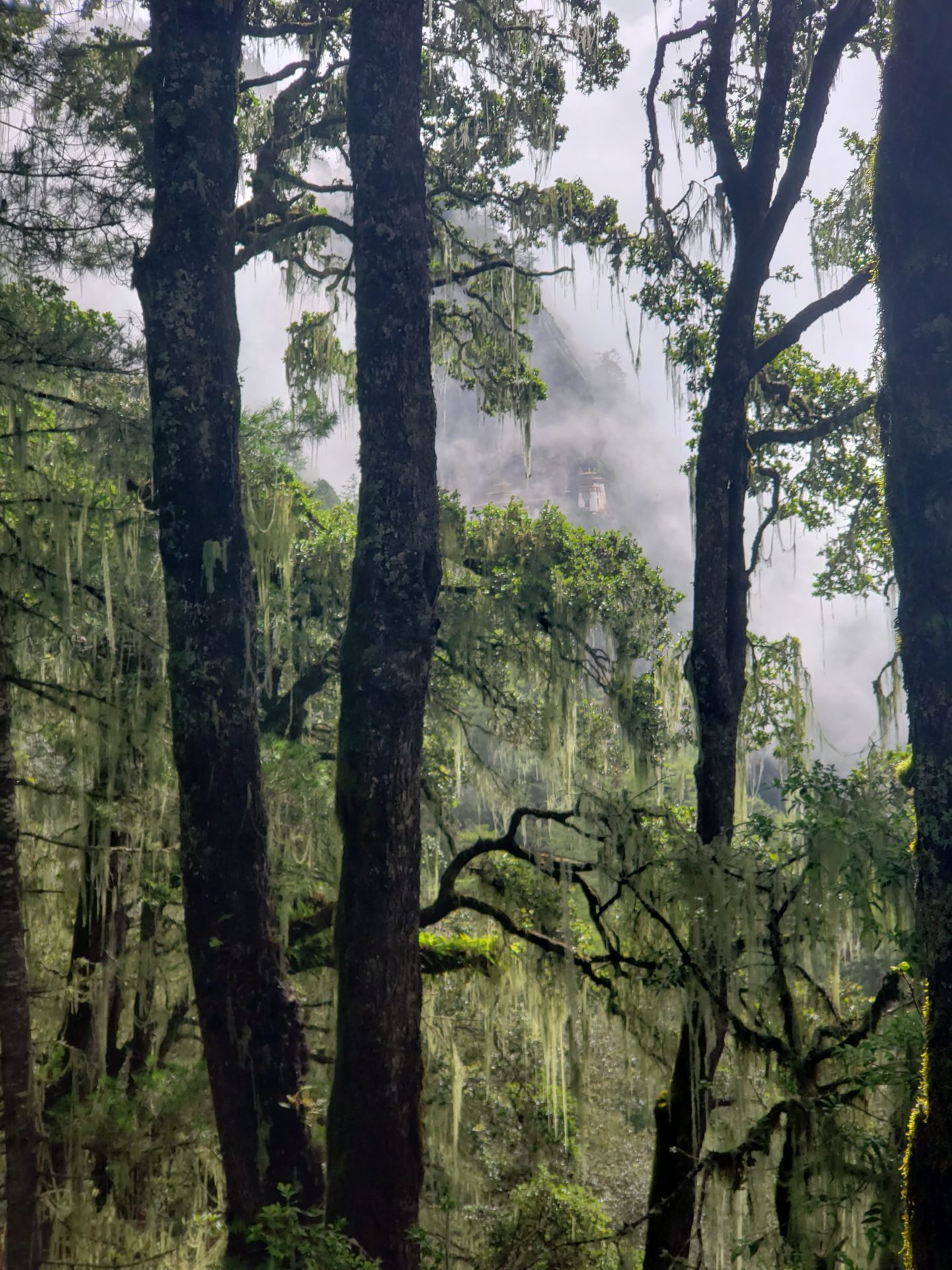
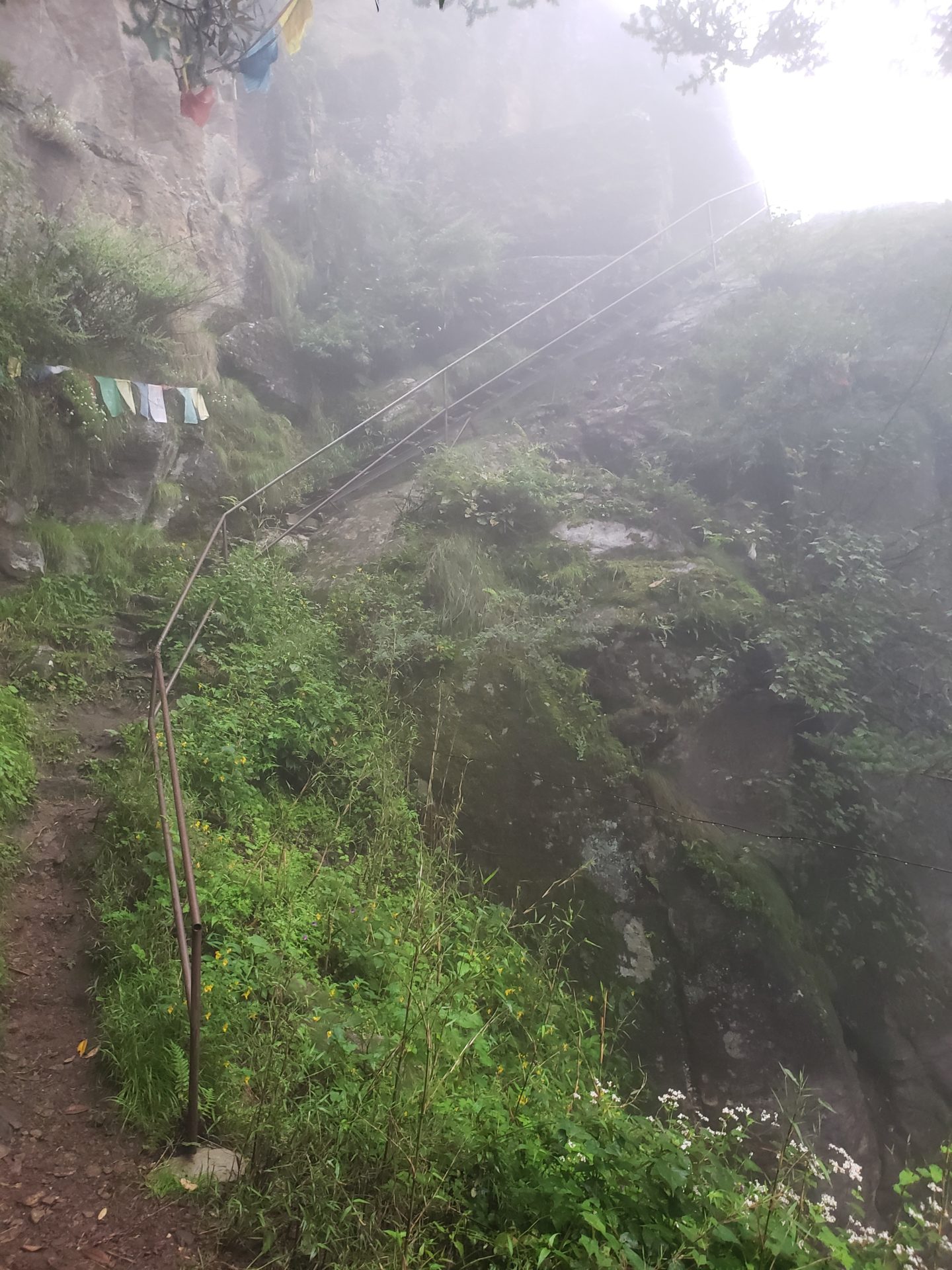
From the cafeteria, trekkers are supposed to be able to see the Tiger’s Nest. With the impenetrable fog, I couldn’t see anything. Light on my feet, I was more focused on the climb than if the sky would clear. Suddenly, the sun came out, and between the trees I was able to catch a glimpse of Tiger’s Nest. Energized, I began to sprint to the temple.
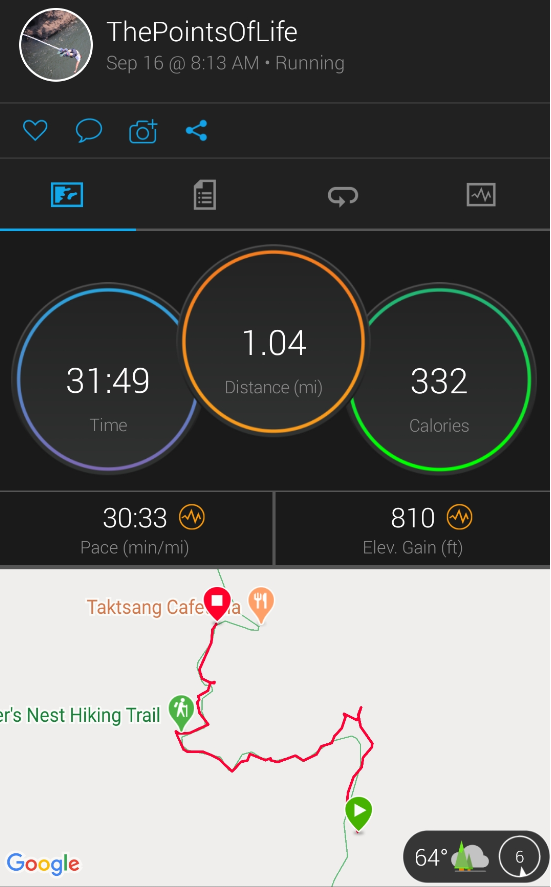
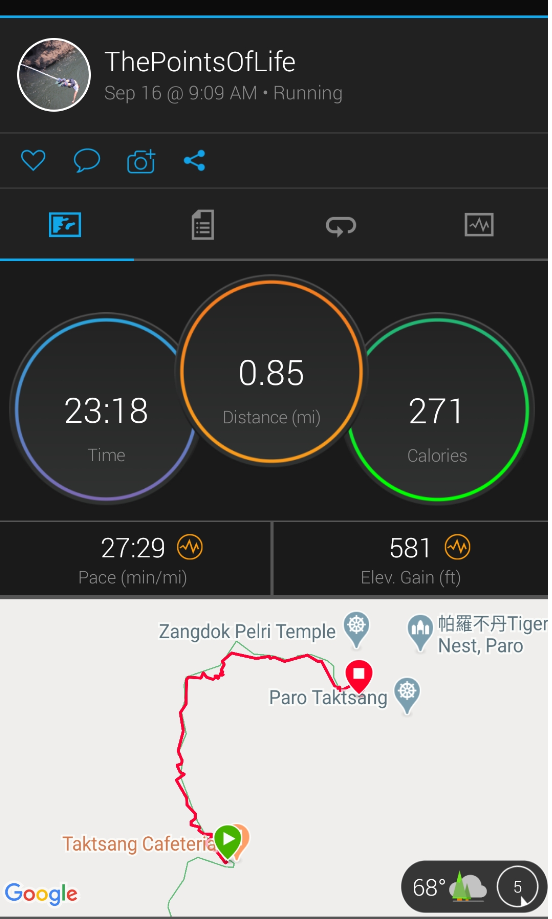
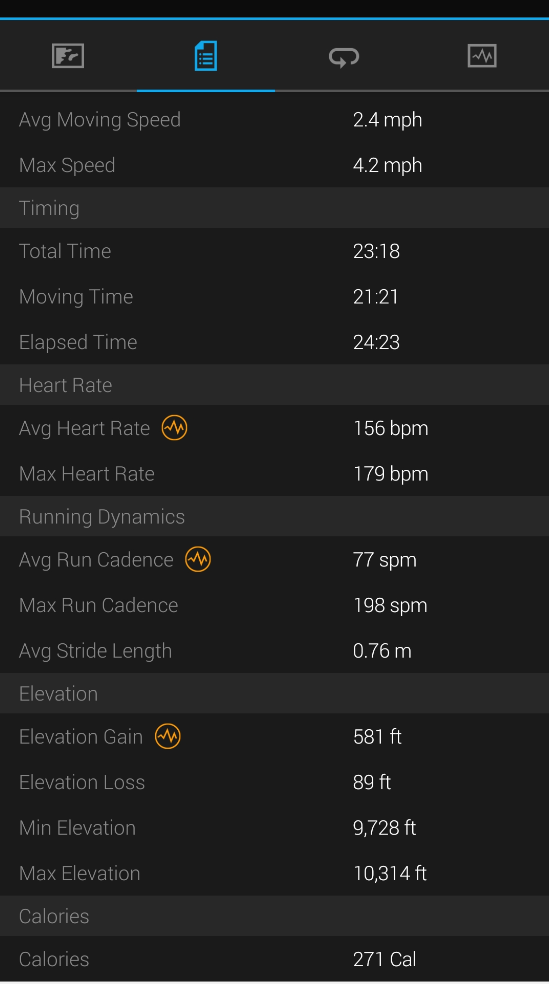
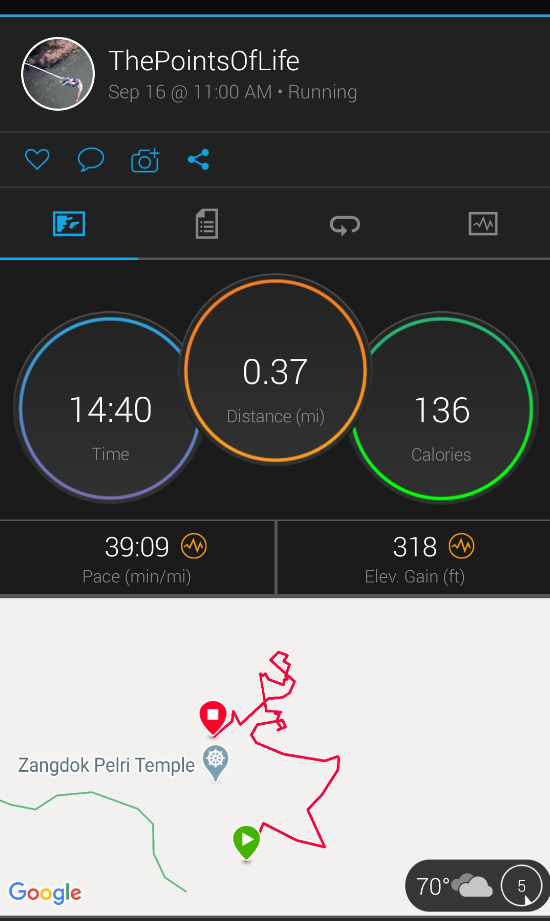
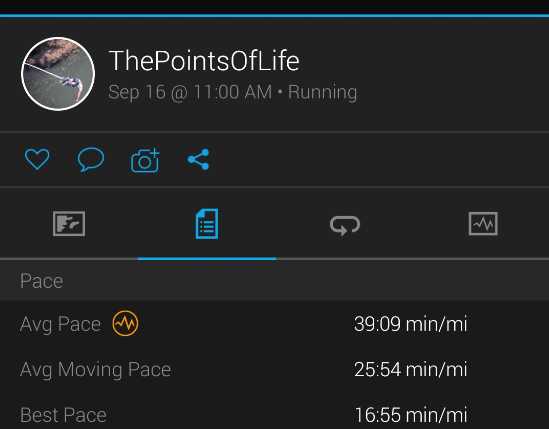
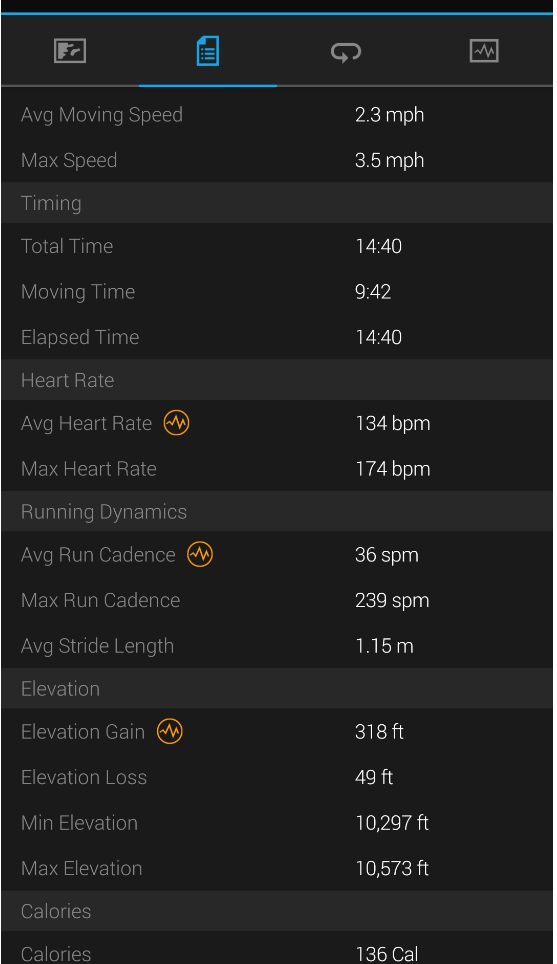
I stopped my Garmin tracker when the trail ended and the stairs began.
By that time, the fog was thicker than ever and my joy turned into despair as I couldn’t see anything. My guide sensed my anxiety and promised me that the sky would clear.
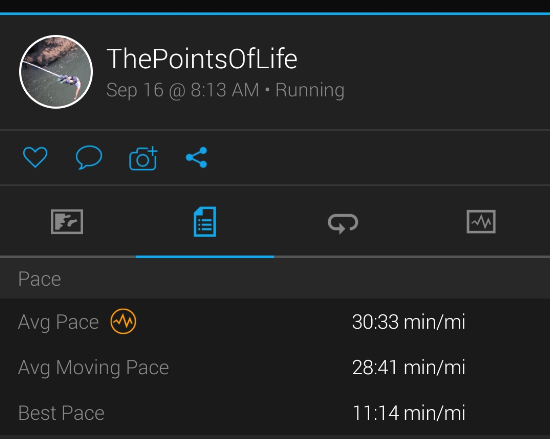
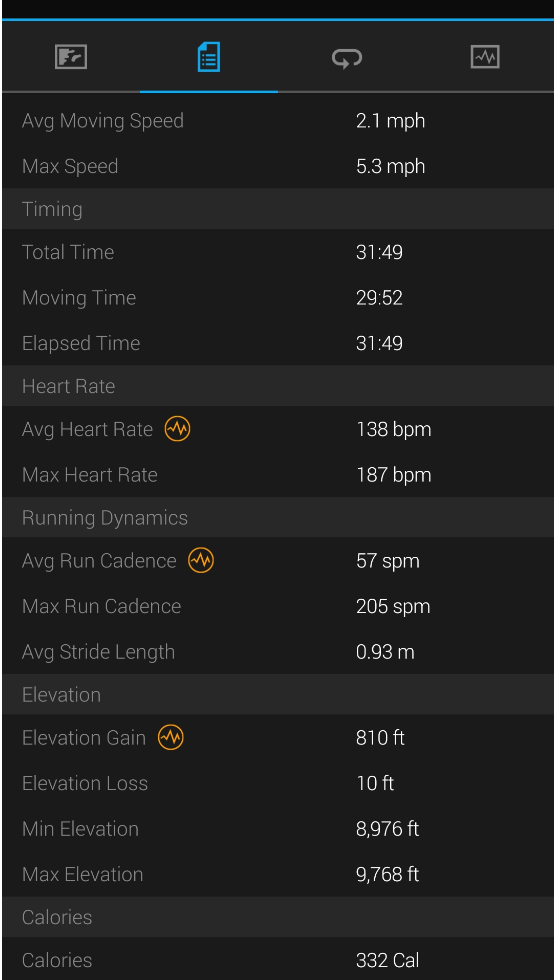
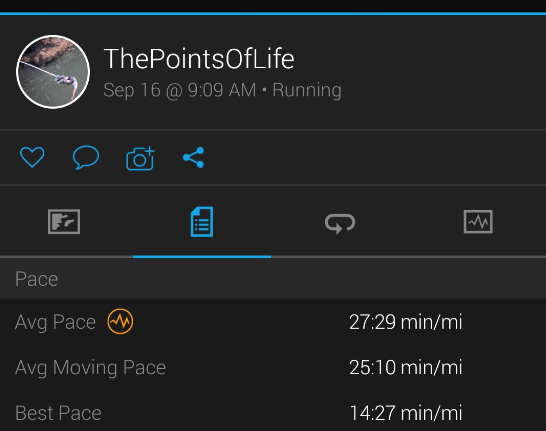
TPOL’s TIP: The trek to Tiger’s Nest is not difficult. It took less than 1 hour to reach it (minus emergency).
The Tiger’s Nest Story
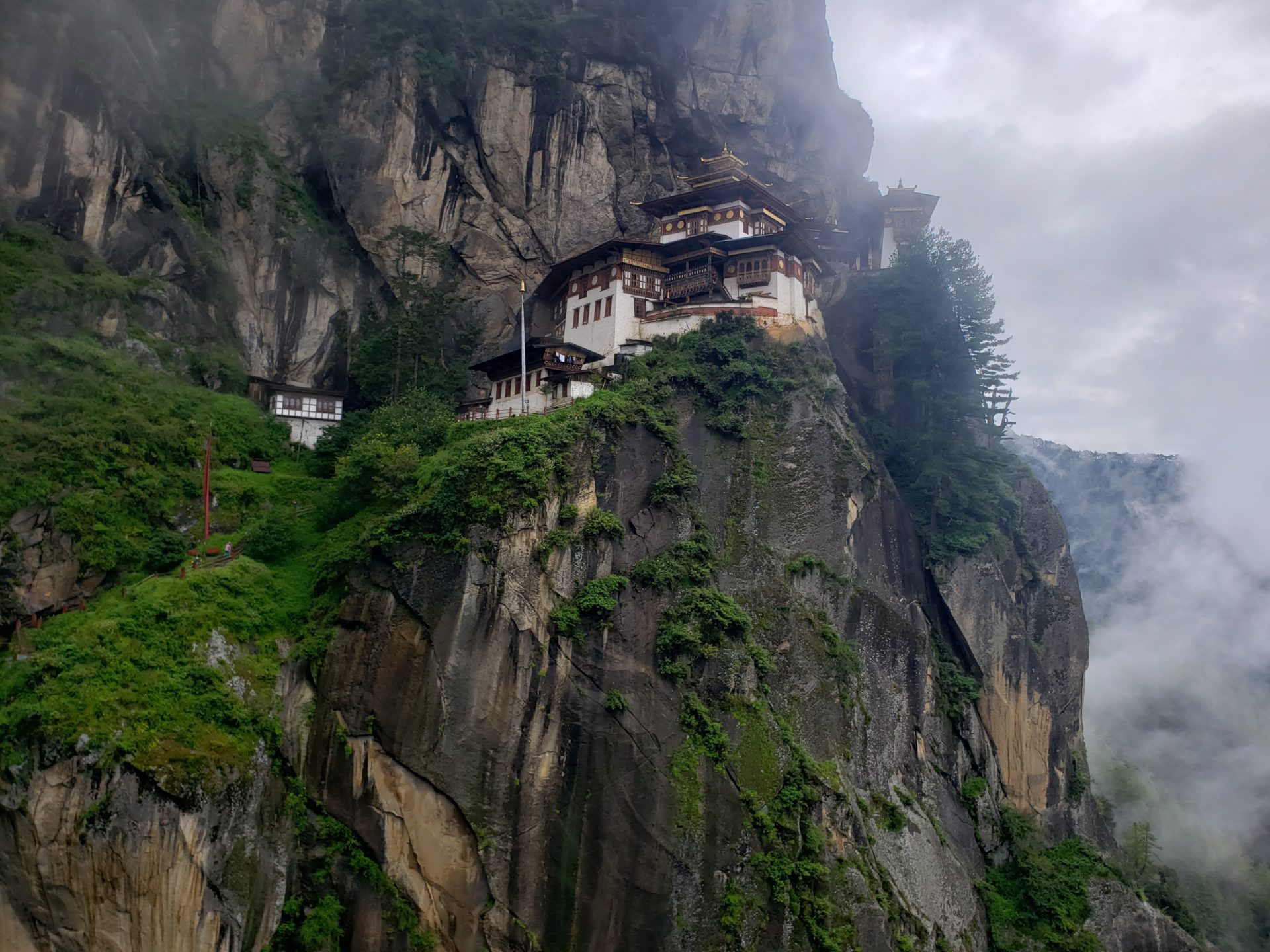
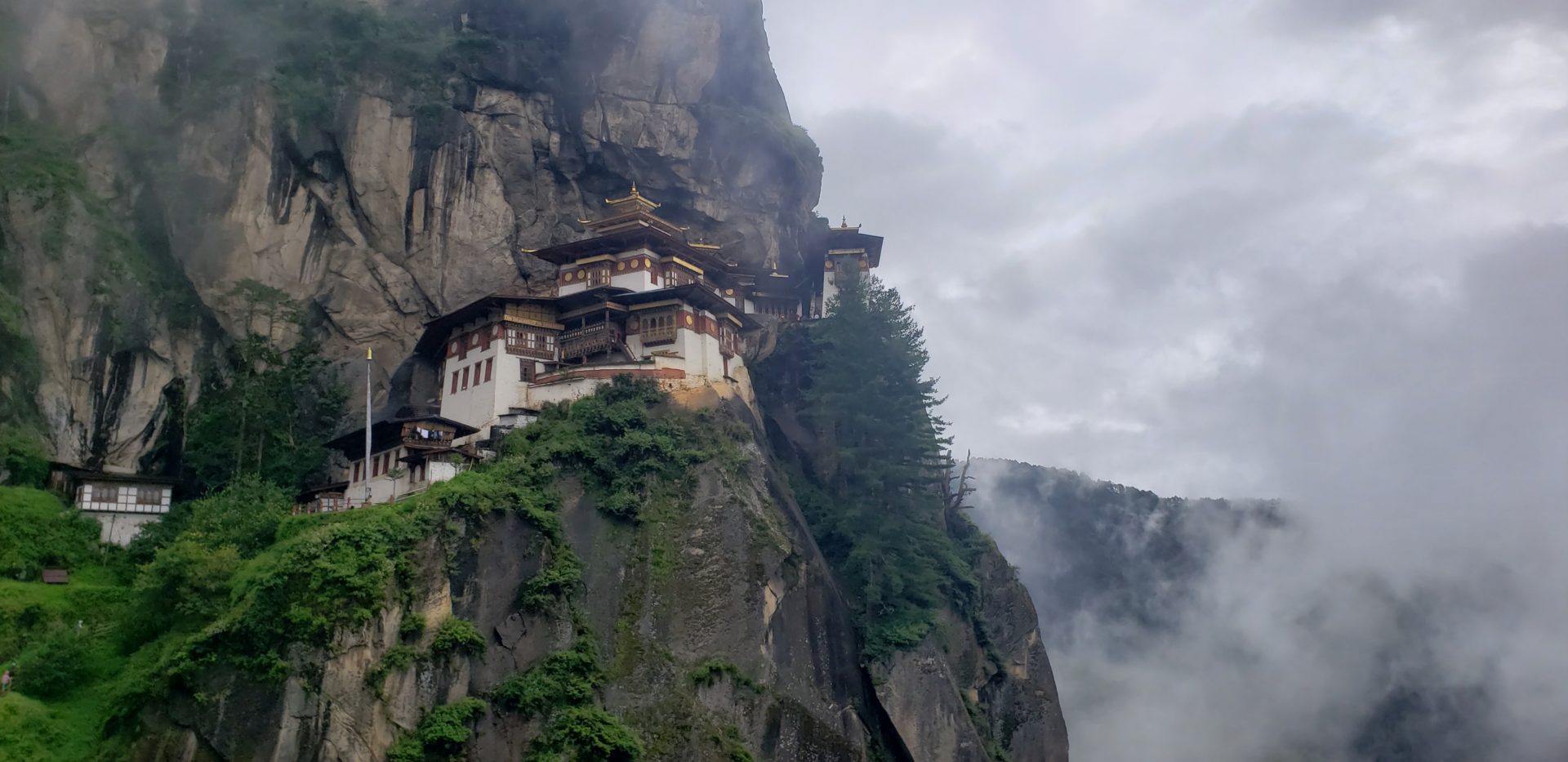
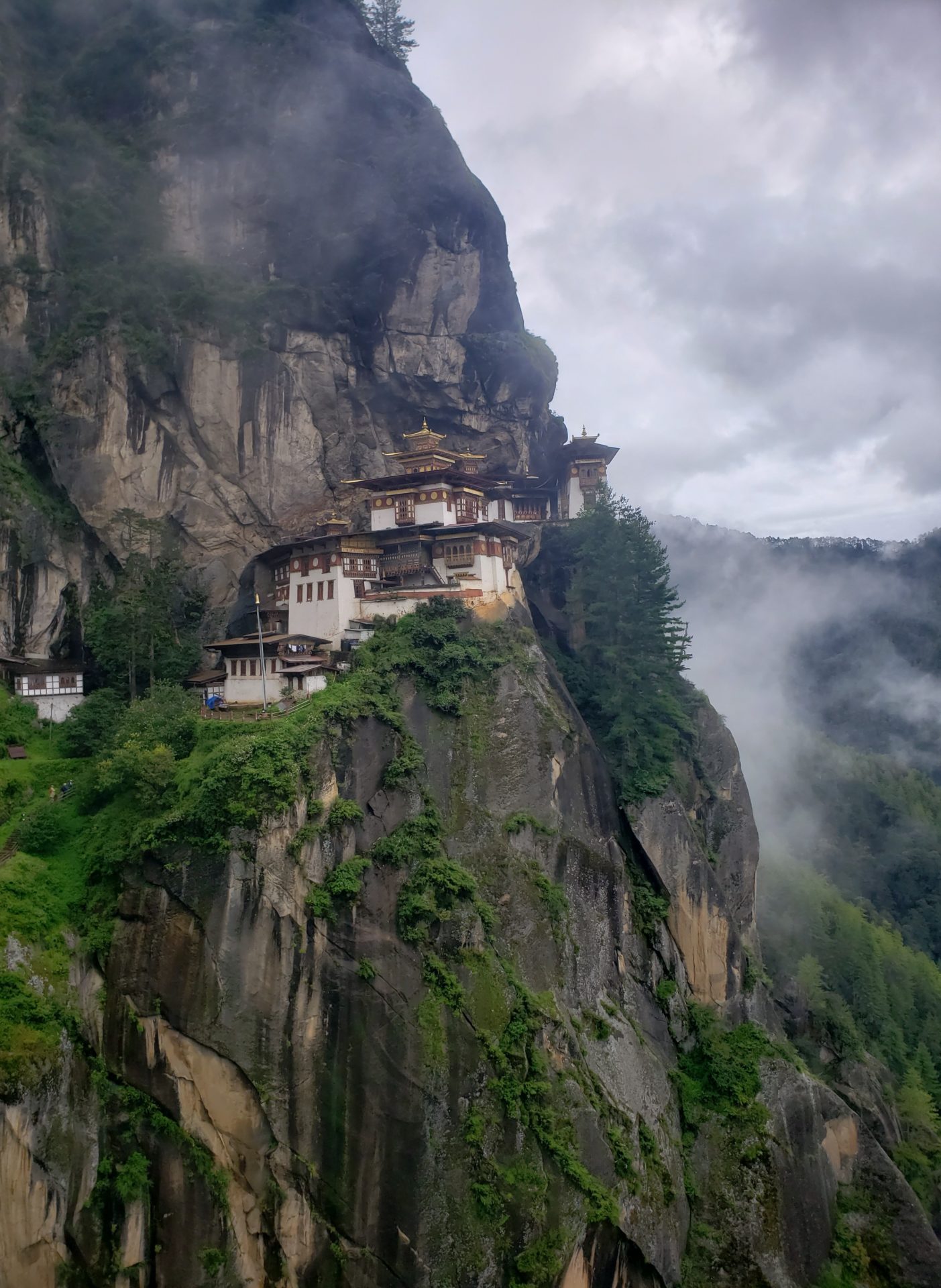
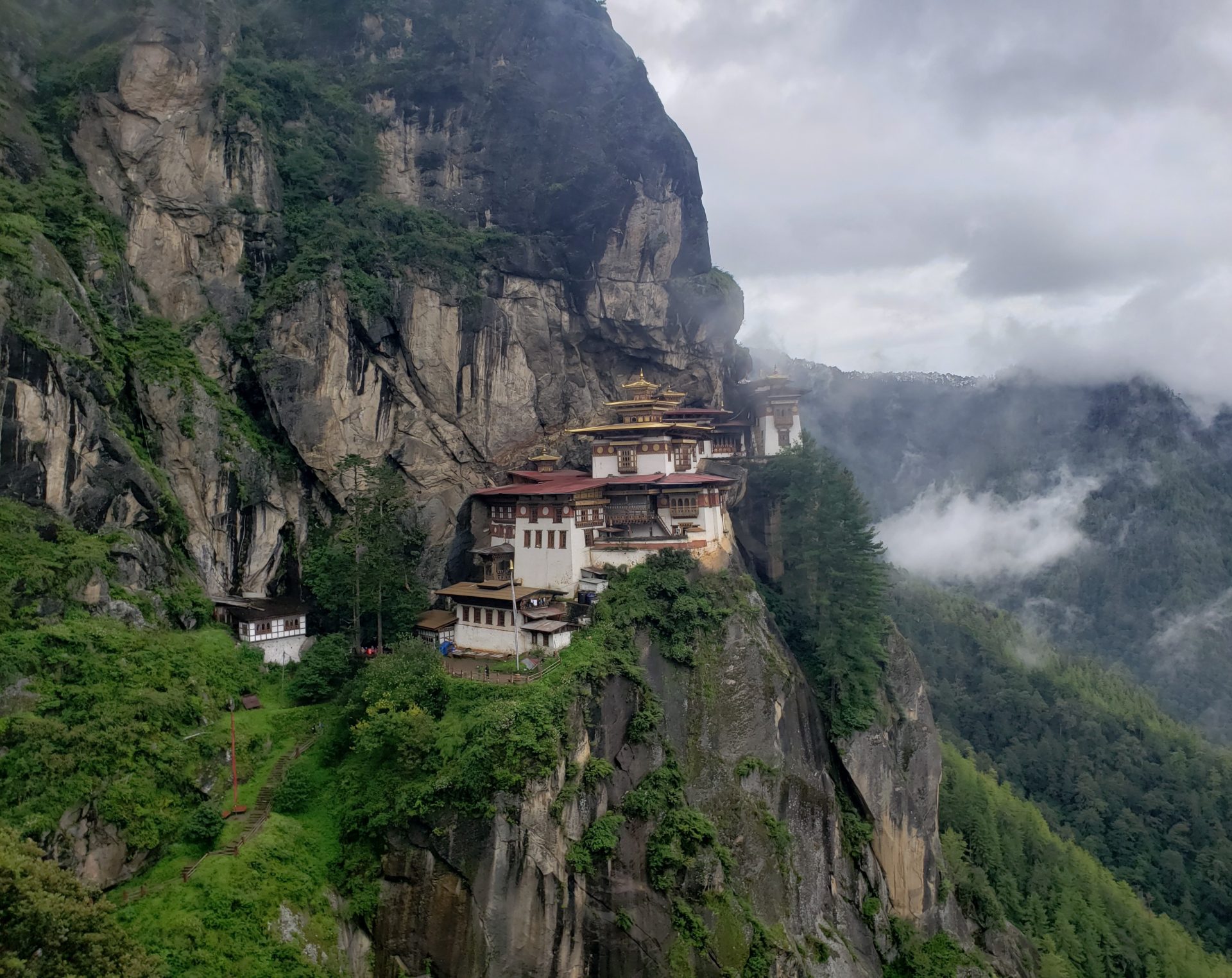
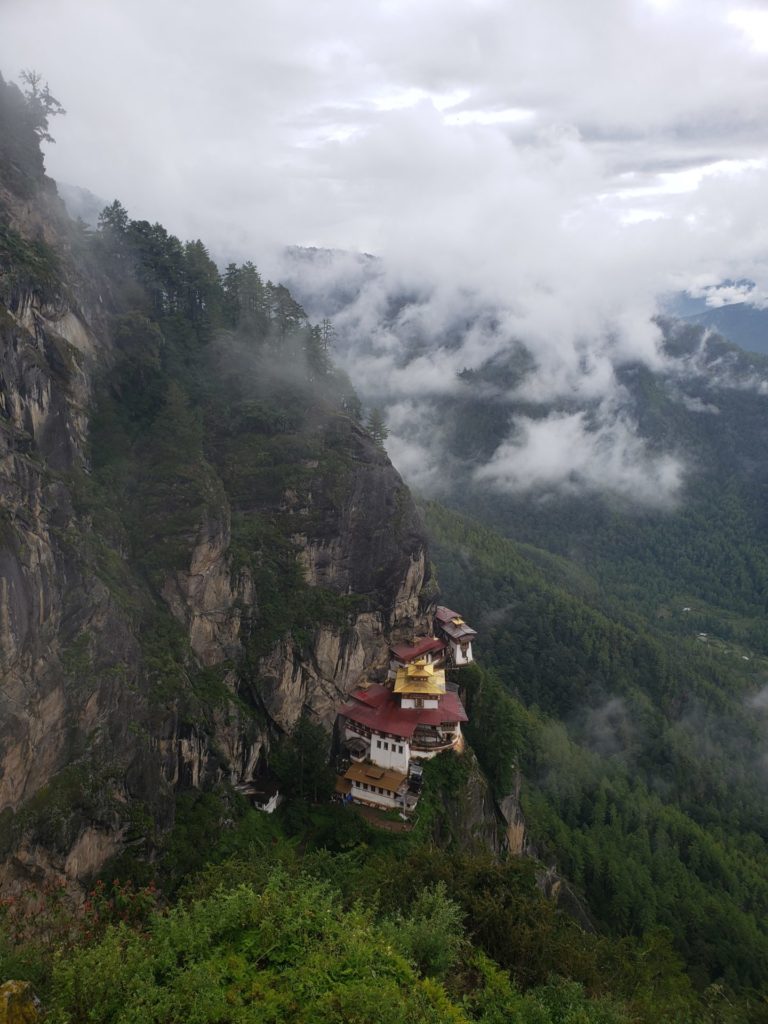
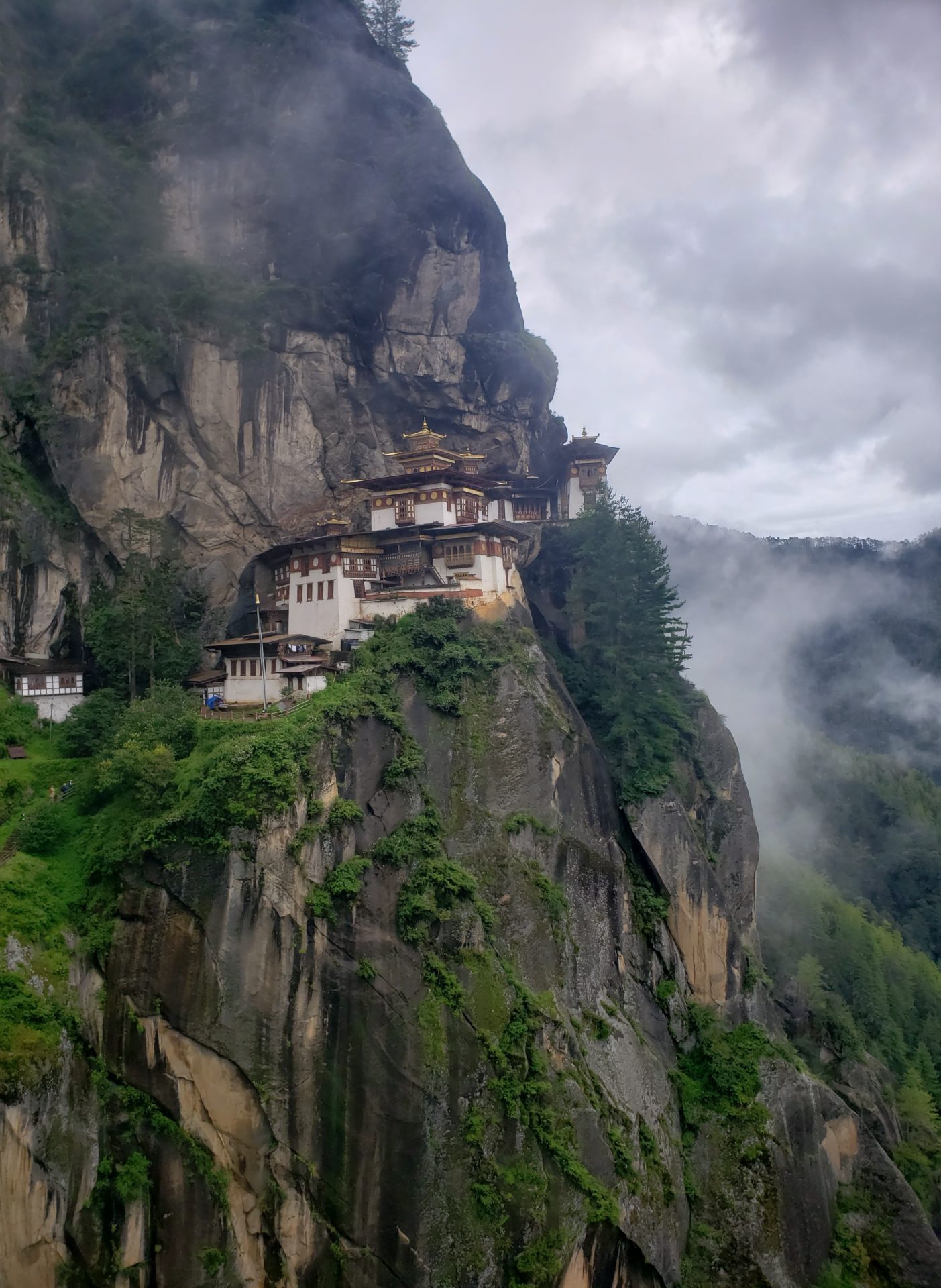
Don’t rely on me for the full story of the Tiger’s Nest, but from what I learned Padmasambhava, who brought Buddhism to Bhutan, flew to this perch on the back of a tiger. There’s also a cave that is only open one month a year. Only the distinguished monks can enter.
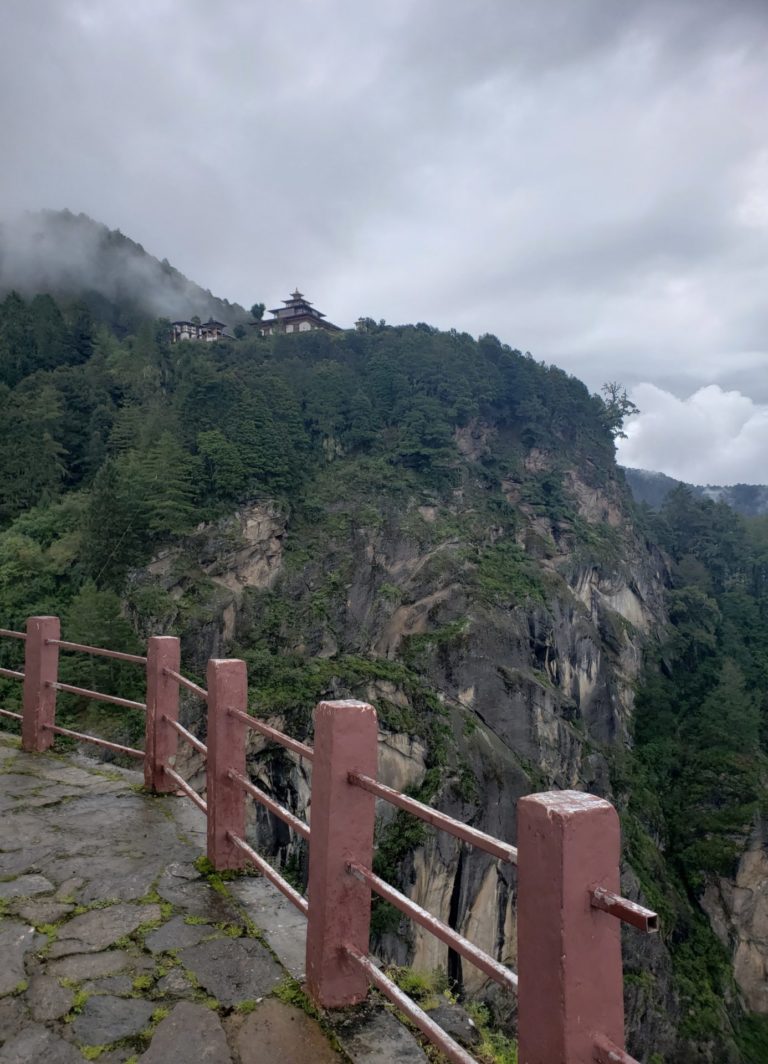
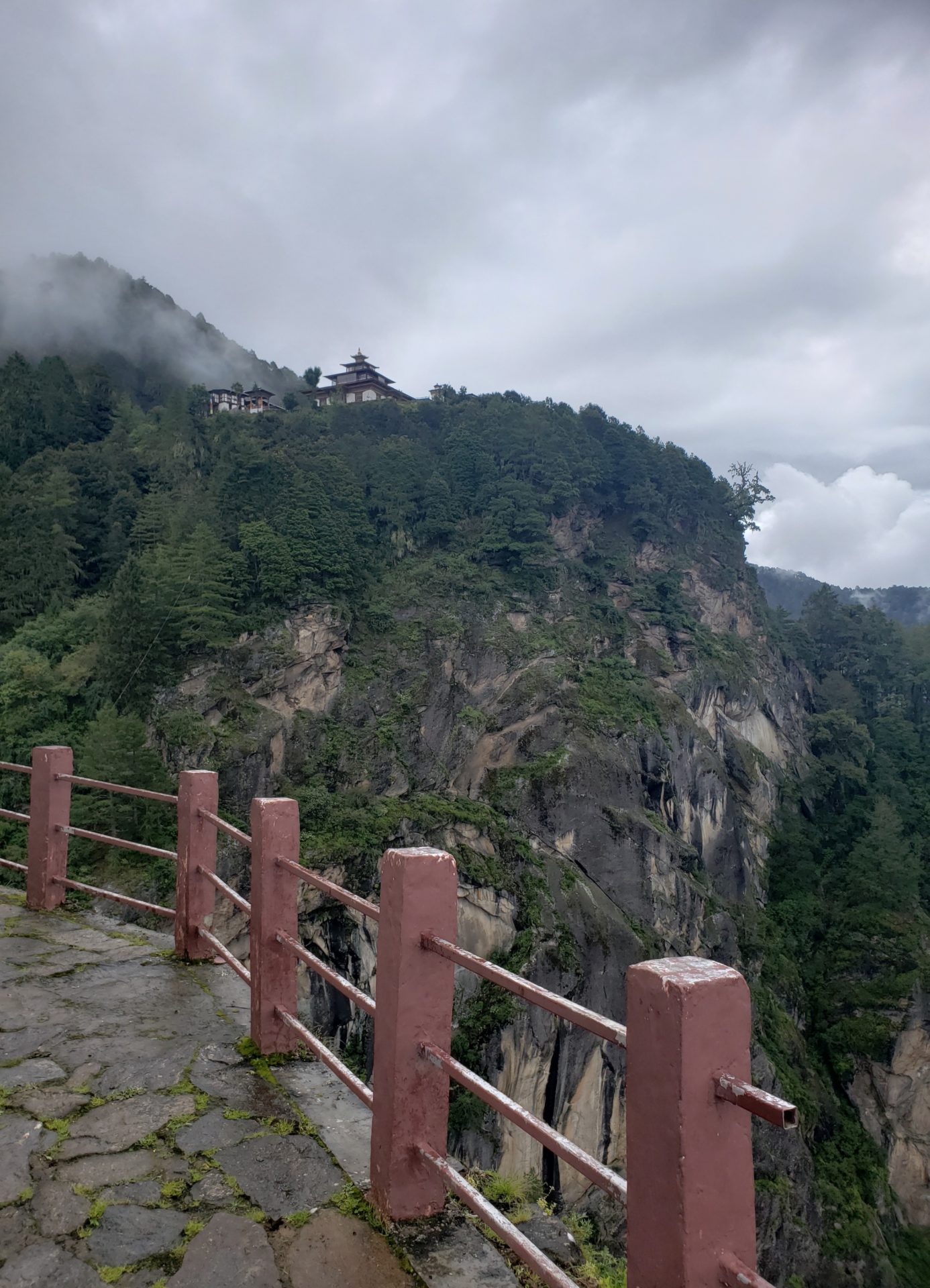
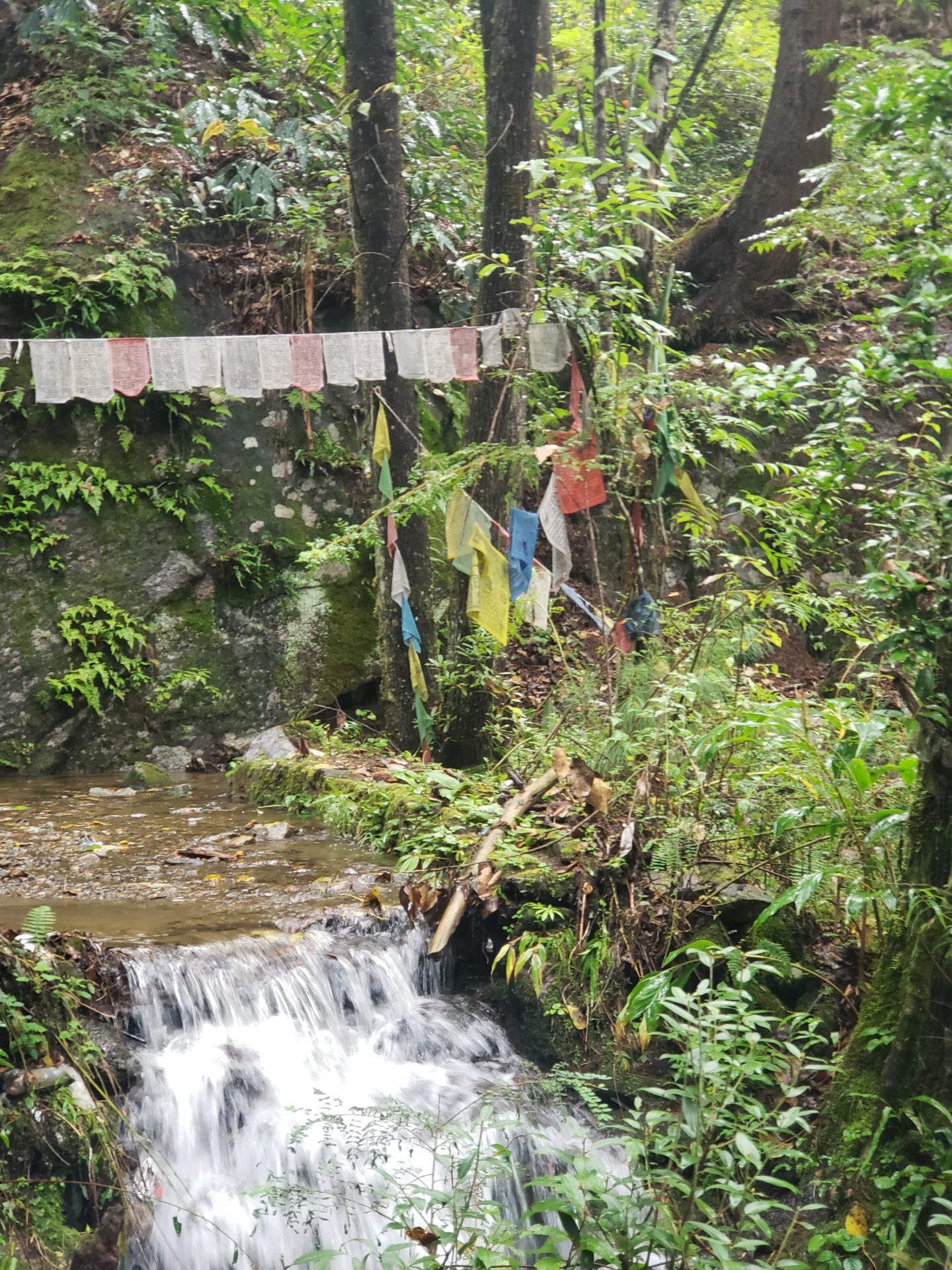
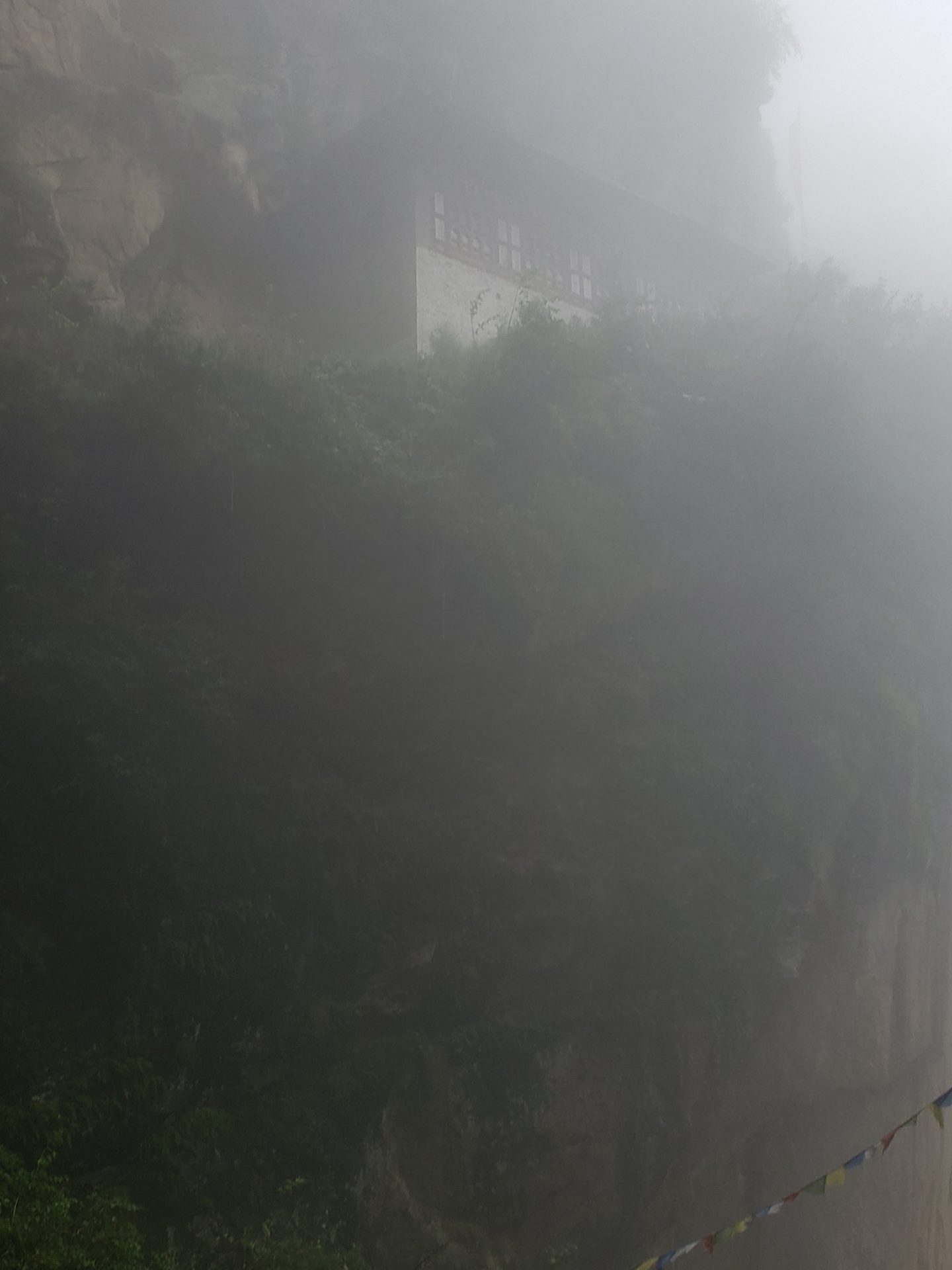
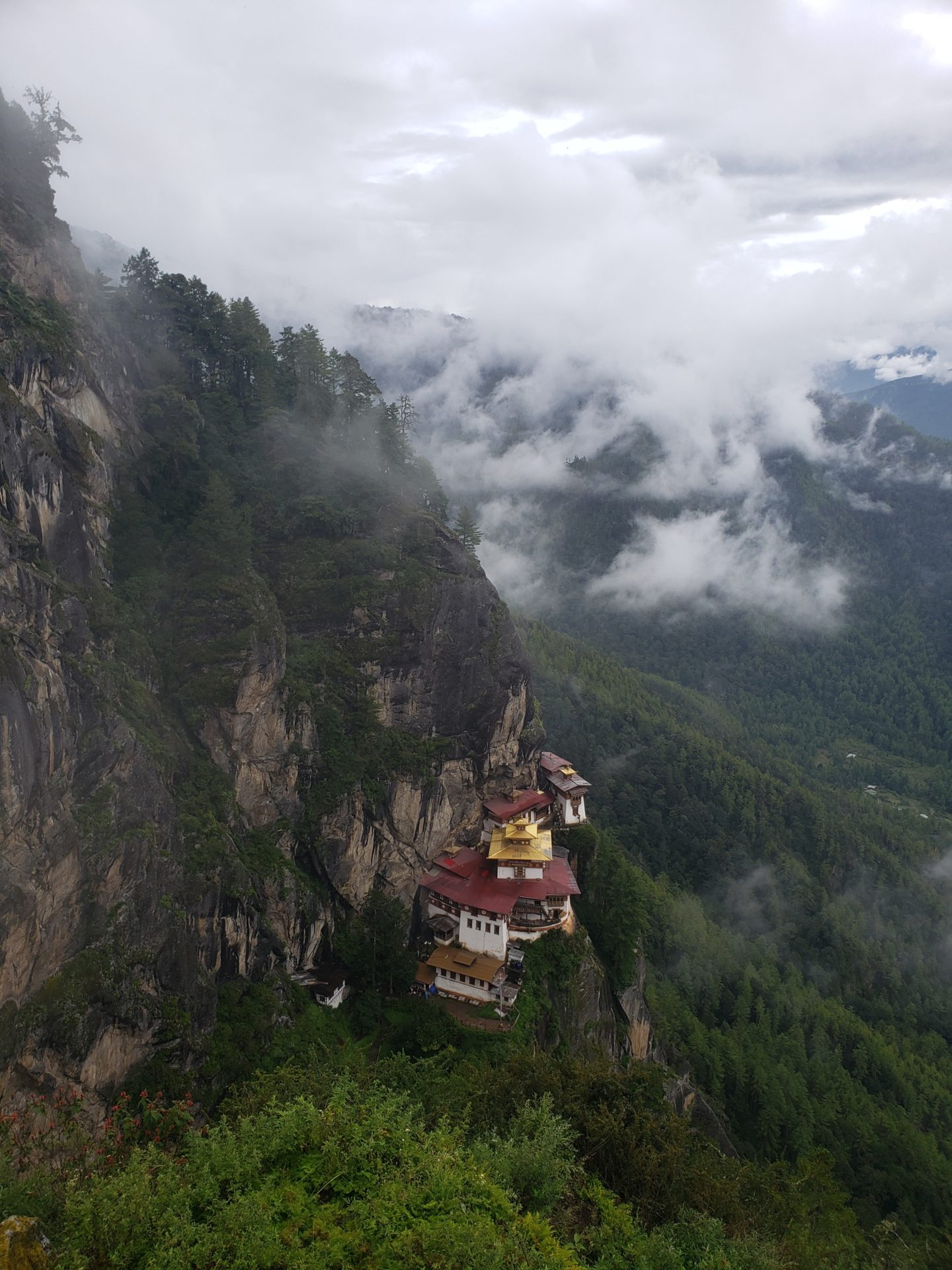
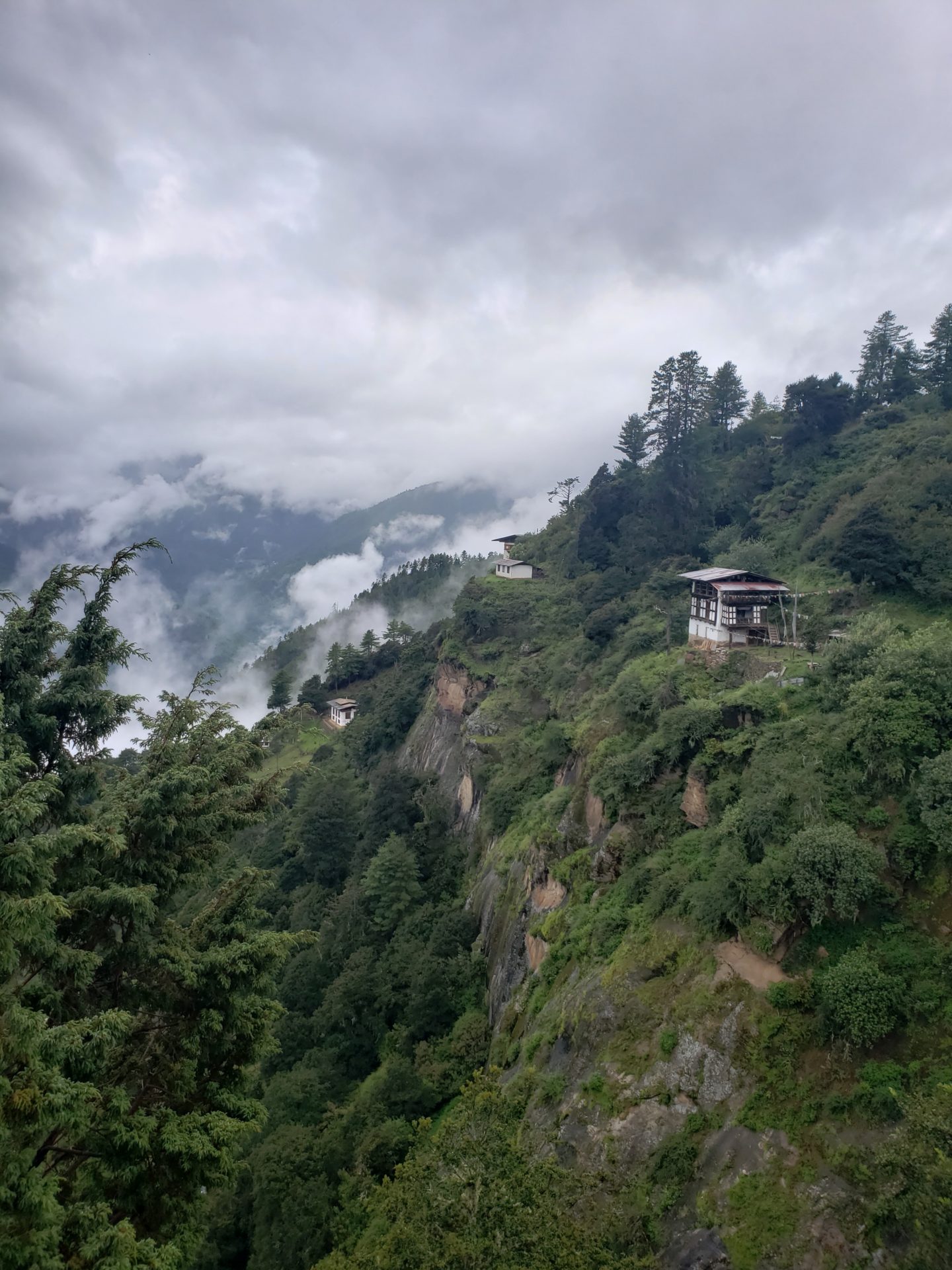
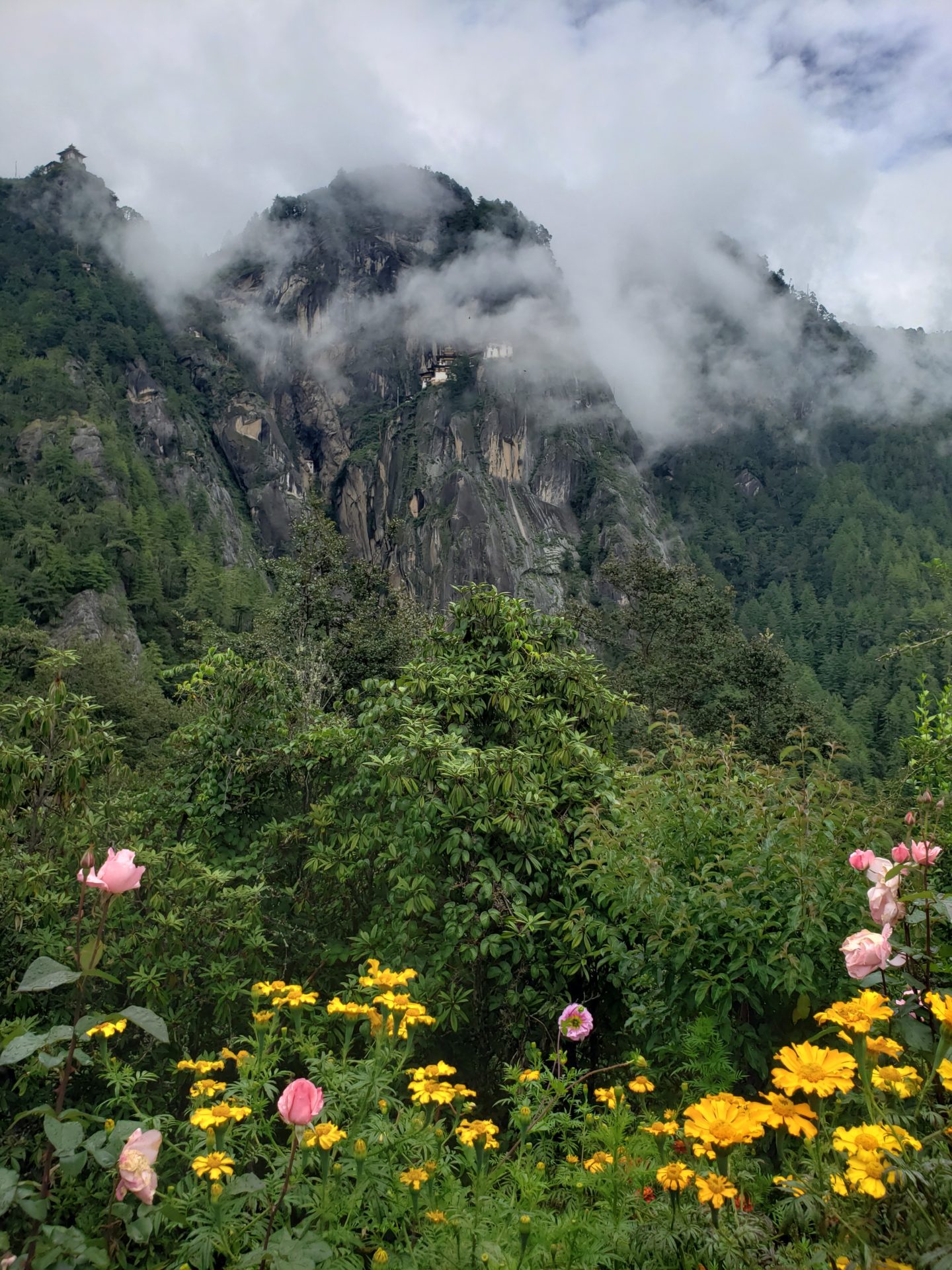
As we were completing our tour of the temples, as promised, the fog began to clear. Giddy, I asked my guide what the structure was even higher than the Tiger’s Nest. He made the mistake of asking if I wanted to climb up there. I said absolutely and he looked as distraught as I did when I thought the fog would ruin my adventure. Trying to discourage me or perhaps trying to save me from disappointment, he said it would be too foggy to see anything from that high. I insisted that we go. Heading there, I stopped at lookout points and took fantastic photos of the Tiger’s Nest.
Top
At the top, it was very foggy. Nonetheless, I was proud of the effort it took to reach this point. It was a much harder and much steeper ascent.
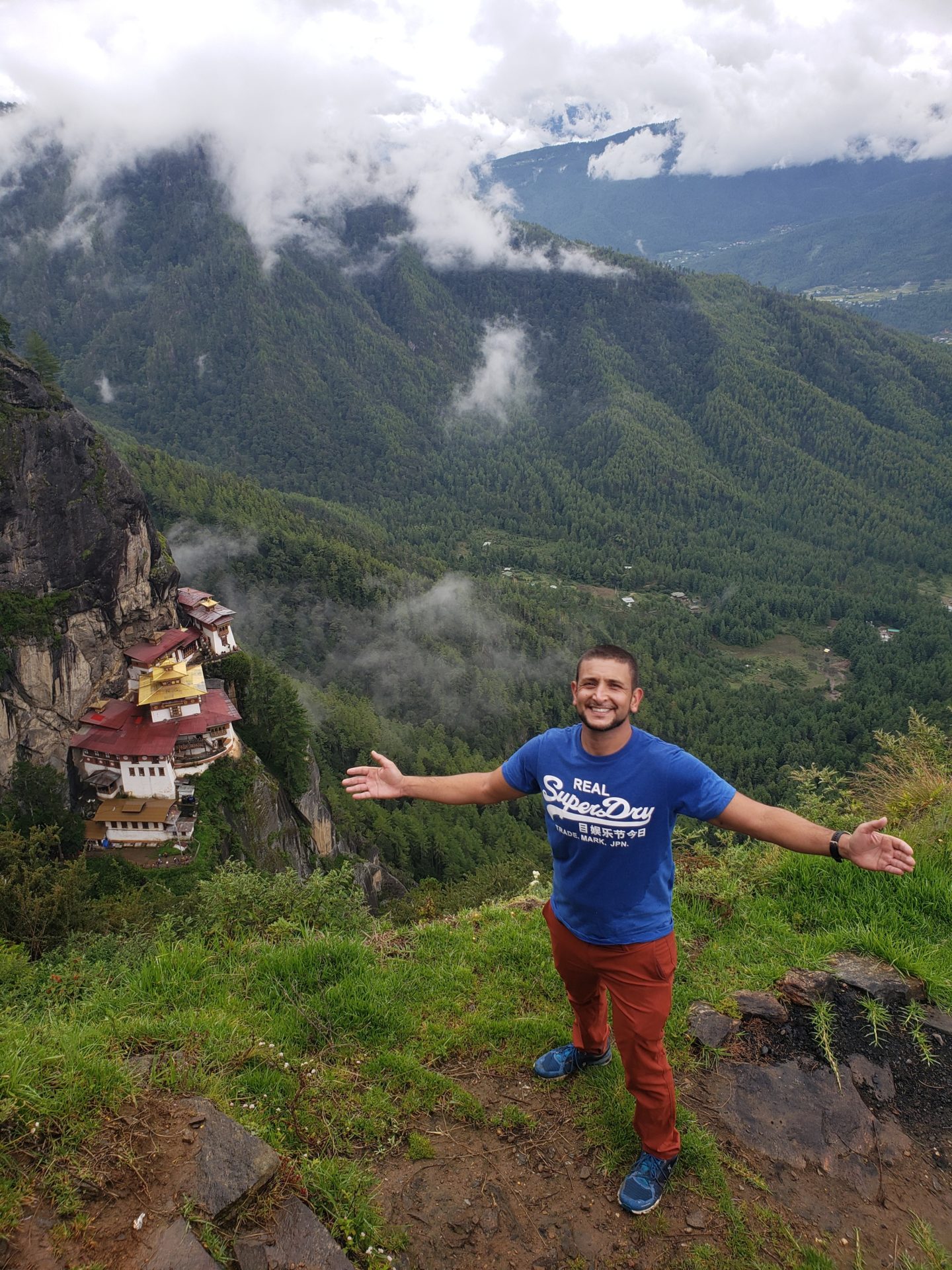
After catching my breath, we went to the ledge (see Beware of Selfie Death!) to see if we could see Tiger’s Nest. Here’s what I found:
Pushing myself and pushing my guide to go beyond what most people do was well worth it.
TPOL’s TIP: Demand to go here!
Descent
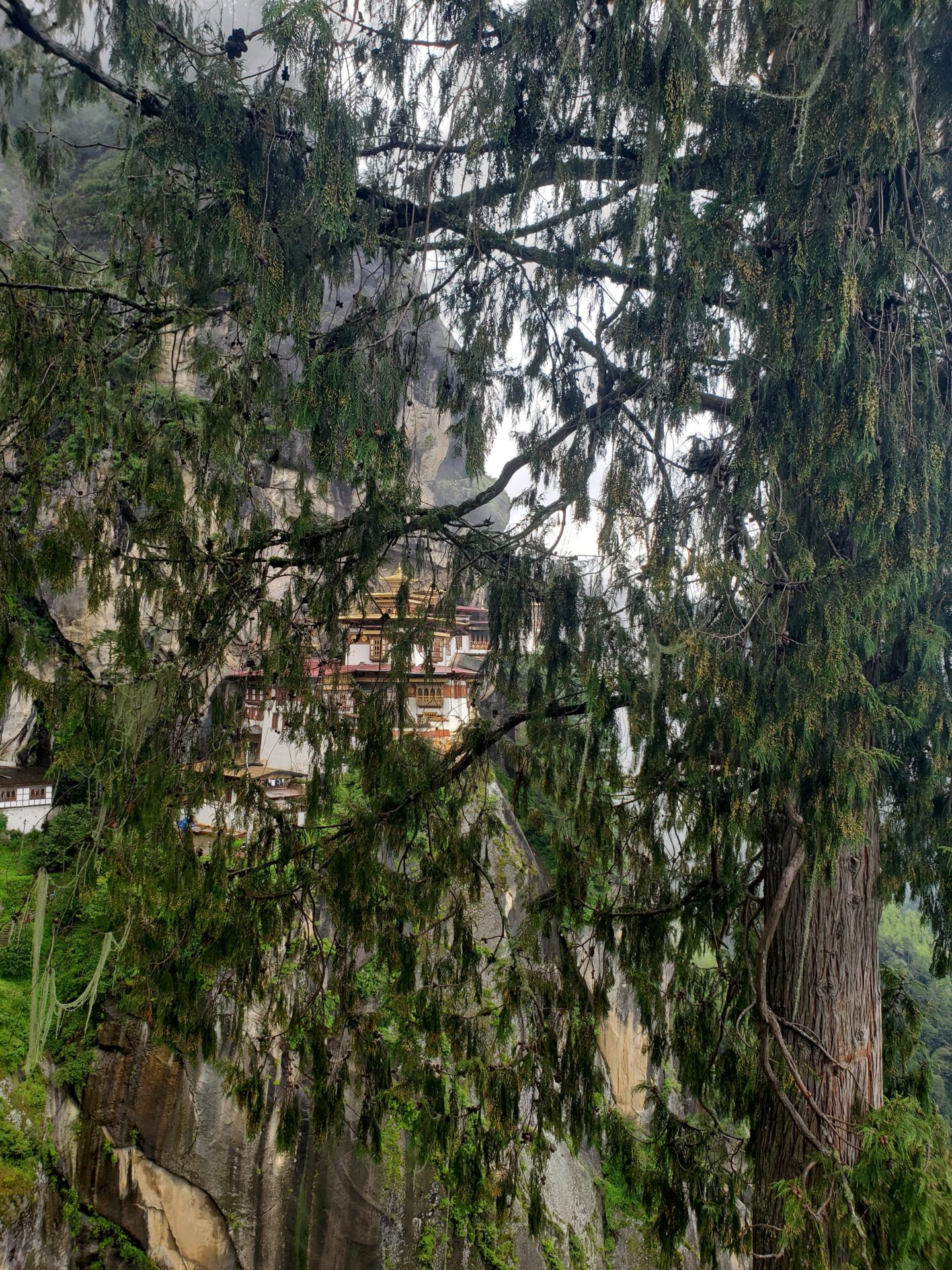
On the way to the halfway point, I couldn’t help but sprint. It was runner’s high meet adventurer’s high. Earlier, I had accepted my fate that seeing Tiger’s Nest was not to be. I tried to rationalize that the view through the trees was sufficient because it made the place look mythical. Now, I had seen it all.
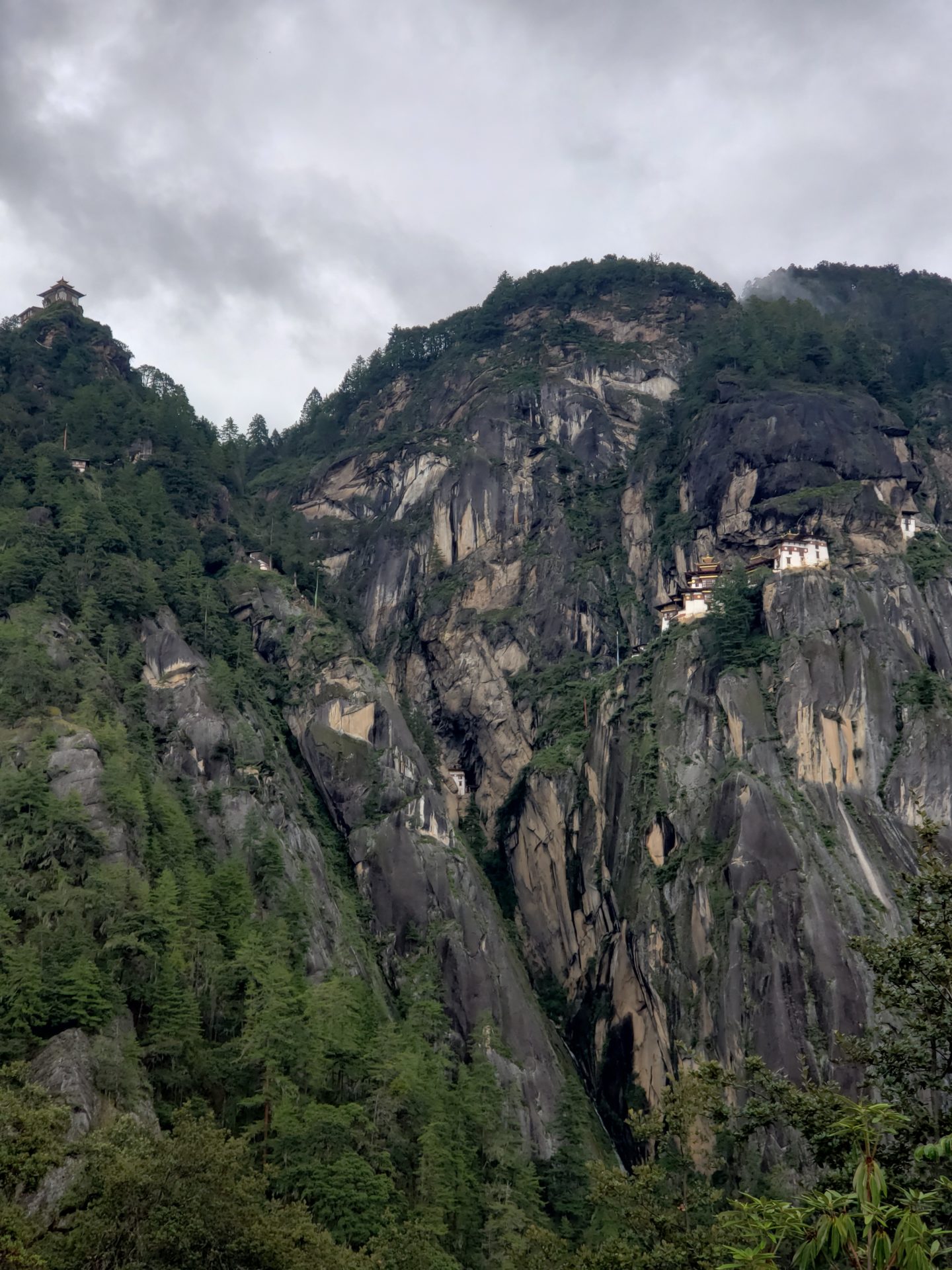
The second summit on the left, the Tiger’s Nest lower on the right.
Lunch
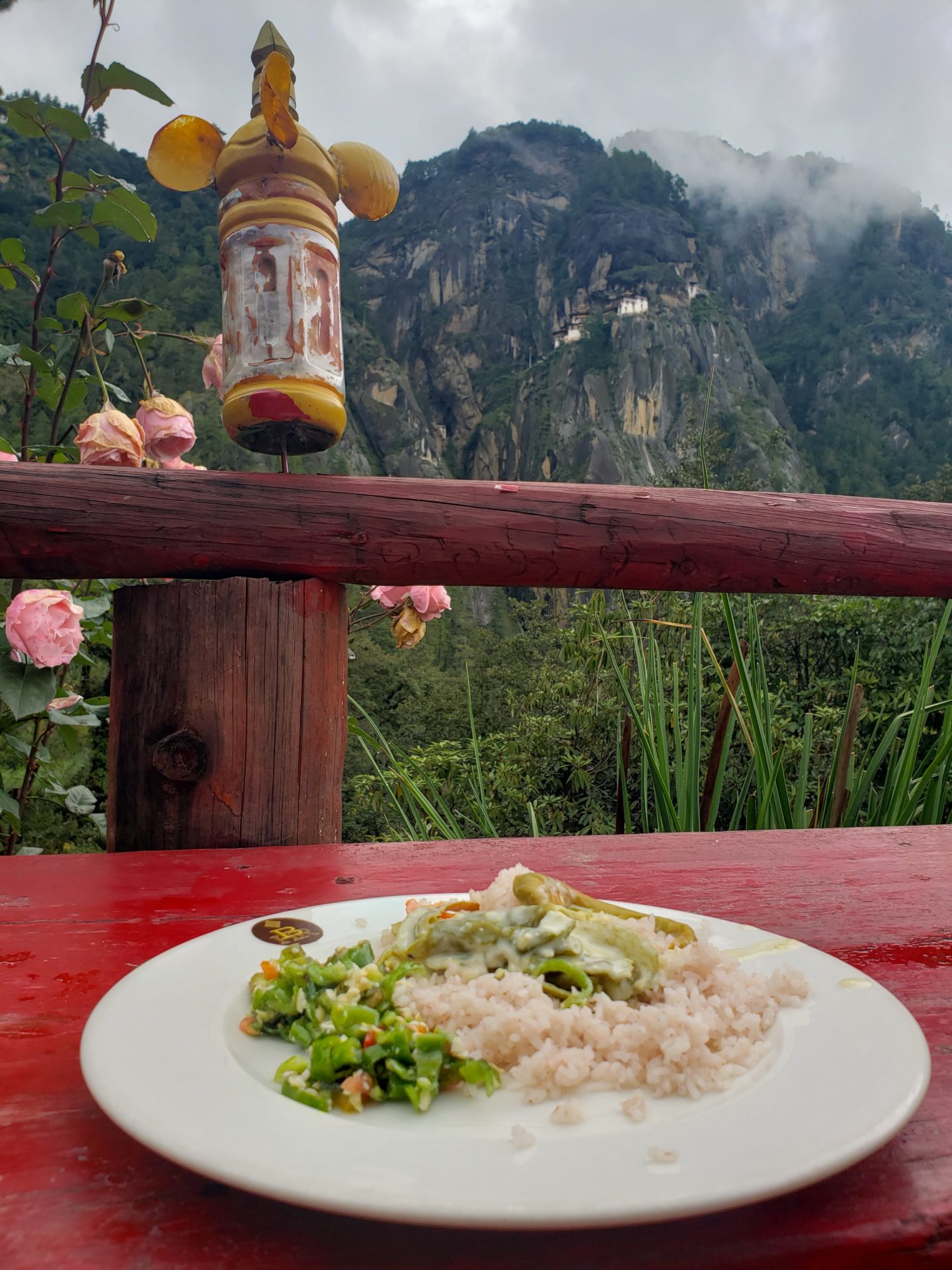
For lunch, I had chili cheese, the food of choice in Bhutan, just not before a steep trek. I also took more photos of Tiger’s Nest, which came into clear view by the end of my meal.
Descent to the Bottom
I didn’t run to the bottom. I took my time to relish in what I had just done. It was a victory lap.
One Last Photo
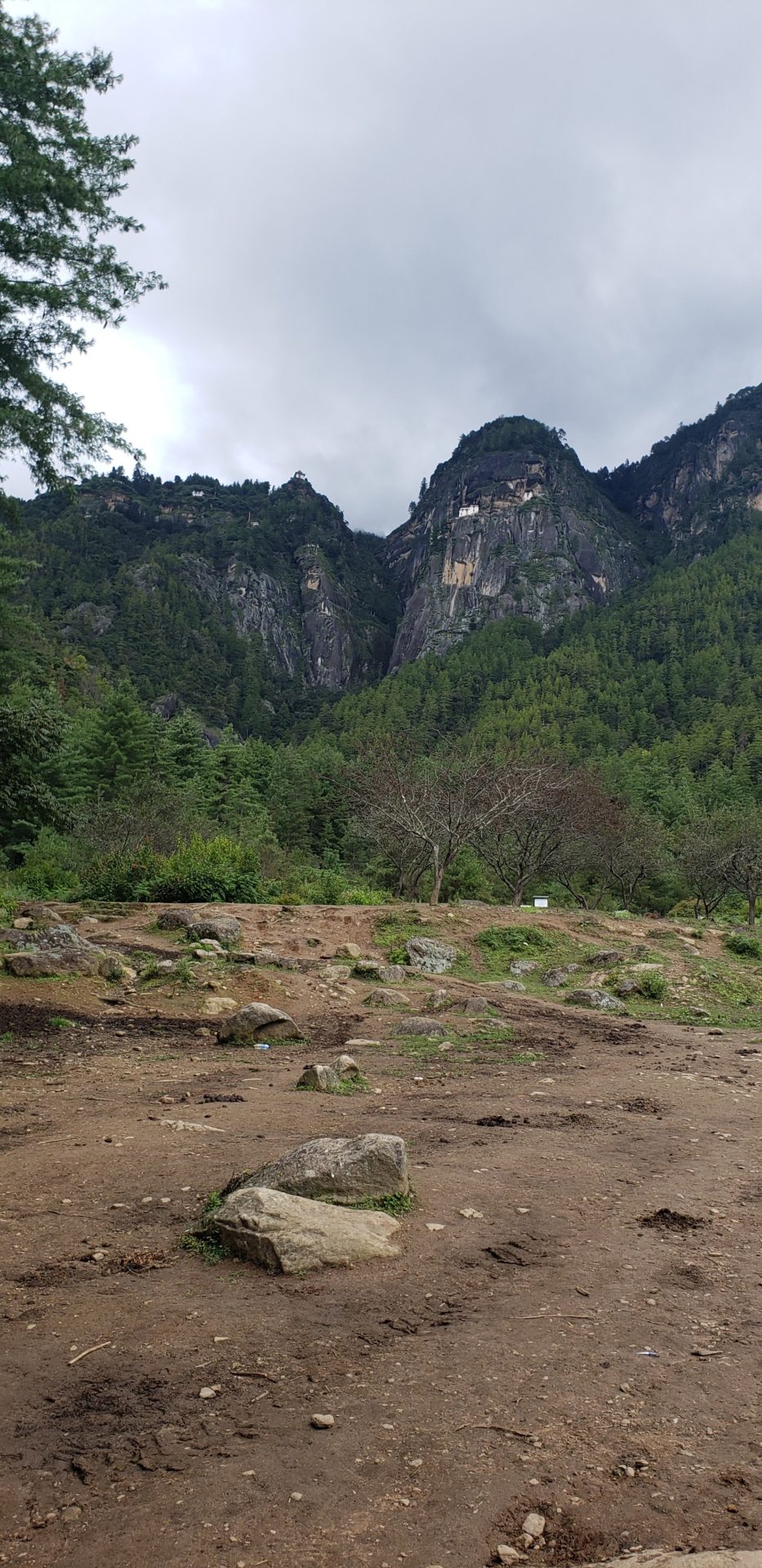
With the skies fully clear, I took a photo to capture how far we had climbed. None of this was remotely visible when we first set out.
On the left was the higher peak, on the right is the Tiger’s Nest.
Last Last Photo
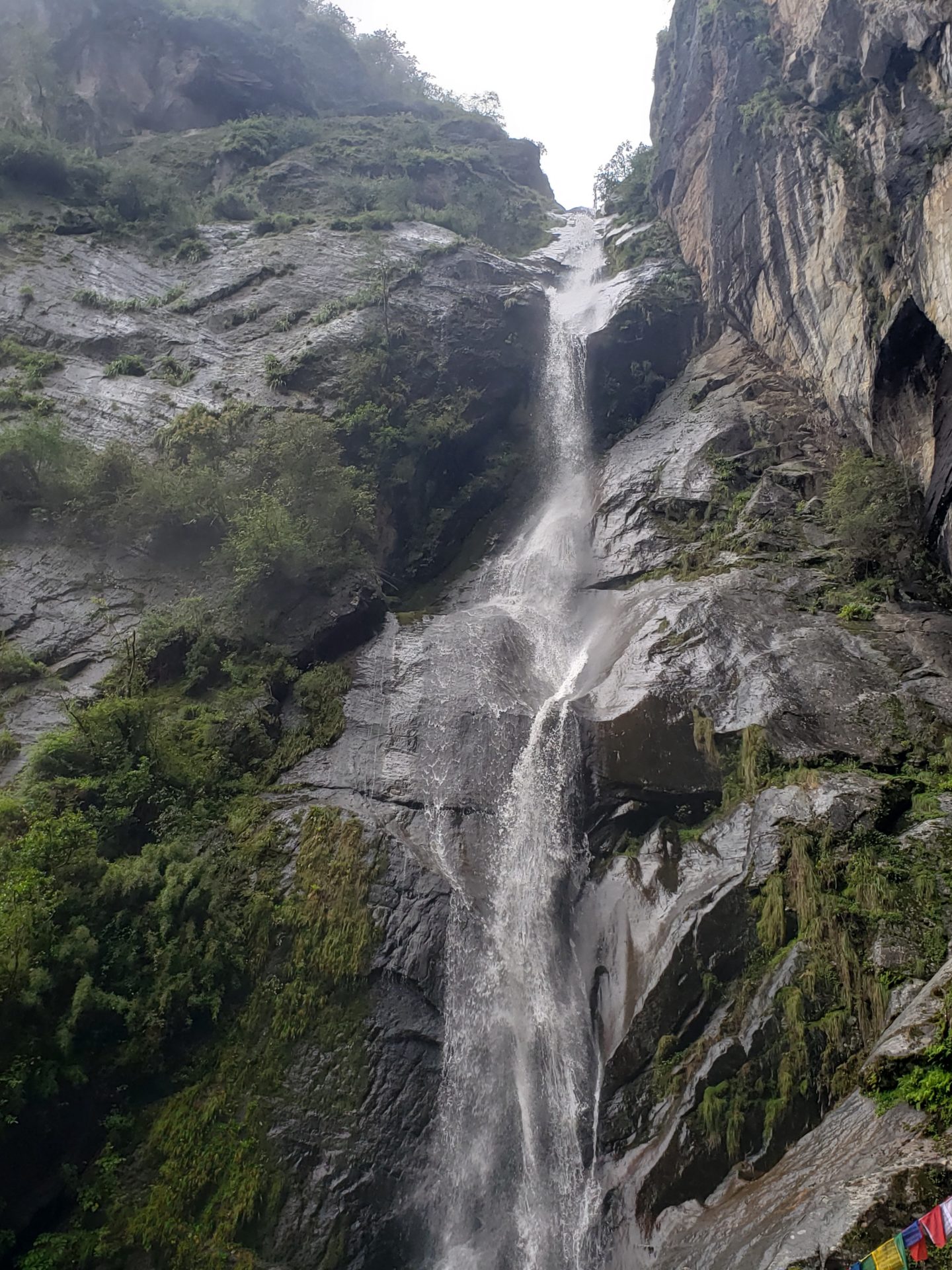
Driving away from Tiger’s Nest, I took my final photo. It is mind-boggling that humans built these temples here.
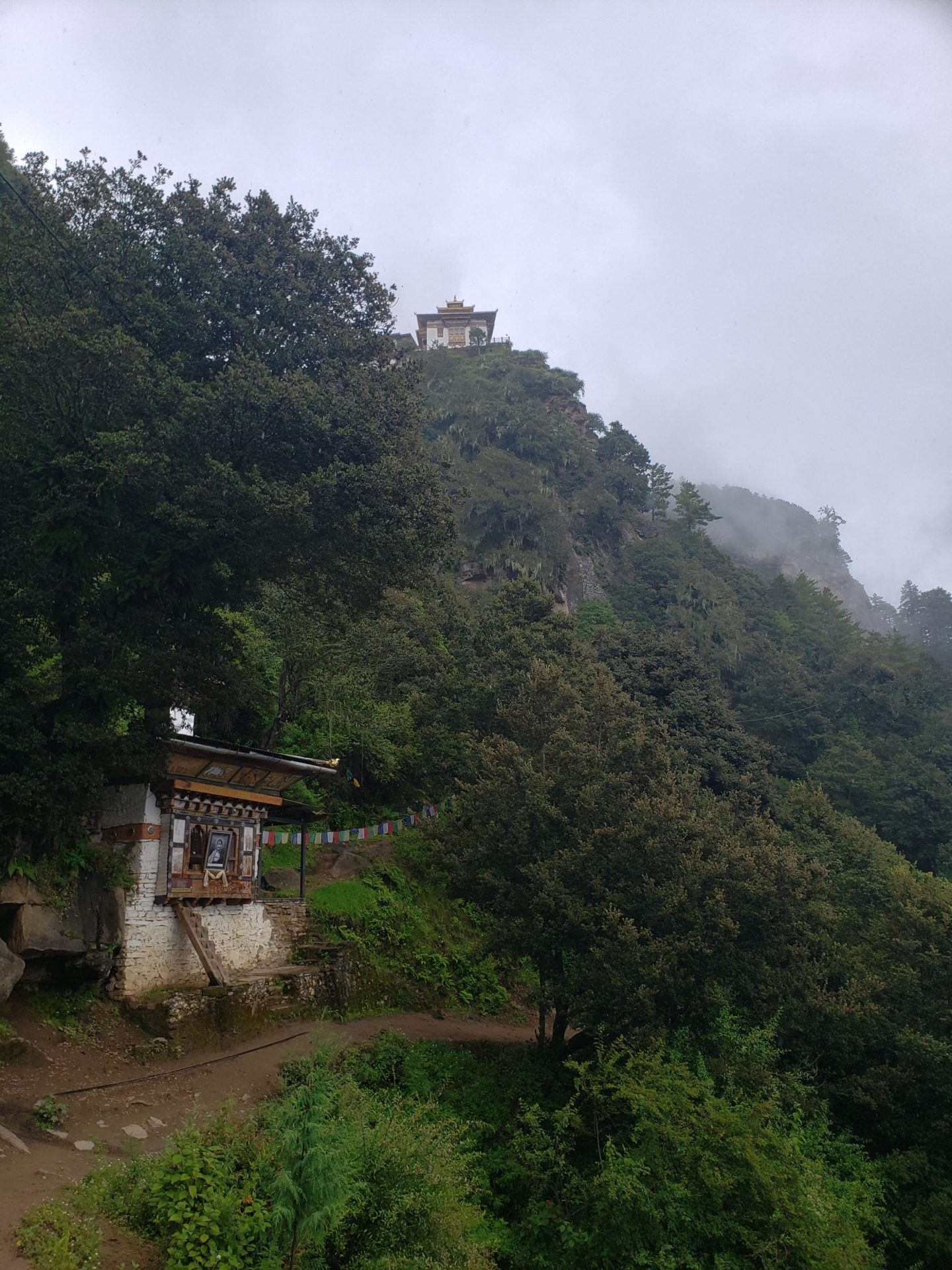
Look up, way up.
Overall
Traveling during rainy season is not recommended. It drastically increases the chances that mother nature will not cooperate. Having said that, the fog around the Tiger’s Nest made it look more magical than when it was completely clear. I am lucky that it worked out and I’m eternally happier for going all the way up.
I have been trying for months to apply for the Citi Business AA card. It had a 70k bonus when meeting the spend requirement. I received a rejection letter reasoning that my credit was restricted. I called the application department and they said there was negative information on my prior business account. I called customer service to follow-up. Here’s what happened.
Two years ago I applied for the Citi Business AA card and was approved. I later found out that I was not eligible for the bonus. Instead of canceling the card, and risking having my eligibility resetting, I kept the card open but never used it. A year later the annual fee was due, but I did not receive an email or a paper invoice. Months after that I started receiving calls from Citi telling me to check my account. I kept logging into my personal account and saw nothing there. I called Citi and they confirmed I was current. It finally occurred to me that this could be the annual fee for my business account. I called Citi business who refunded my $95 and closed my account with no balance.
Despite this, my business account still shows negative information, and for some reason customer service and the credit department can’t straighten it out. The credit department keeps saying they can’t move forward until customer service sorts it out. Customer service says there’s nothing to sort out. Whenever I think I’m getting close to a resolution, I’m just transferred to another agent and the madness continues as I try to explain the story again.
I thought moving to Puerto Rico would unlock more churn opportunities (see Looking to Churn? Move to Puerto Rico). It’s only unlocked more headaches. First, I applied for the Santander card and was approved only to never receive the card. They left a voicemail asking me to verify info. I called back and never could reach a banker. I applied for the Popular AA card. I was approved with an obscene credit line. I had to submit proof of income to an employee. I emailed her three times with no answer. I called and was transferred over and over. Usually, the calls ended up with me being transferred to the Miami branch and the agent telling me that they don’t offer AA cards. I would explain that I was a resident of Puerto Rico. Then I would be transferred again. Then the call would disconnect. Finally, I spoke to someone who said that it had been too long since my application and I would have to reapply again. Taking another hit on my credit was the last thing I wanted to do, but I did it anyway and applied over the phone. I was approved again. I sent my financial info again. Now, I wait. “Approved but not really,” continues.
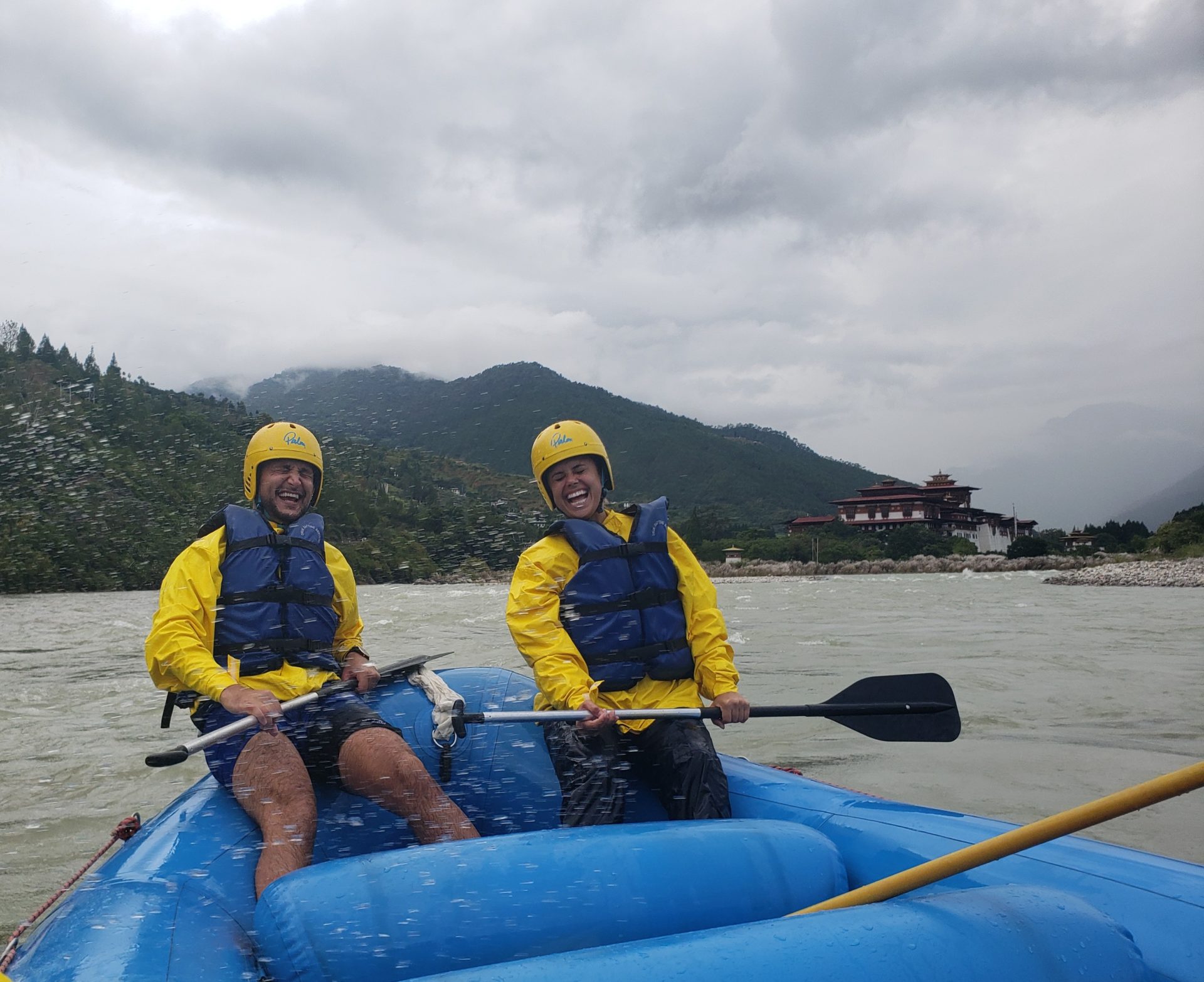
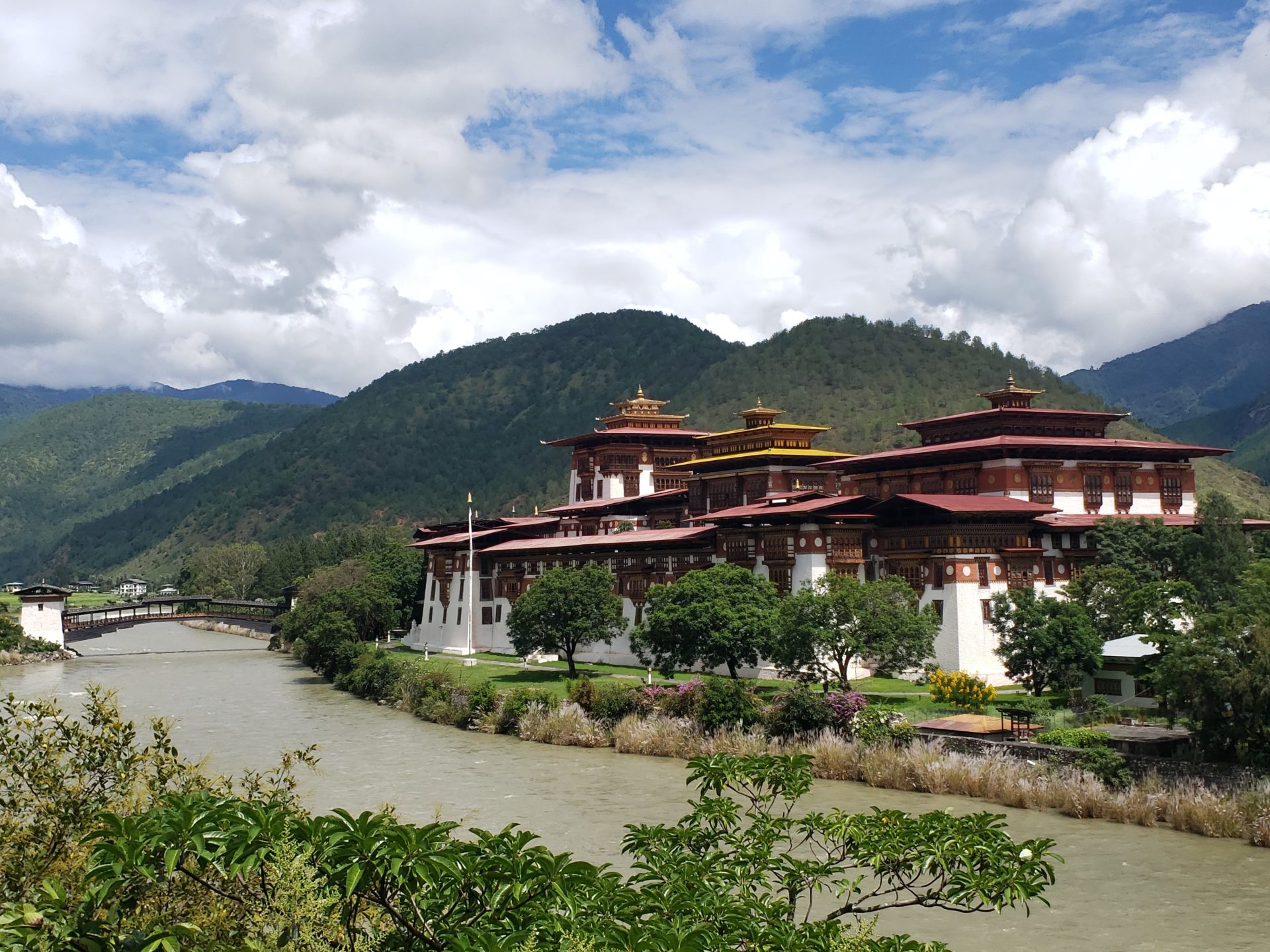
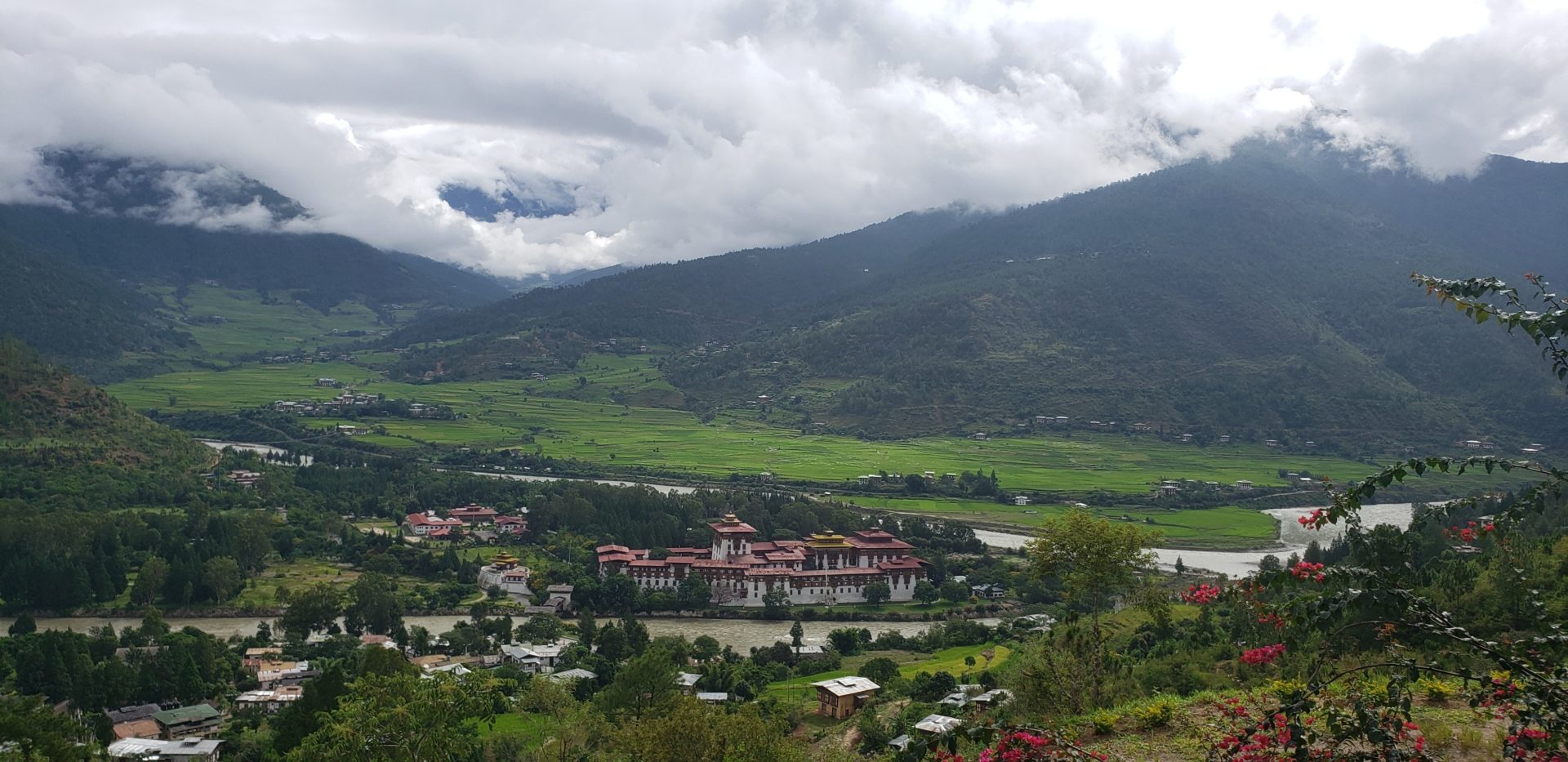
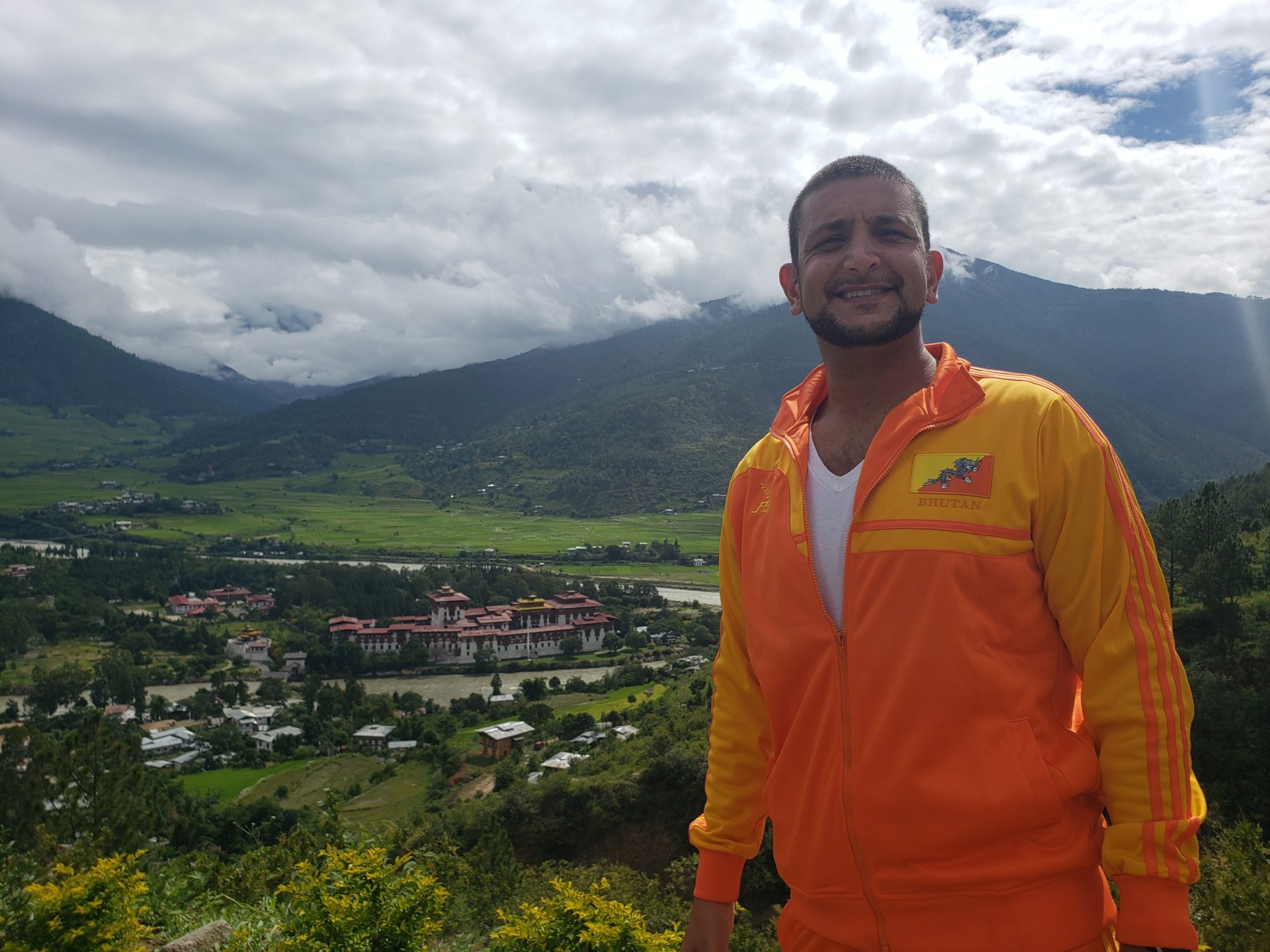
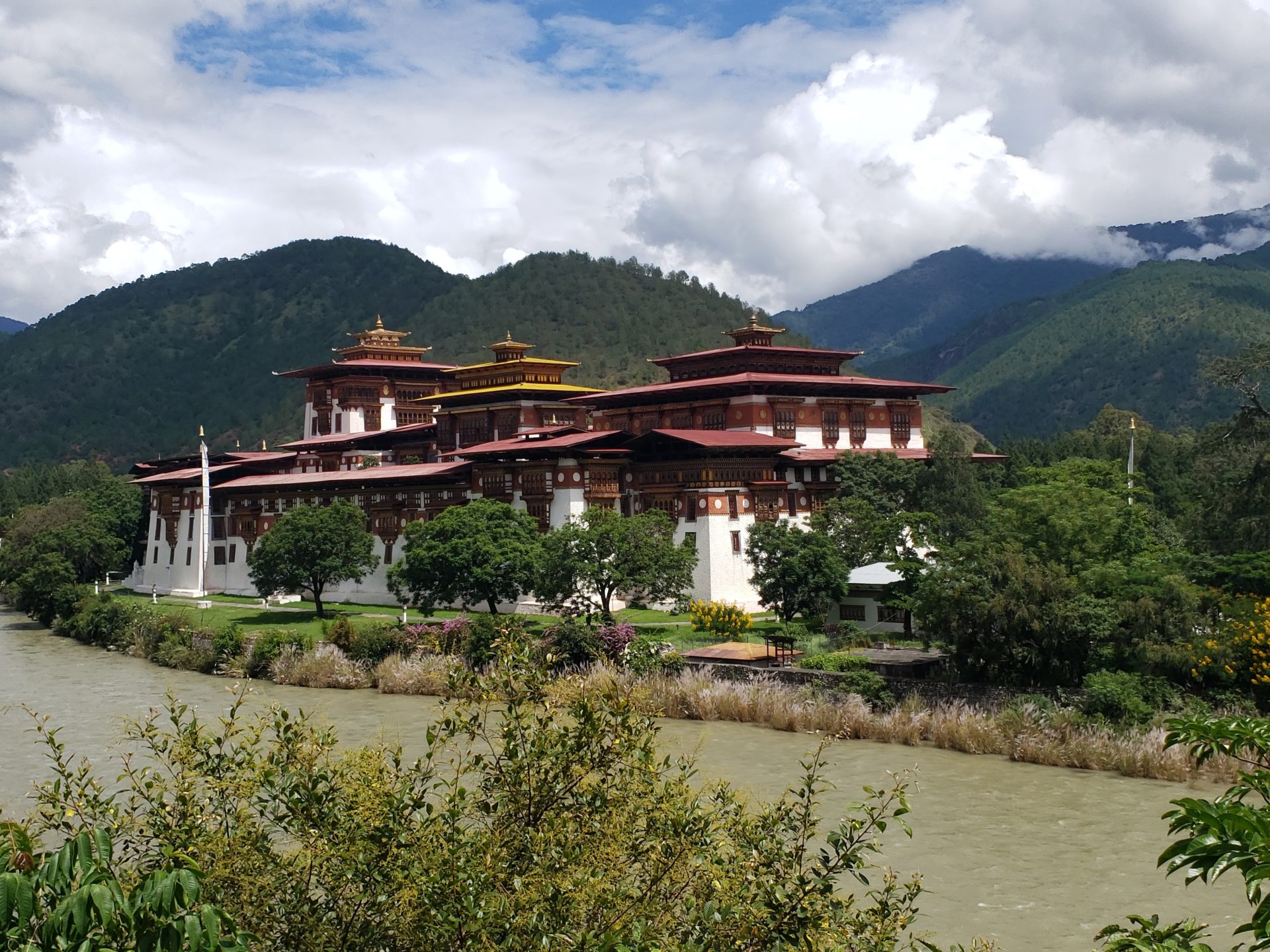
Day 4 began with a great view of the Palace of Great Happiness from our hotel. Like travel in Thailand, I was templed out. However, unlike self-guided tours in Thailand, I was on a set itinerary (see Tour Guides: Like Attending Class, It’s Boring But Useful). Although I initially resist going to cultural sights because they aren’t as thrilling as whitewater rafting (see Finding Happiness: Bhutan Day 3), I am glad that I go. I come away with greater knowledge and appreciation of the country I’m visiting.
The Palace of Great Happiness
Breakfast
Breakfast was decent but eating three times a day was beginning to show.
If happiness is measured by kg…
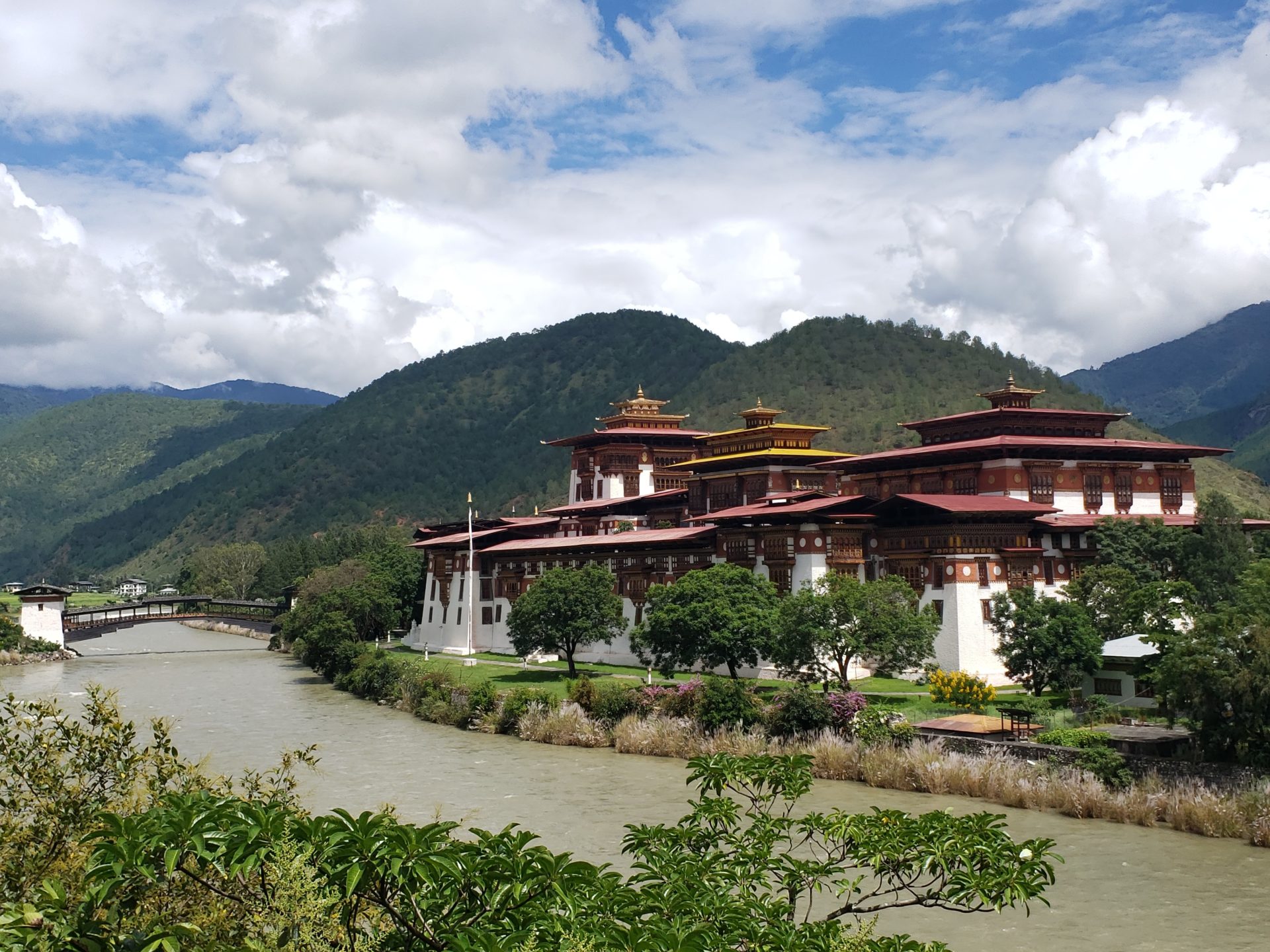
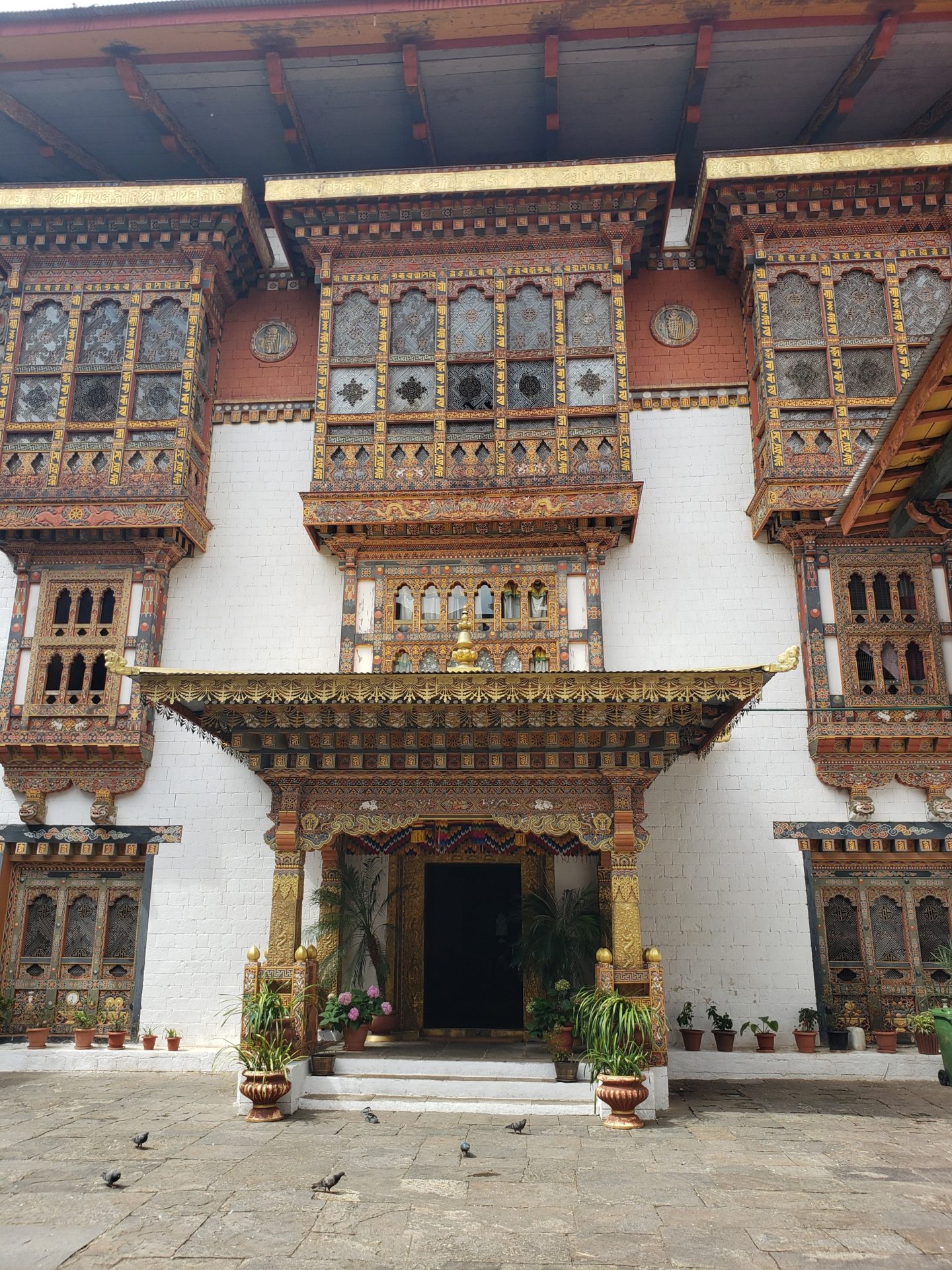
Palace of Great Happiness
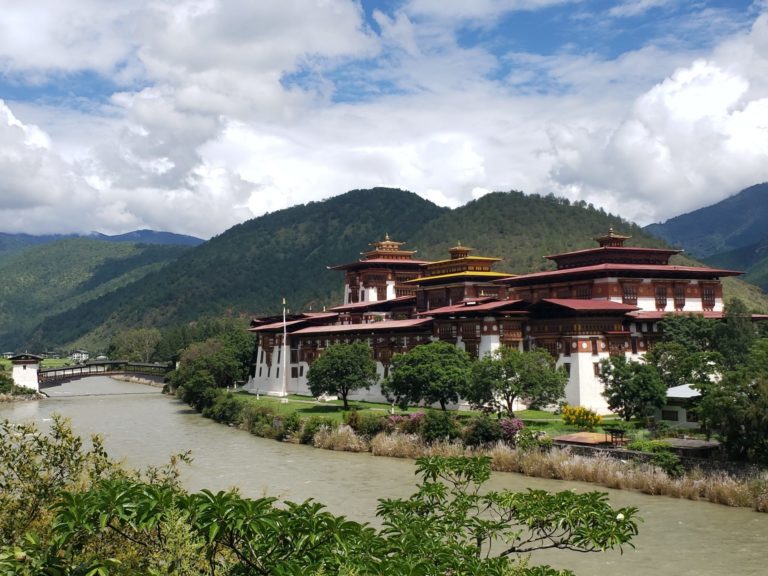
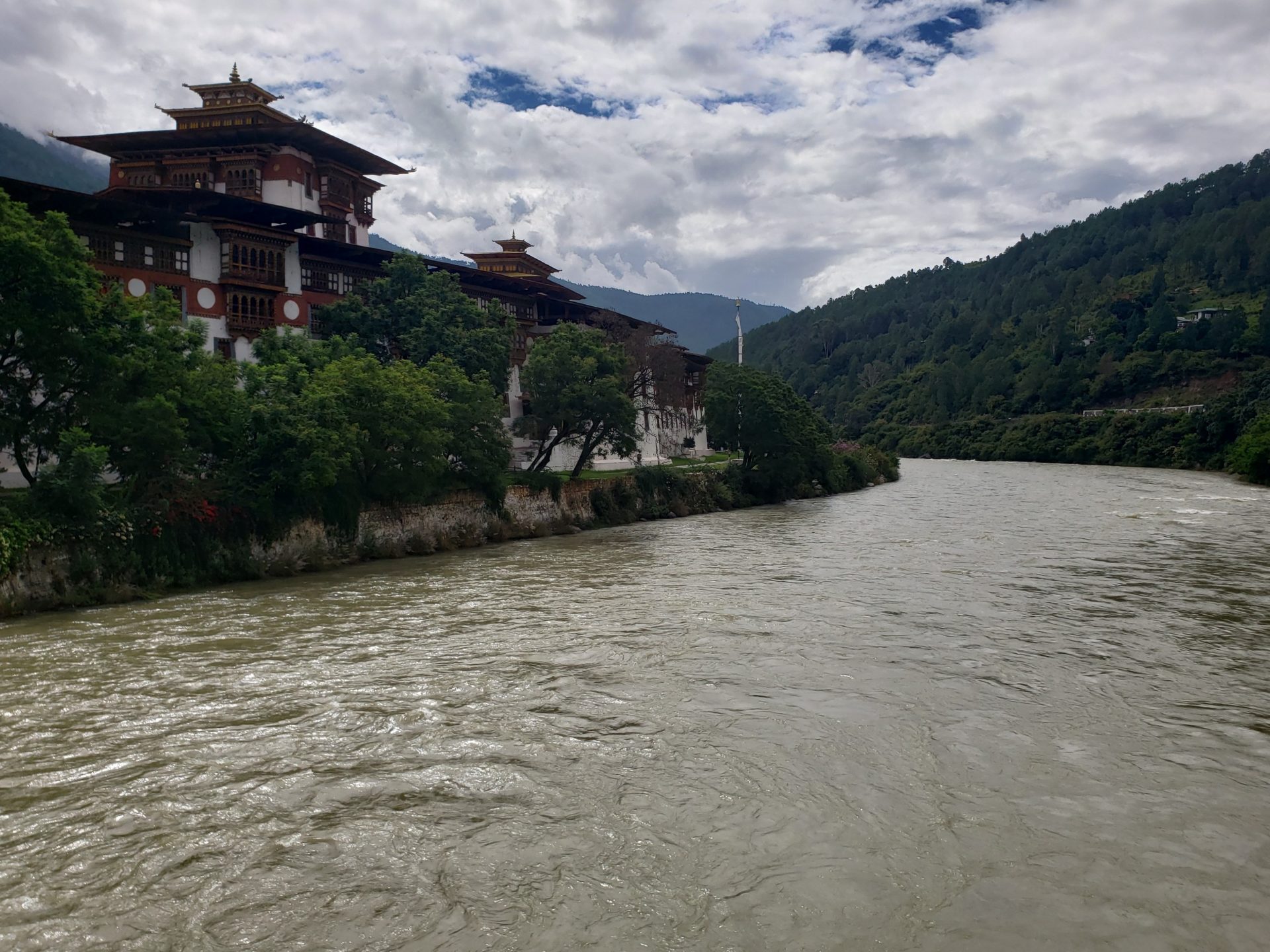
The Palace sits in the middle of the male and female river.
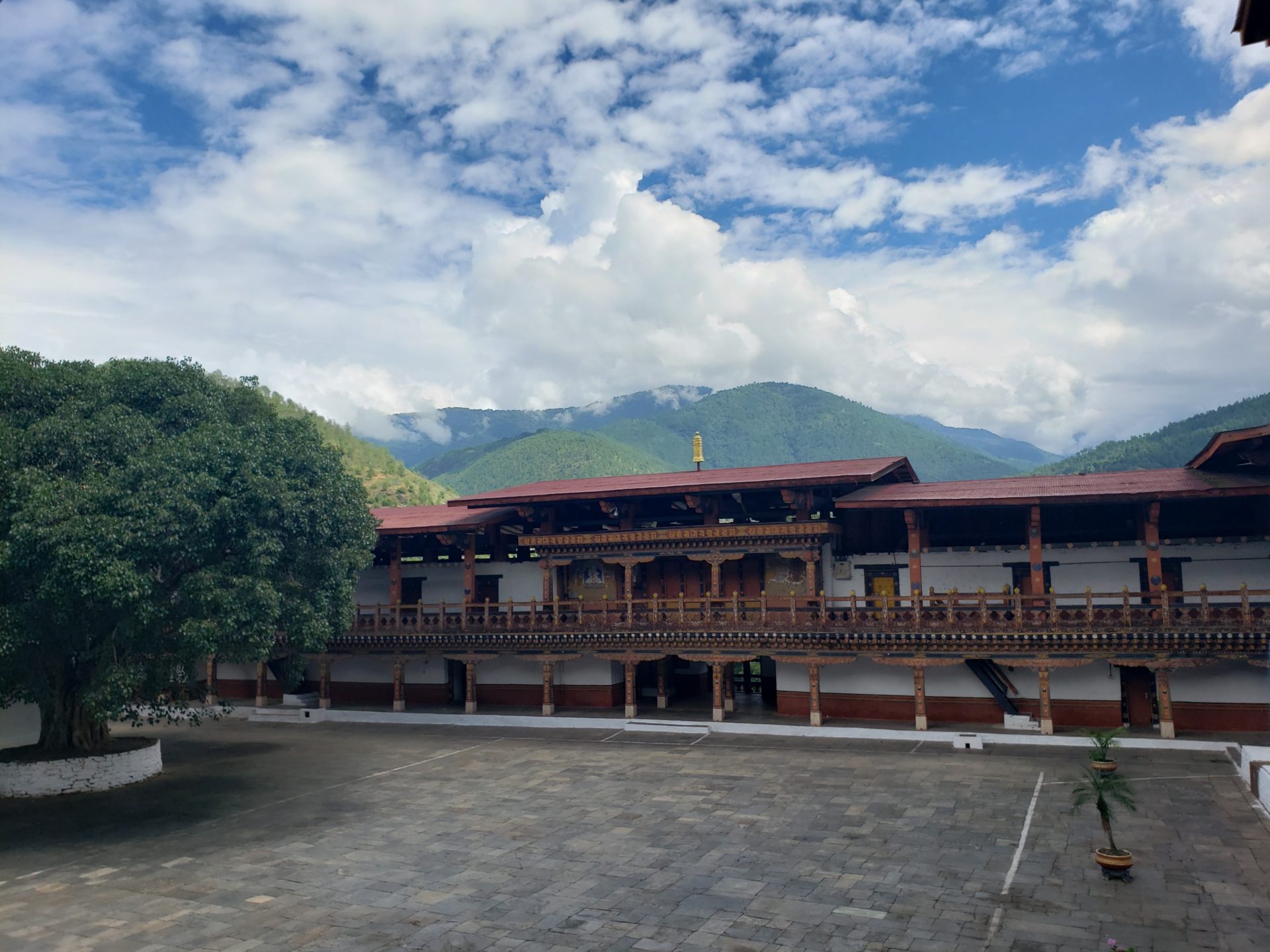
The first king of Bhutan was crowned at this palace. Therefore, all significant events take place here.
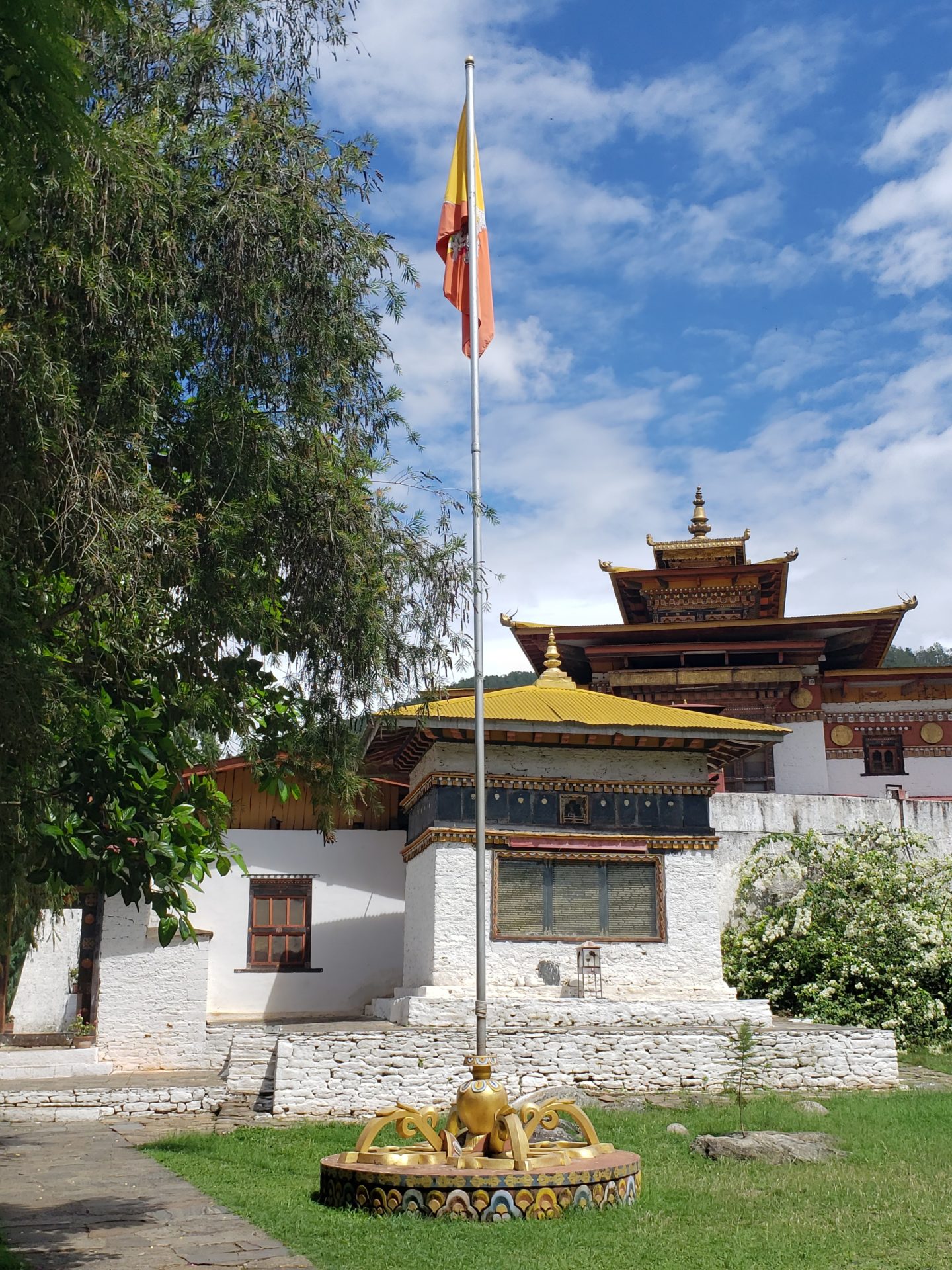
The tree under which Buddha found enlightenment is in one of the courtyards.
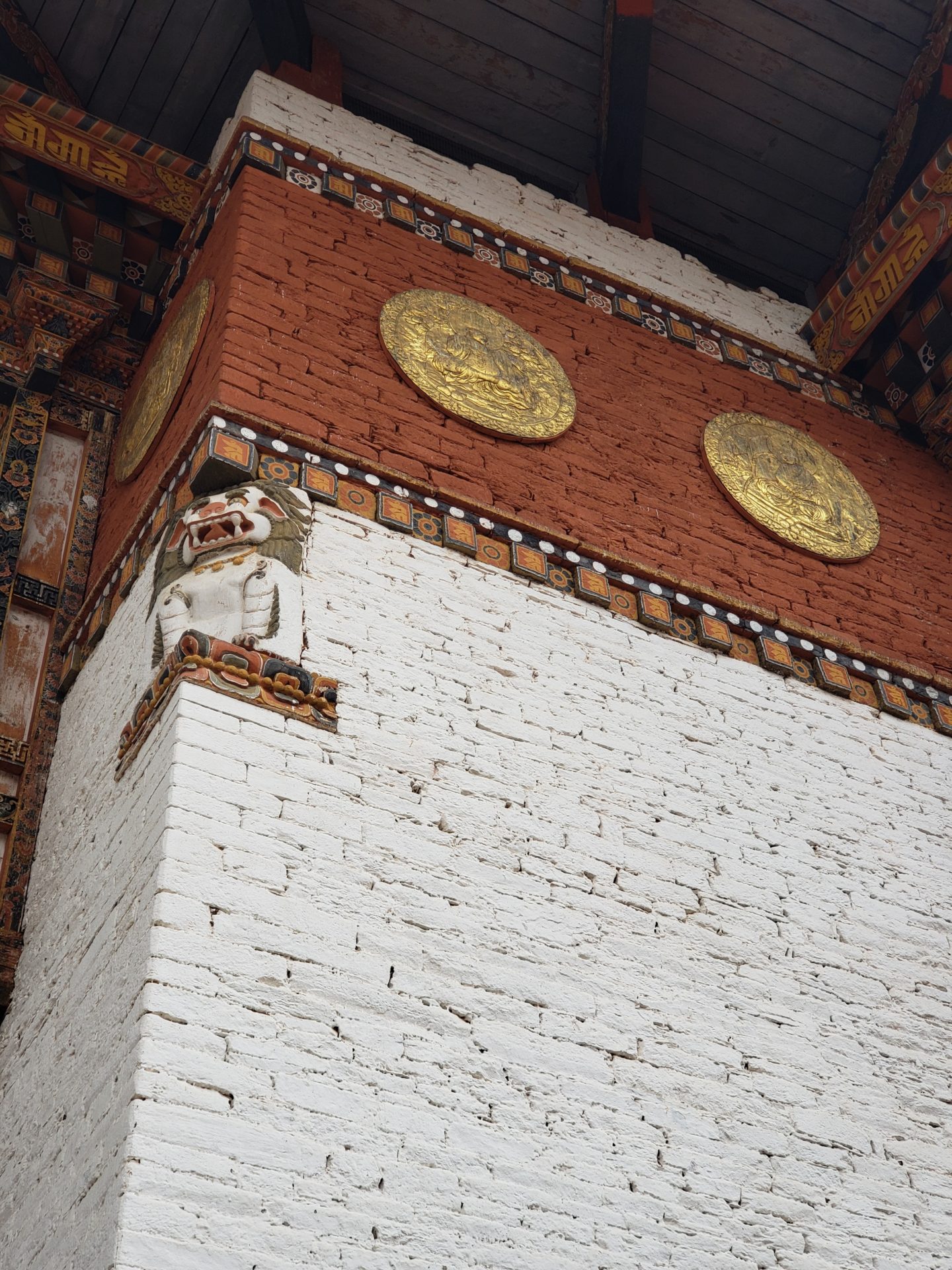
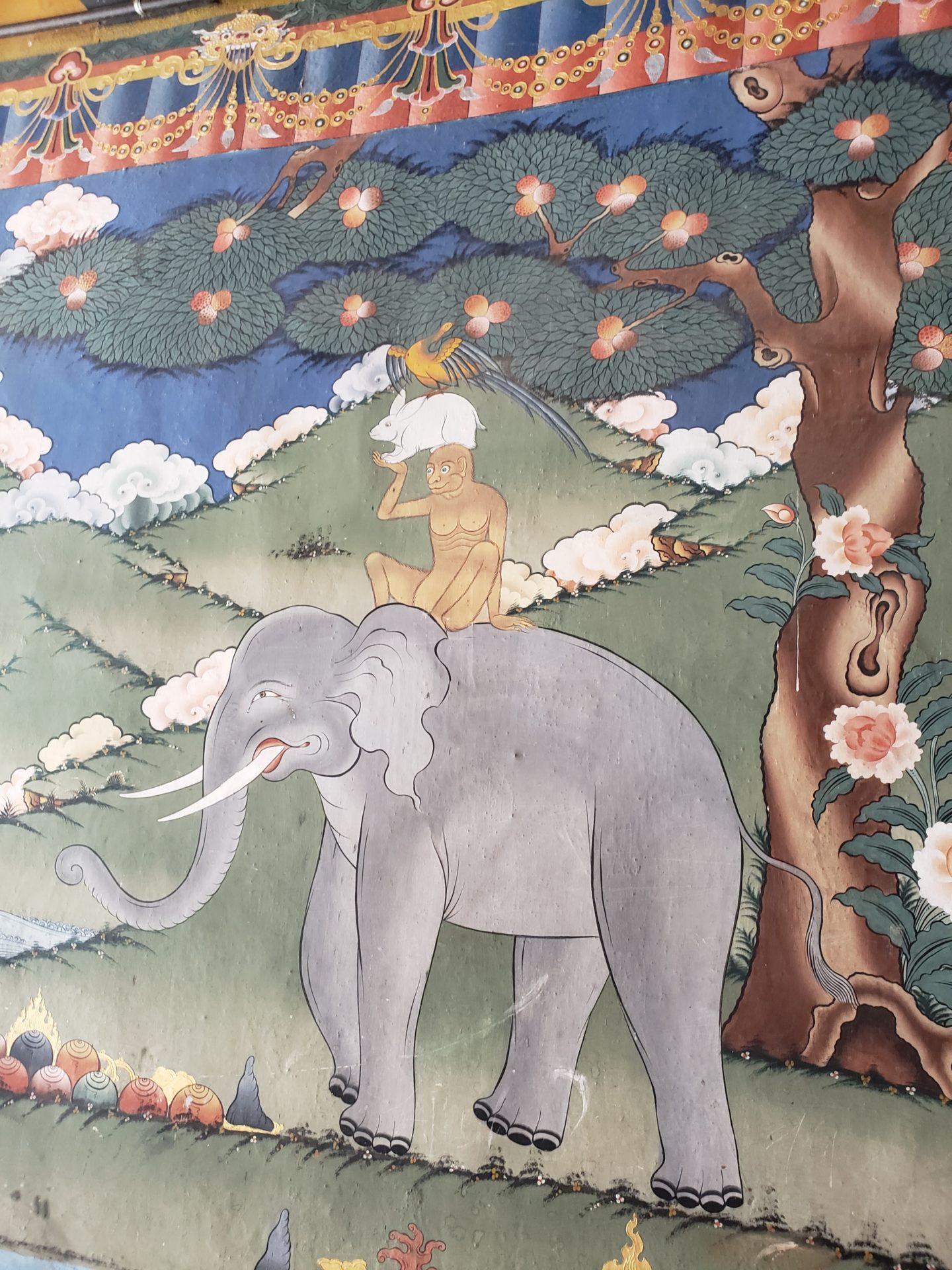
Like the other temples we visited, there are traditional paintings on the wall. The wheel of life (see Day 1) and the four friends are my two favorites.
Finally, there’s an area where only the king can enter.
After taking photos from the outside, we headed off to my favorite temple, Chime Lhakhang.
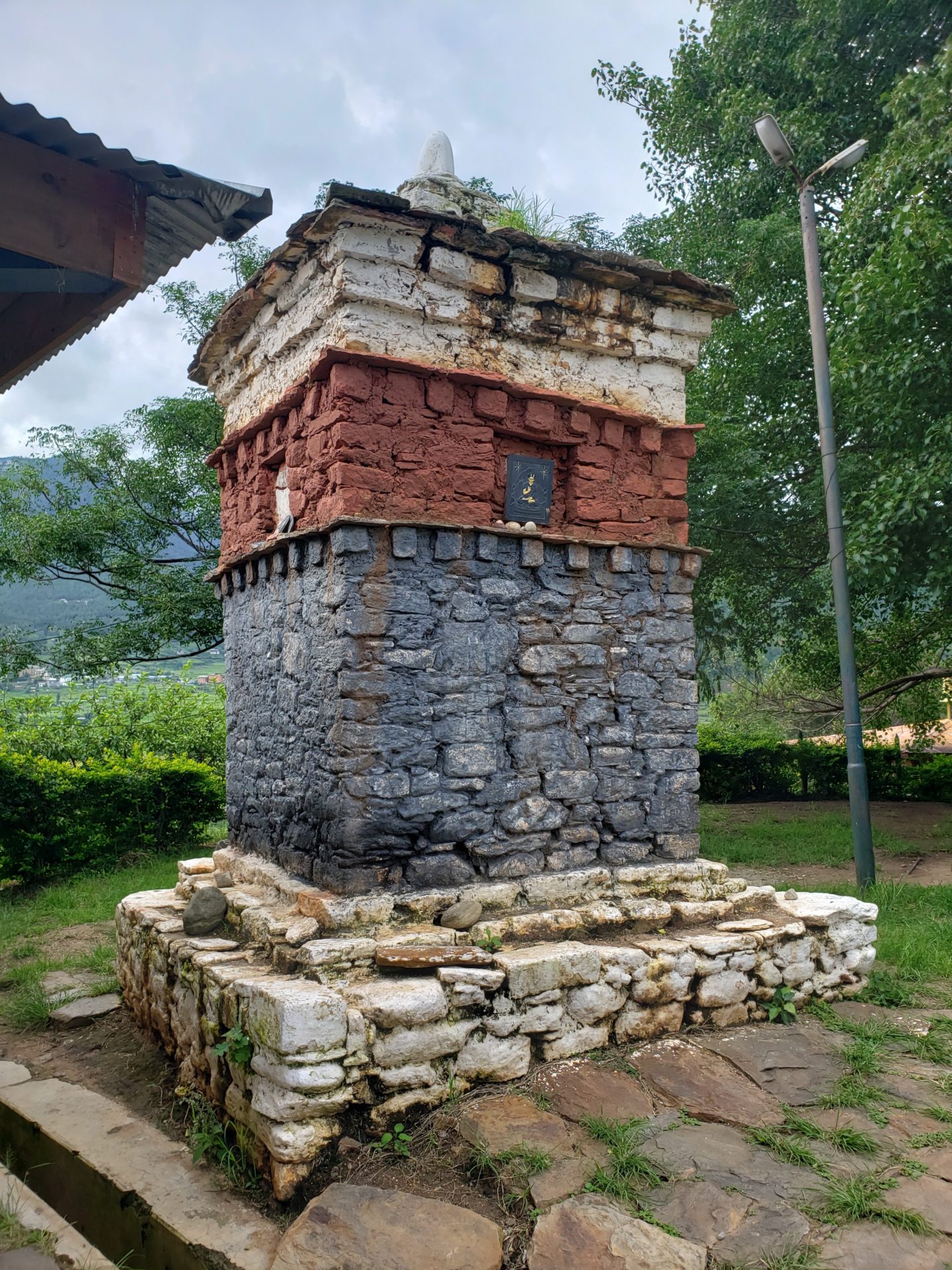
Chime Lhakhang
Chime Lhakhang was built in tribute of Lam Drukpa Kuenley, the Divine madman, who “deliberately portrayed the image of a vagabond and wandered around the countryside, indulging in song and dance, alcohol and women, hunting and feasting.” Kuenley, a social critic, “taunted the hypocrisy of the established orders, including the monastic order.” “The use of his phallus as a ‘flaming thunderbolt’ weapon symbolizes the discomfort that society experiences when facing the truth.”
Phallus Marks the Spot
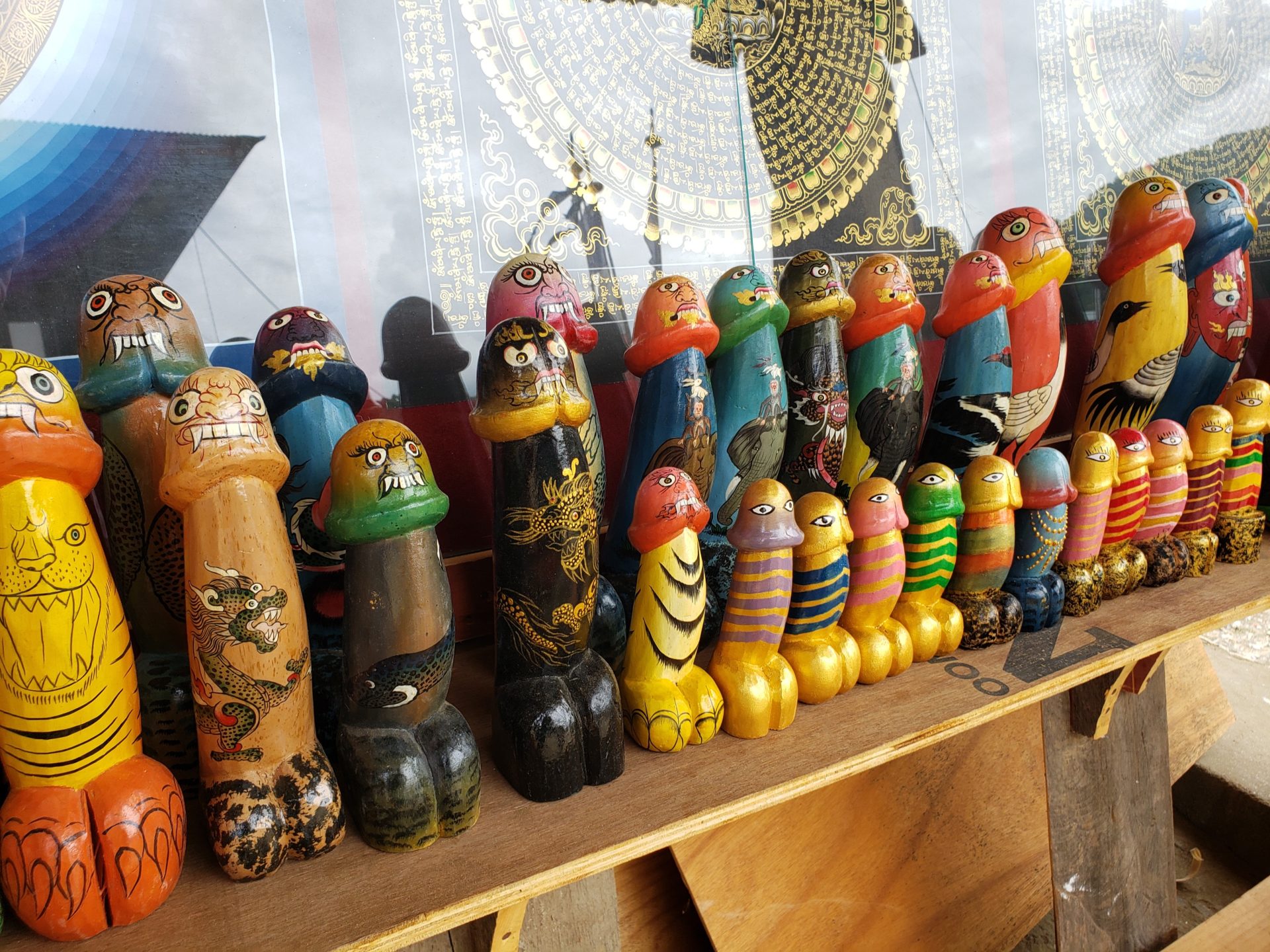
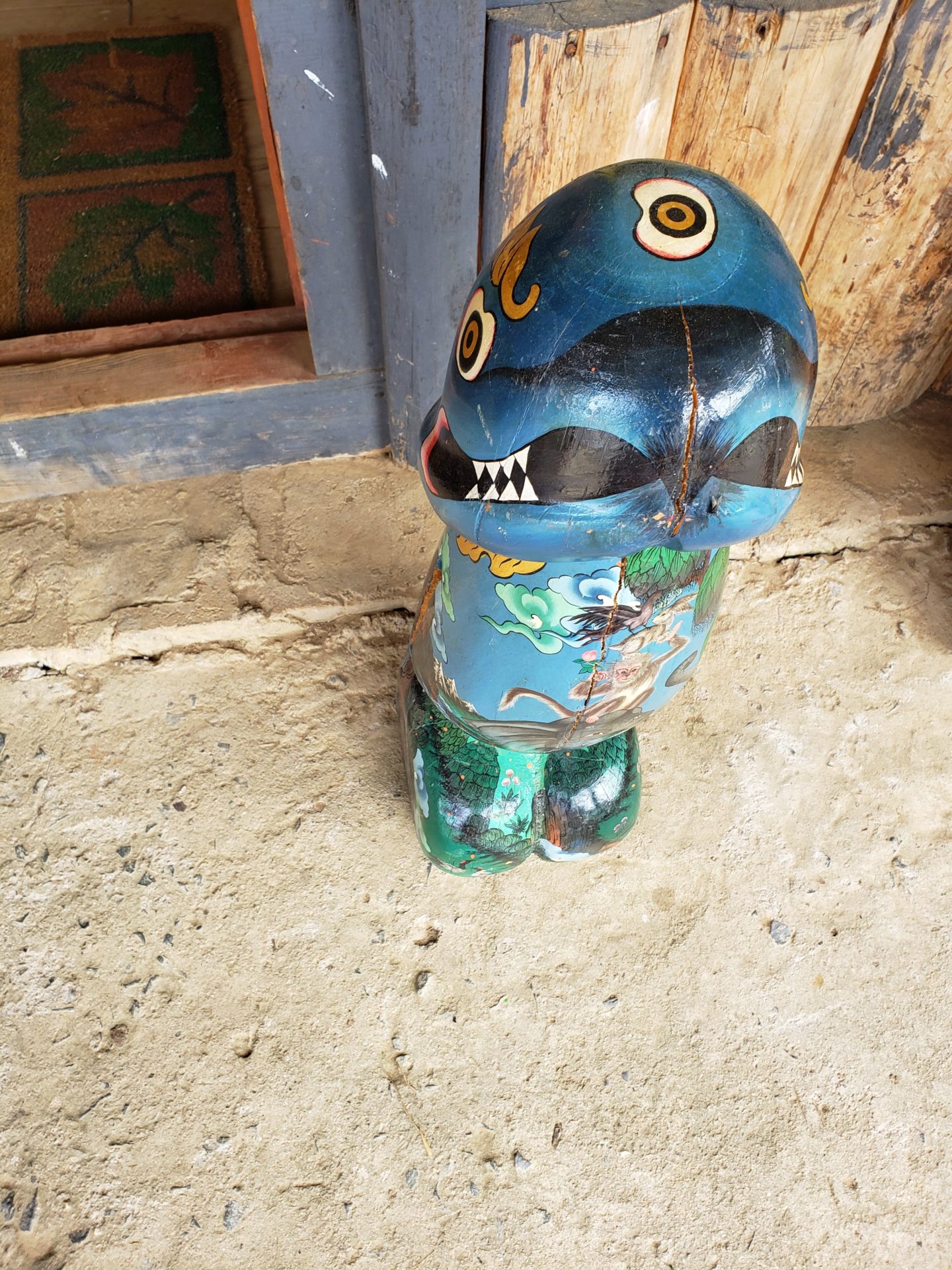
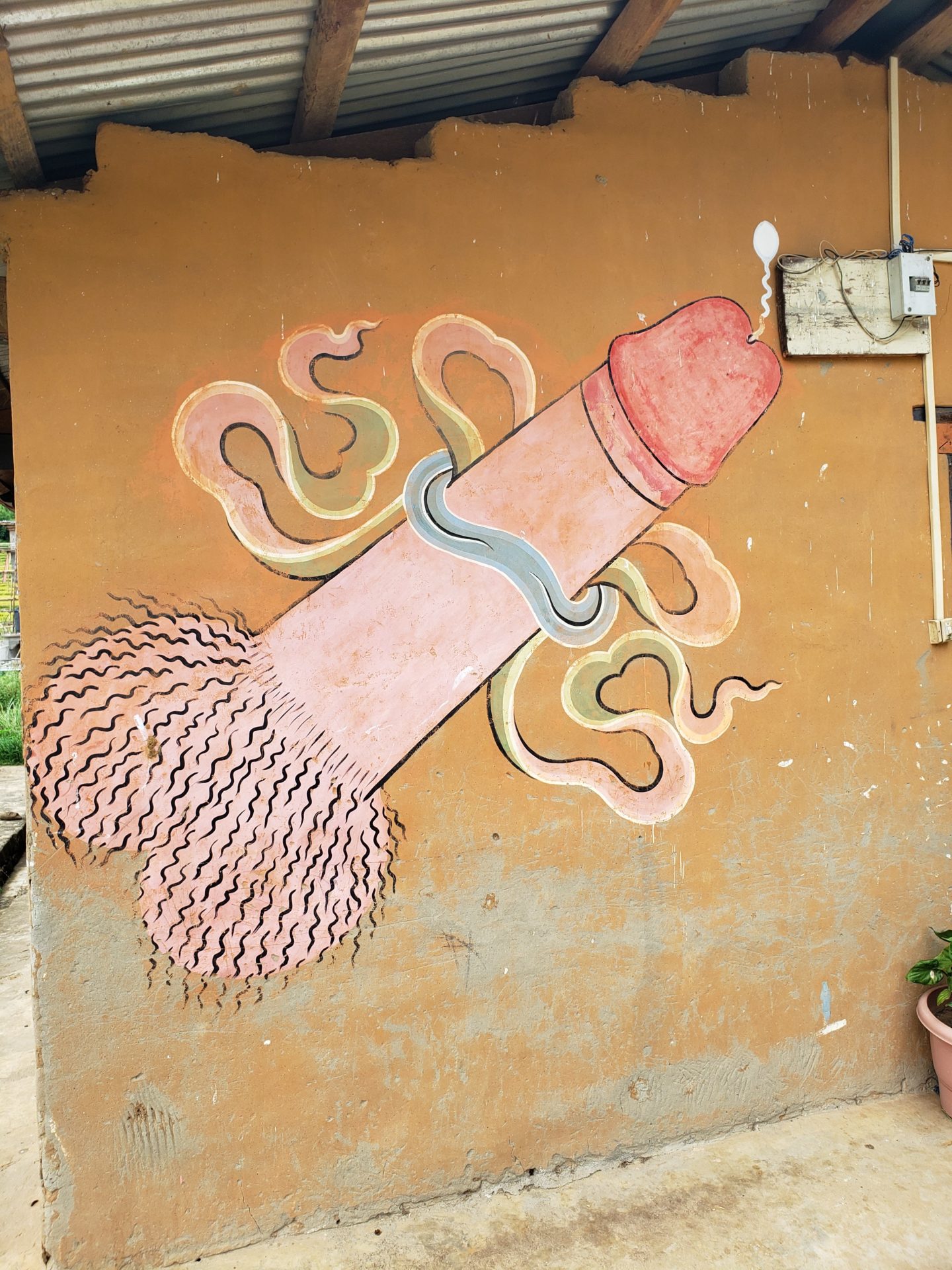
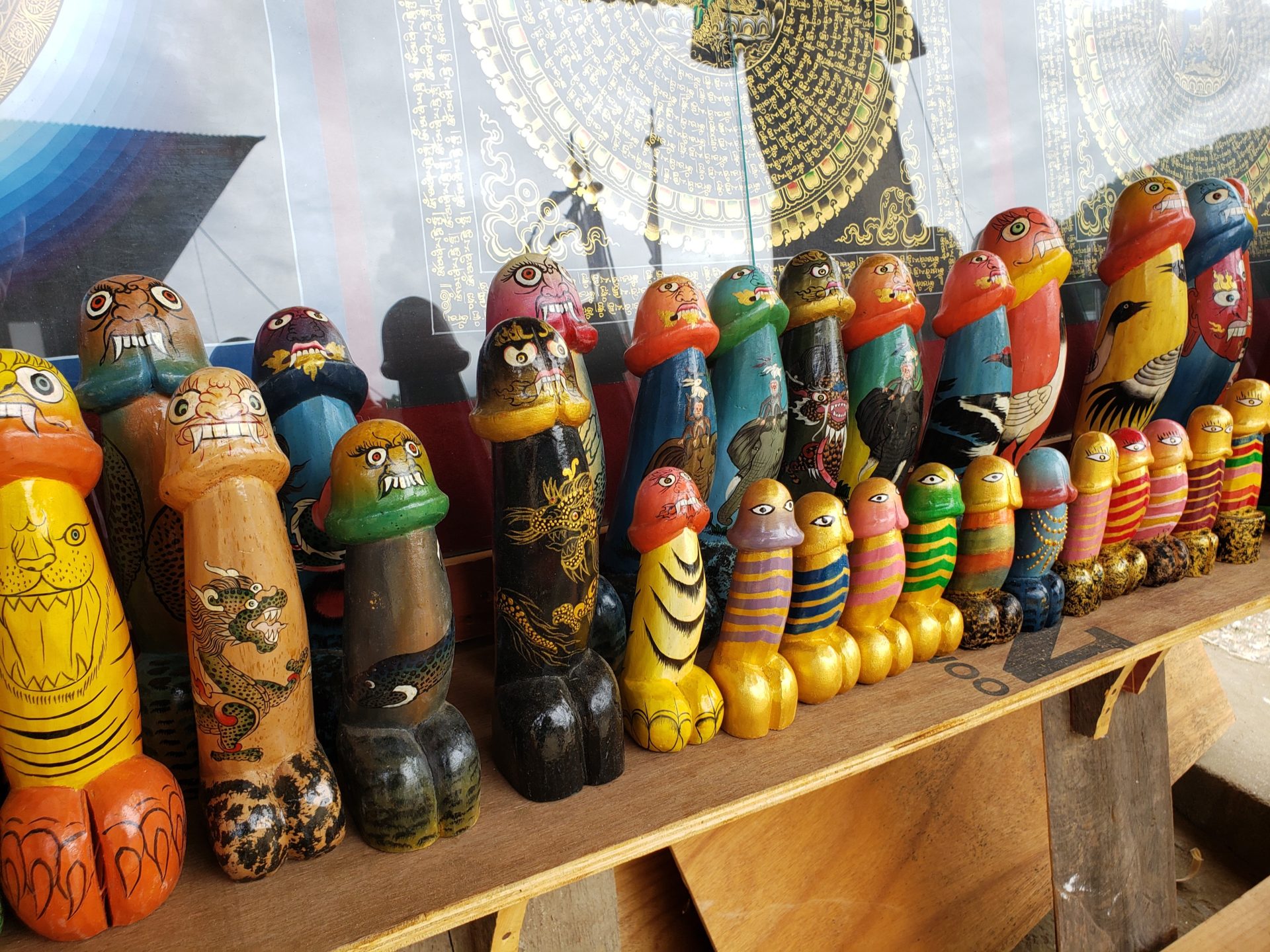
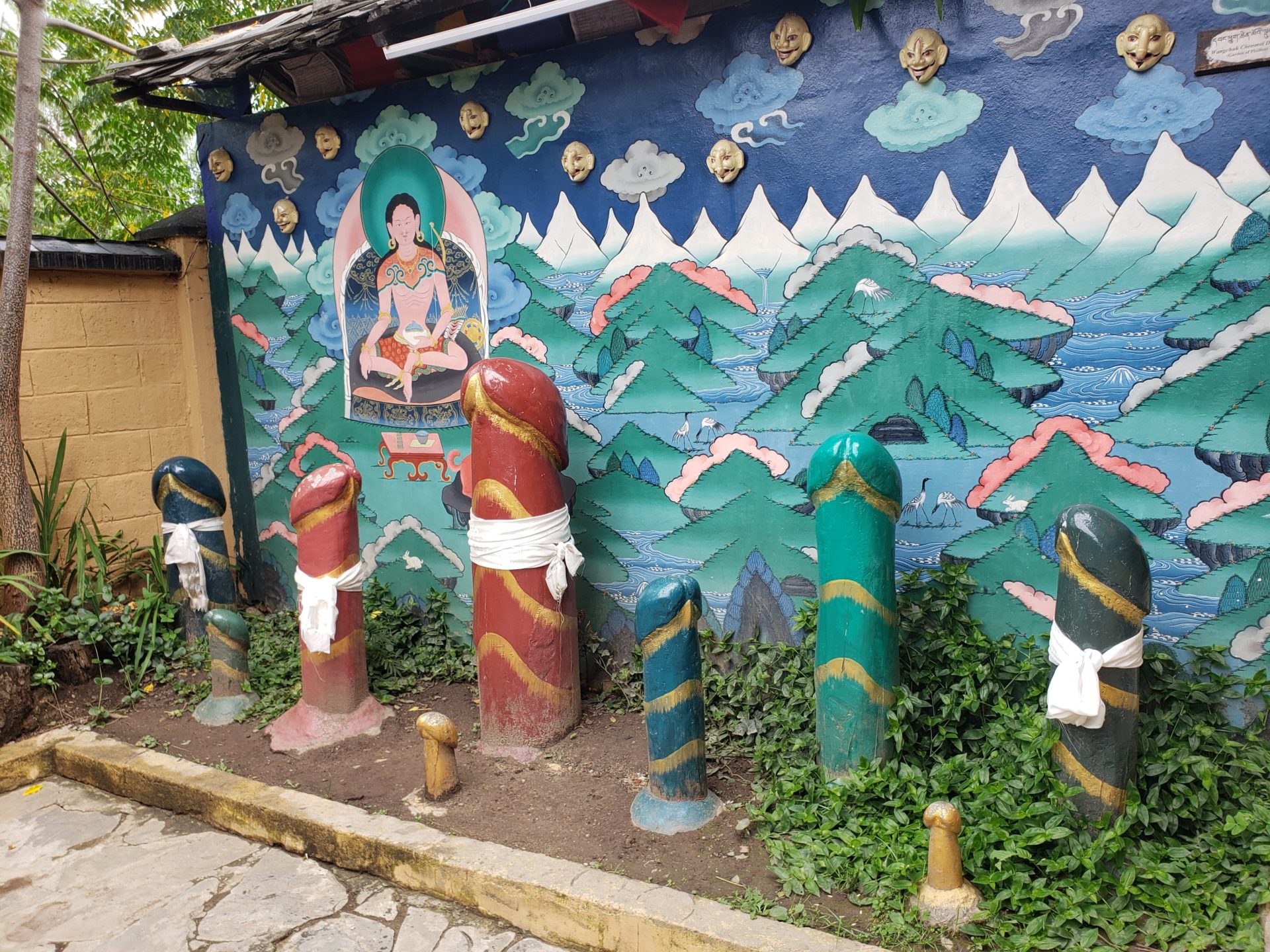
As far as the eye can see, there are phallus sculptures and paintings leading the way to the temple which his brother built in his honor.
Minus the womanizing, this man reminds me of TPOL, who also doesn’t care for the opinion of others and is always looking for a good time and bottle of wine. It was only fitting after visiting the temple that I acquired a phallus for my personal collection. If you thought bargaining at the Fake Market or Tailor Market in Shanghai was tough, try bargaining over giant penises.
The first shop wanted 12,000BTN or $168 for one. The second wanted 8k ($112) which went down to 5k ($70). That’s a lot to pay for dick. At that point, I was ready to go home unsatisfied. As usual, the shopkeeper, who also was the penis engineer, dropped his price. He would sell two for 8k. I had my eye on two cocks and said I would pay 6k ($84). Outraged, he said no. Finally, we agreed to 7500 ($105) for two.
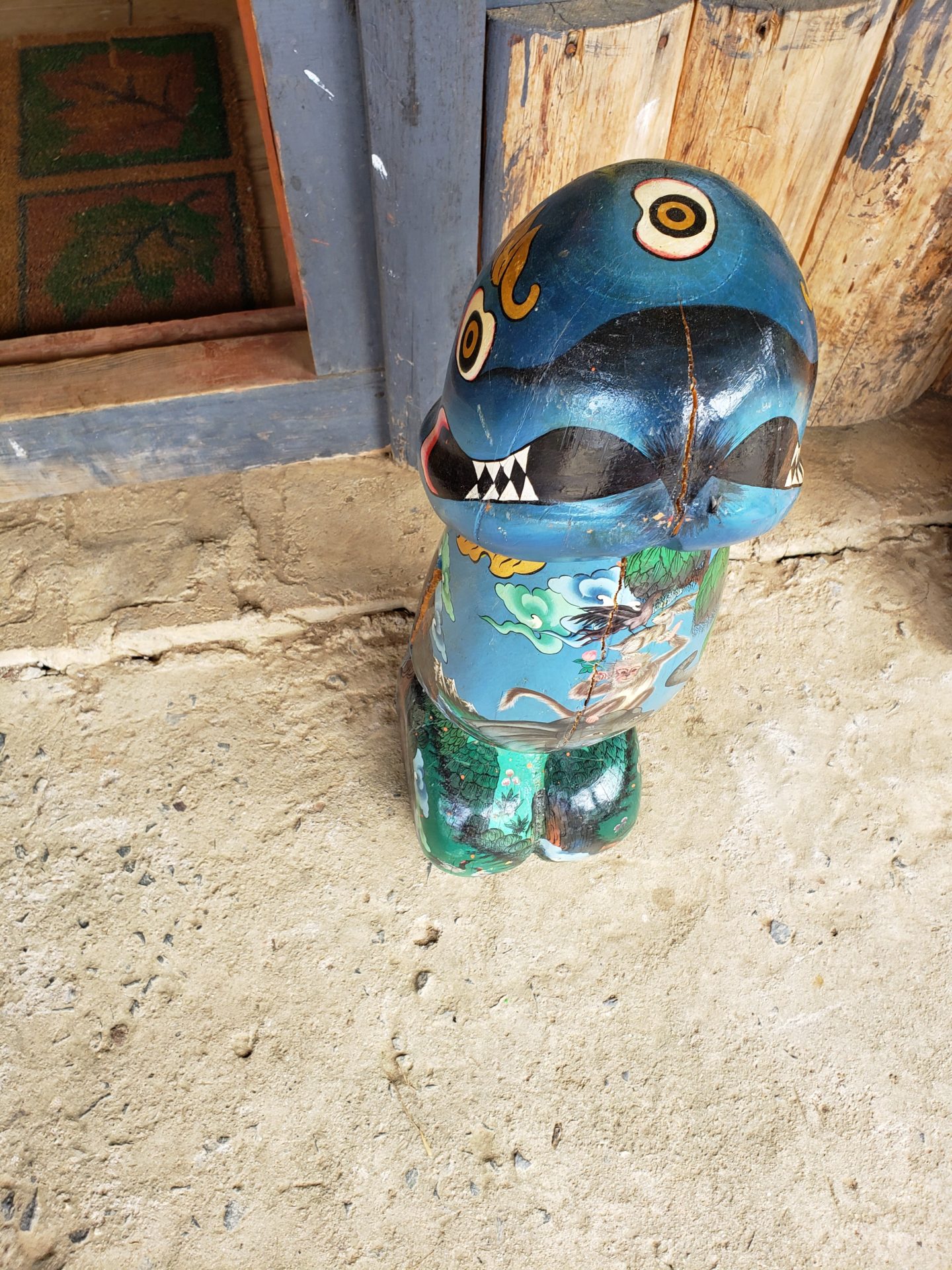
I bought the pink and blue from the back row.
TPOL’s TIP: Get your penis when you can. Had I waited until I went to Paro, home to the Tiger’s Nest (see Finding Happiness: Bhutan Day 5), I would’ve paid more for just one phallus. Here, I knew the engineer had crafted the penis himself and I wasn’t getting a dud.
TPOL’S TIP: if you pay by credit card, the merchant will pass along the 3 to 3.5 percent foreign transaction fee that they are charged on to you.
Penis jokes aside, the phallus serves three functions. First, they shoo away bad evil and bring good luck. Second, they promote fertility. Finally, they protect the home from malicious gossiping, so good luck trying to talk shit in my comments section. I now have a phallus filter for that.
TPOL’s garden of penises.
Fully cocked, we drove to Paro. Again, we stopped at Dochula pass (see Finding Happiness: Bhutan Day 3). Again, it was too foggy to get a view of the Himalayas, which was the only thing that didn’t work out on this trip.
Lunch in Thimphu
Lunch was bland. I don’t know what food they think tourists like because it is completely different from what Bhutanese people eat.
We received this.I needed this.
TPOL’s TIP: I wrote about this many times. Demand, kick and scream, and complain that you don’t want to eat at tourist restaurants. It’s a shame to miss the good Bhutanese food on account of guides not understanding your food tastes.
After lunch, we went on a tour which started with shots of arak, Bhutanese rice wine. The tradition is to dip your ring finger in the arak, swirl it around three times, and flick the alcohol in the air while chanting she, she, she.
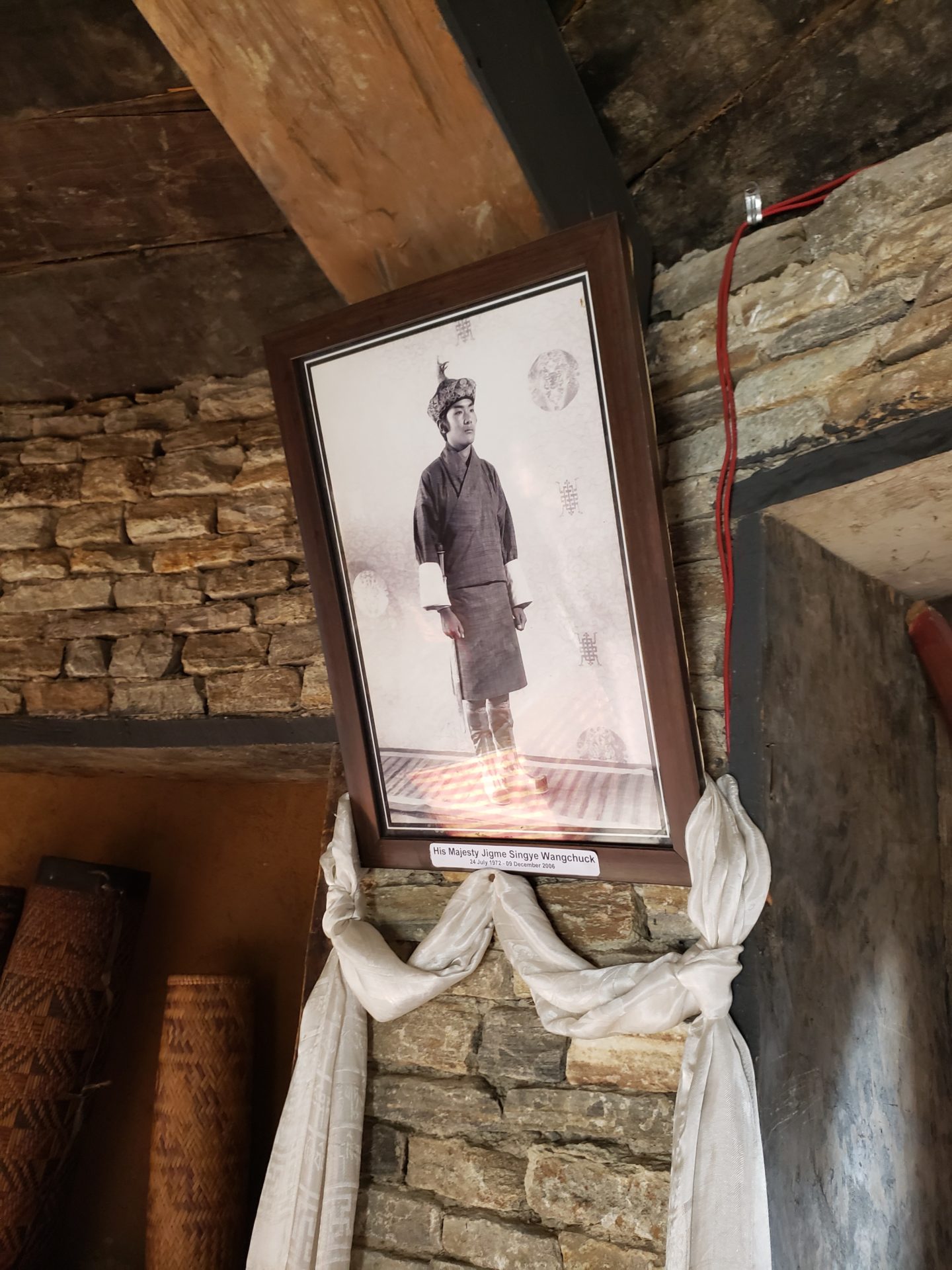
We learned about the five kings of Bhutan. The second most recent, Jigme Singye Wangchuck, became king at the age of 17 before relinquishing the throne to his son. He also invented the Global Happiness Index.
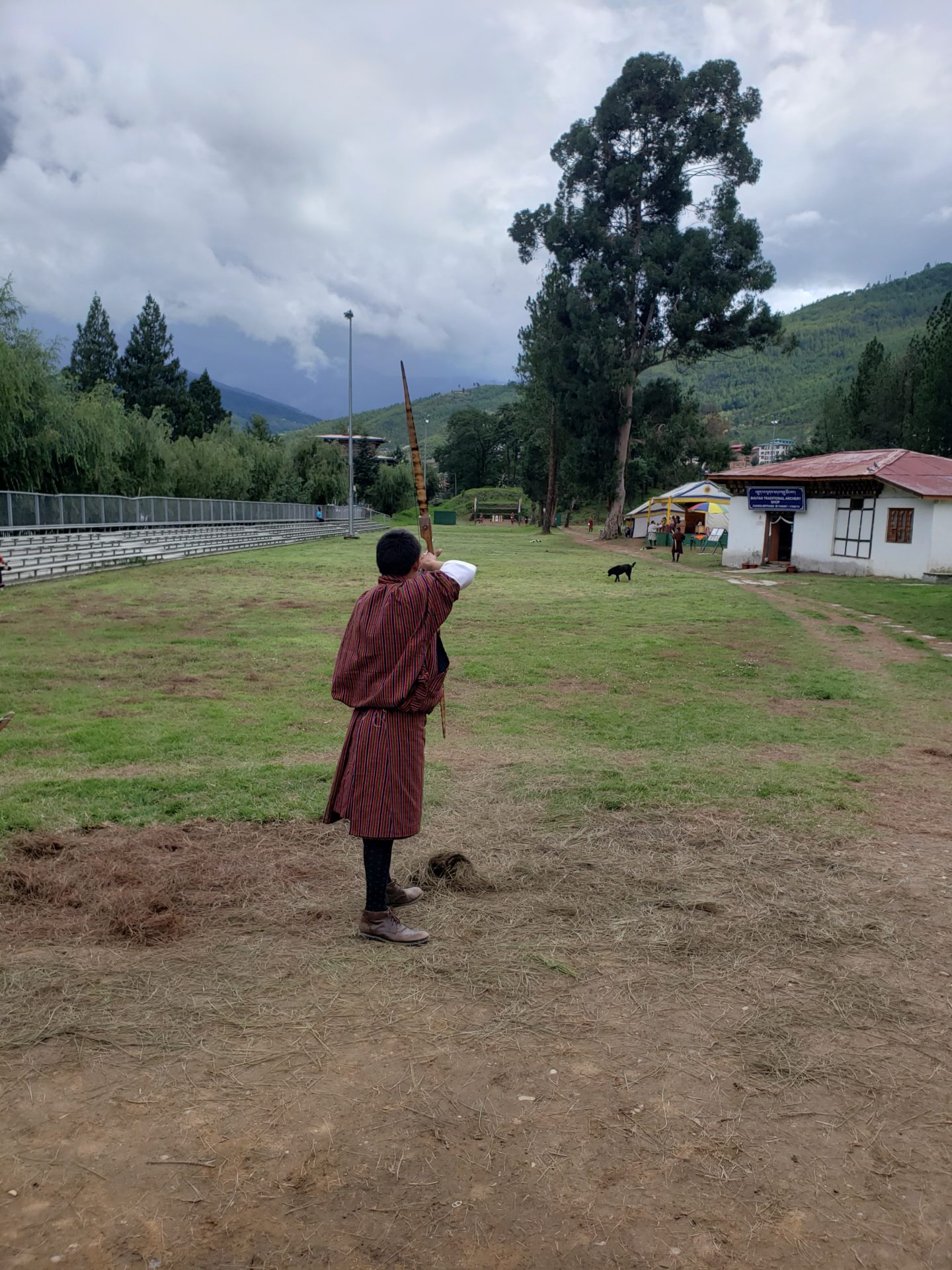
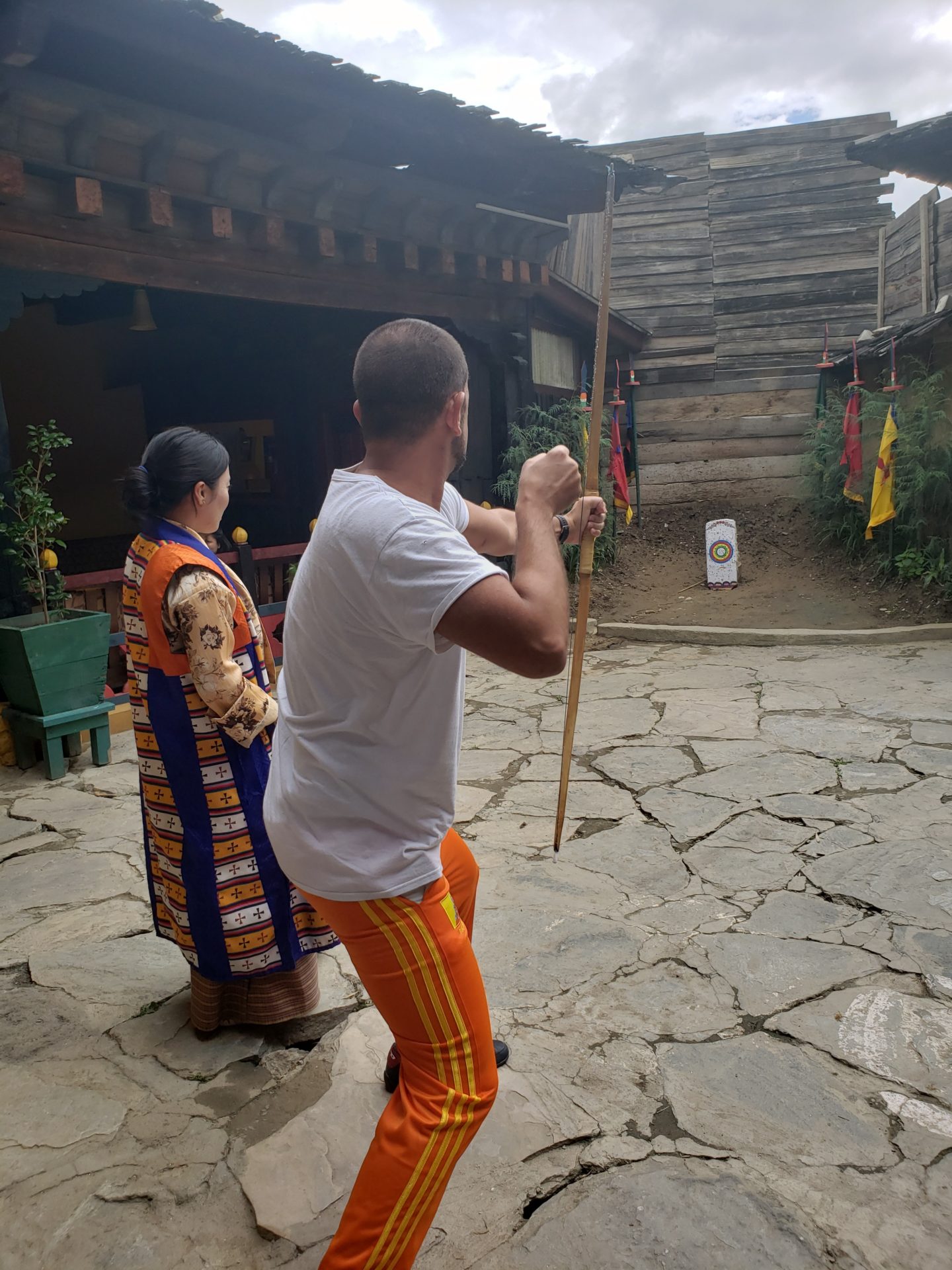
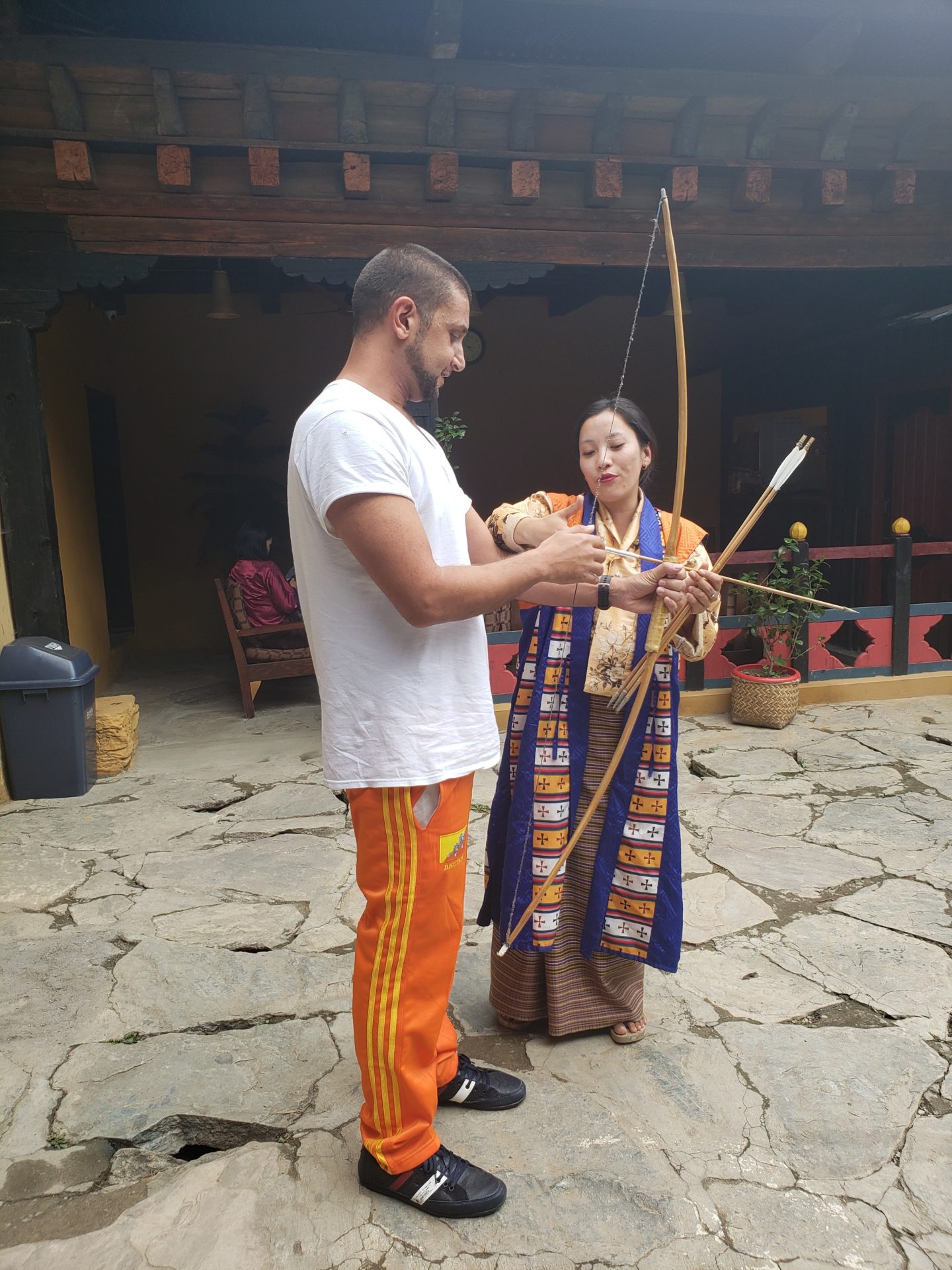
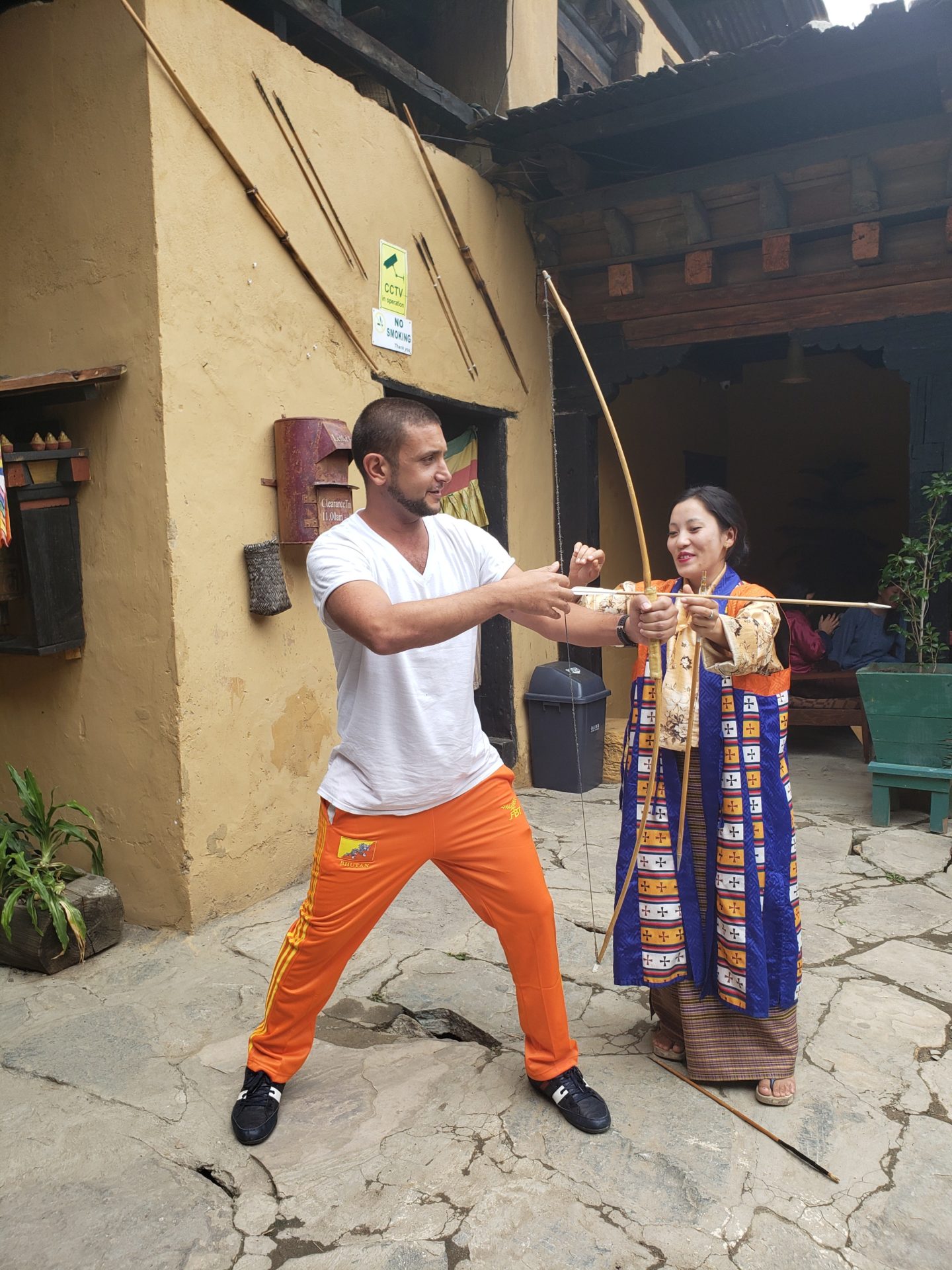
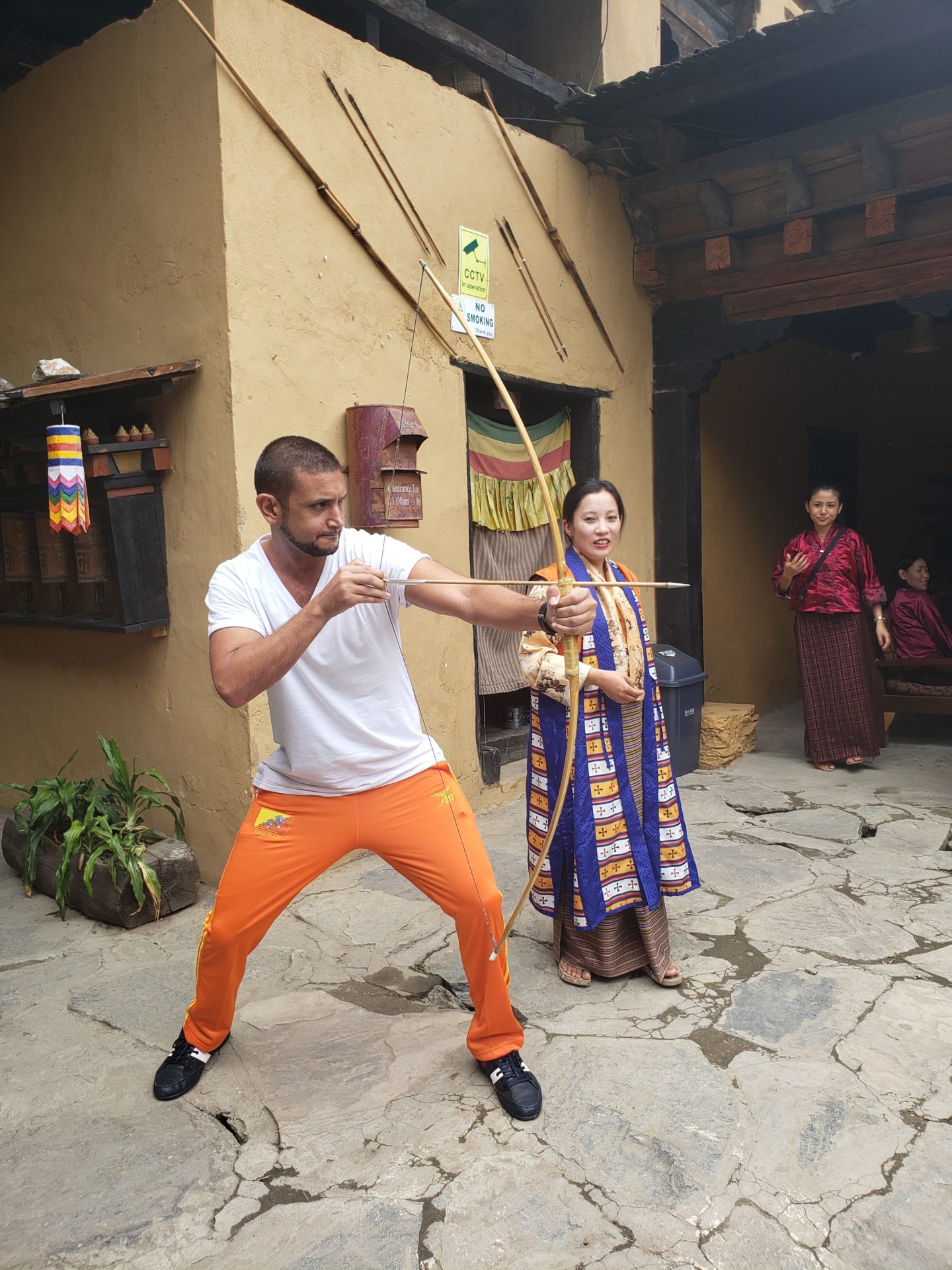
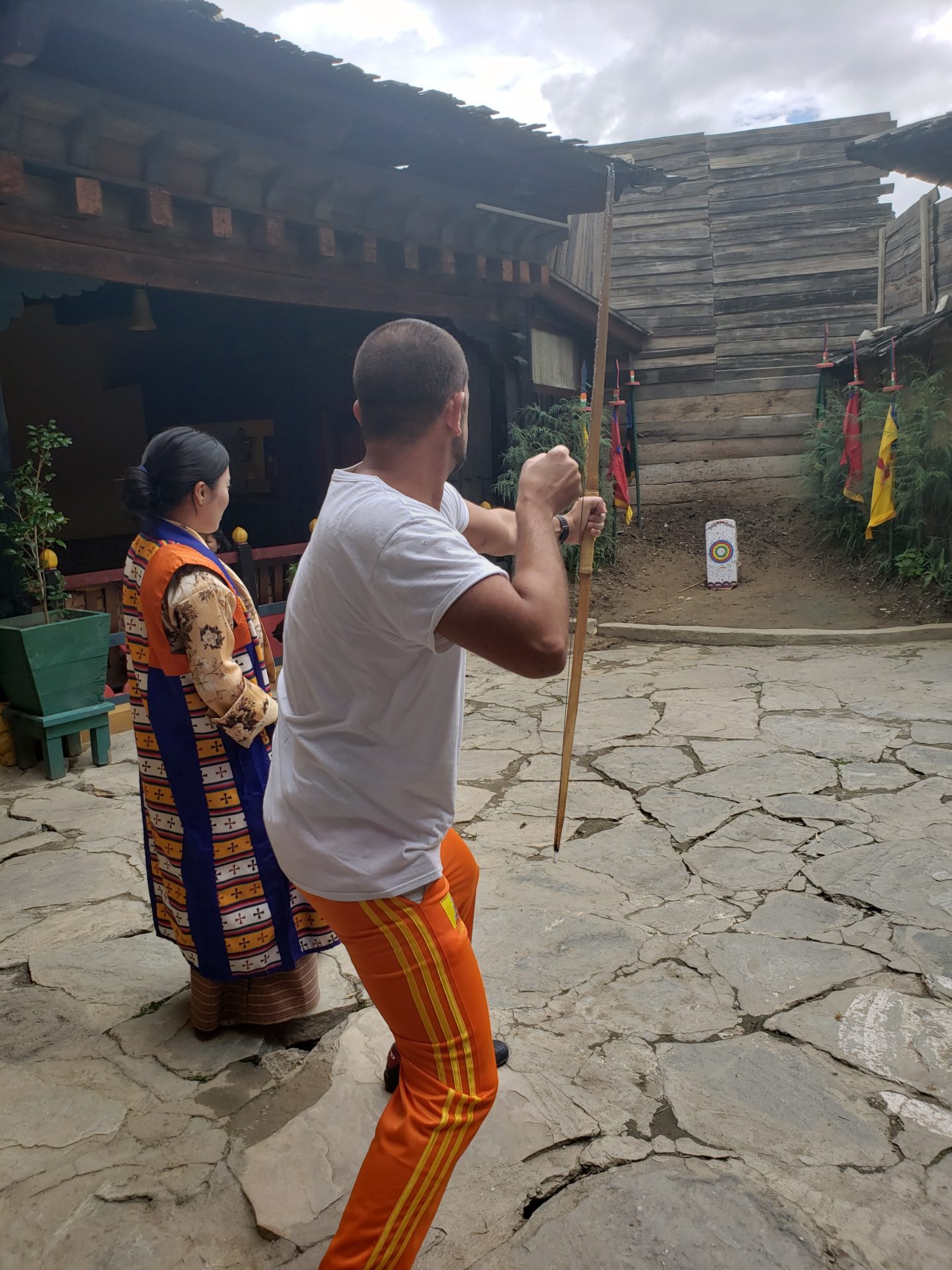
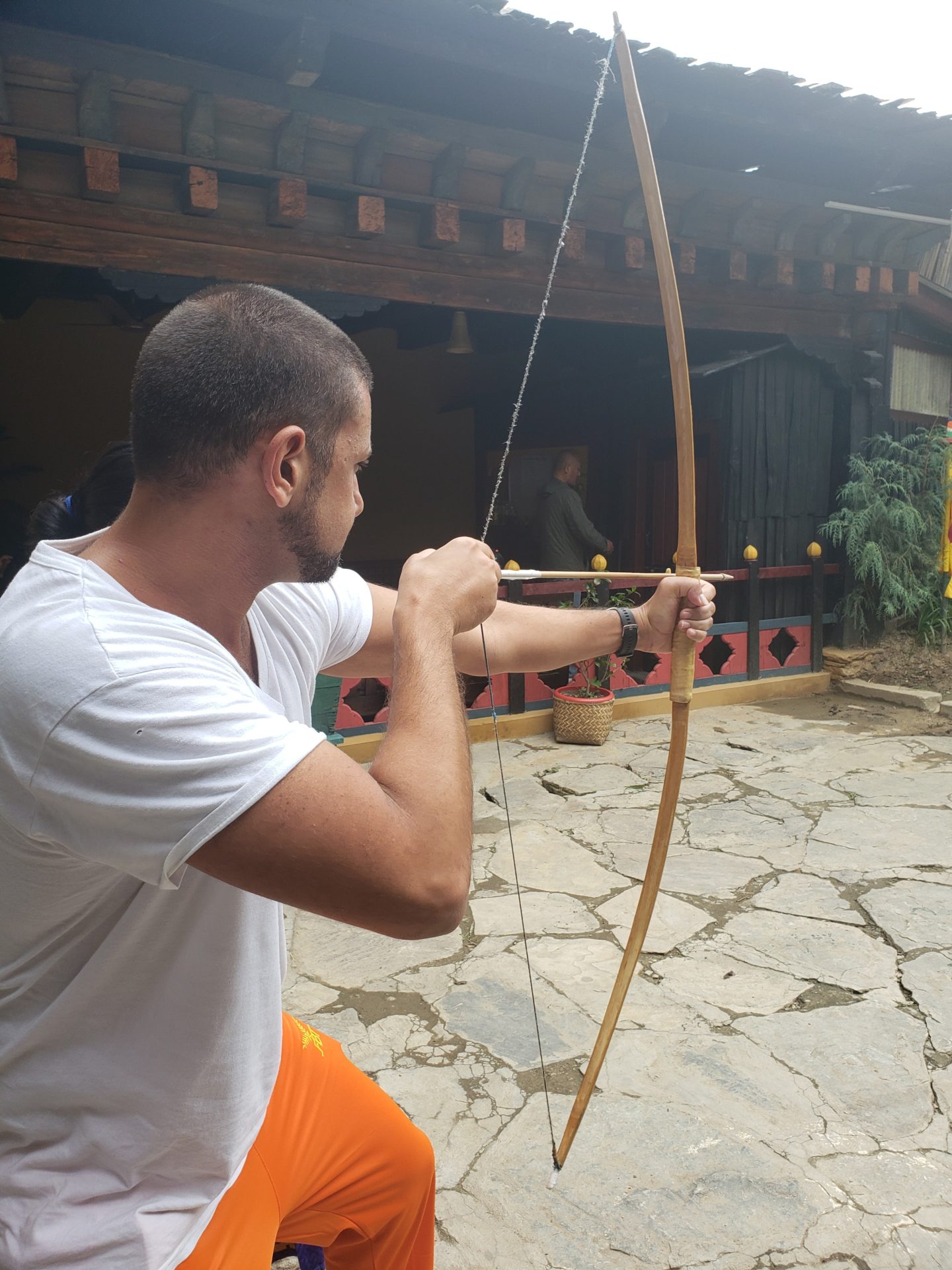
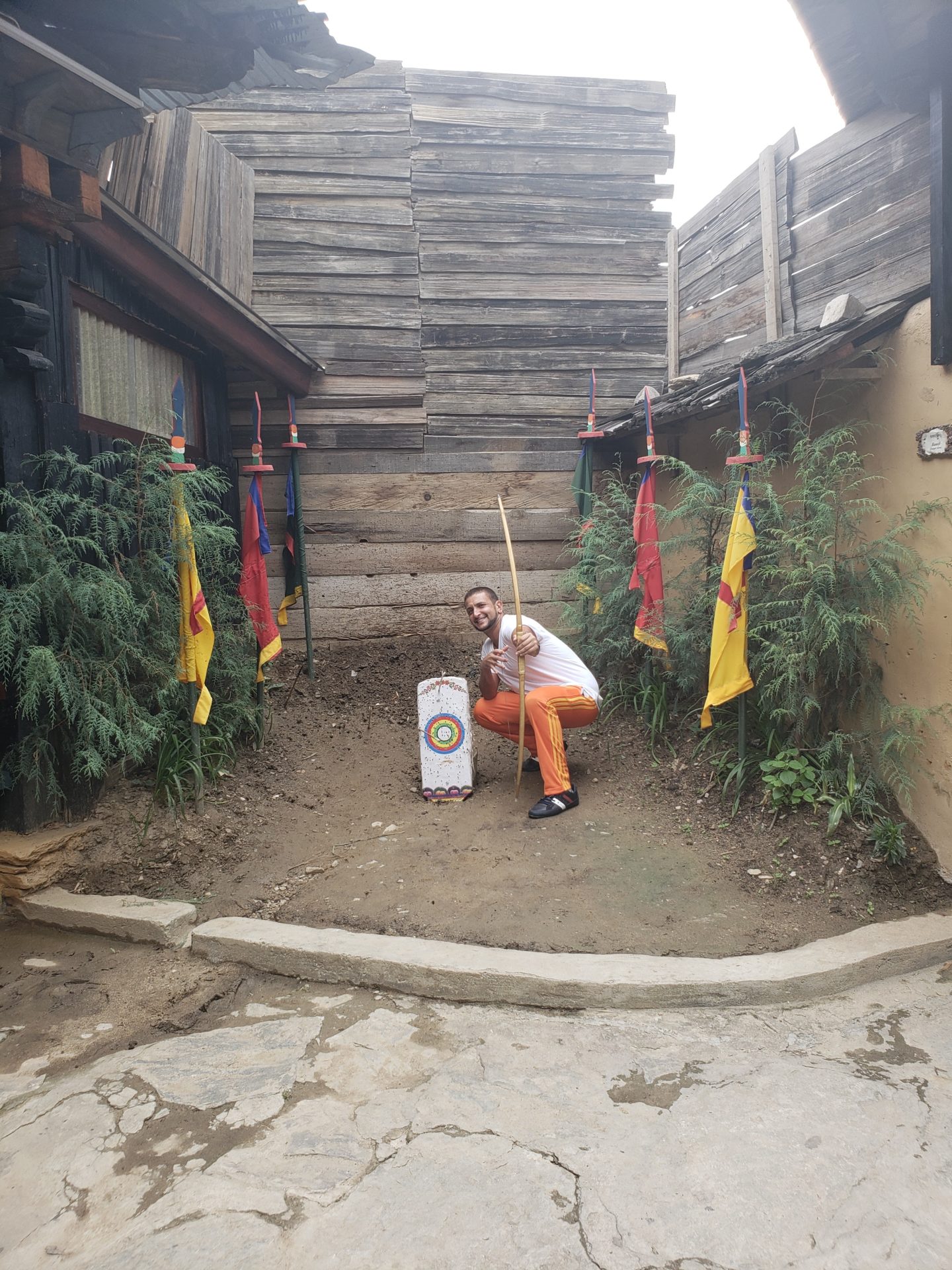
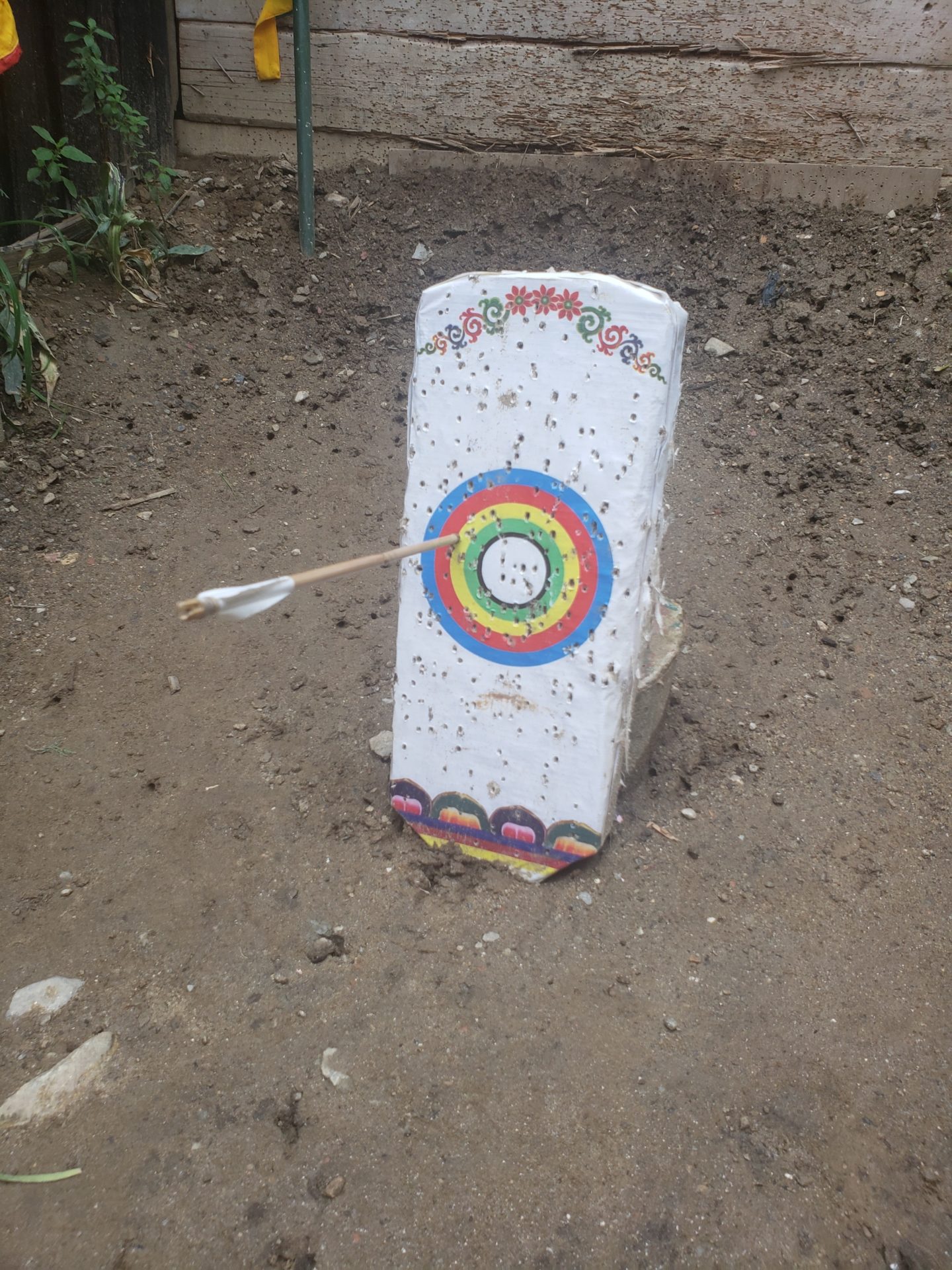
The culmination of the tour was trying my luck at archery. Unlike the archery I saw on Day 2, there was no one on the other side awaiting my stray arrows. It took a few tries to hit the target, but when I did the crowd came alive and we celebrated in dance.
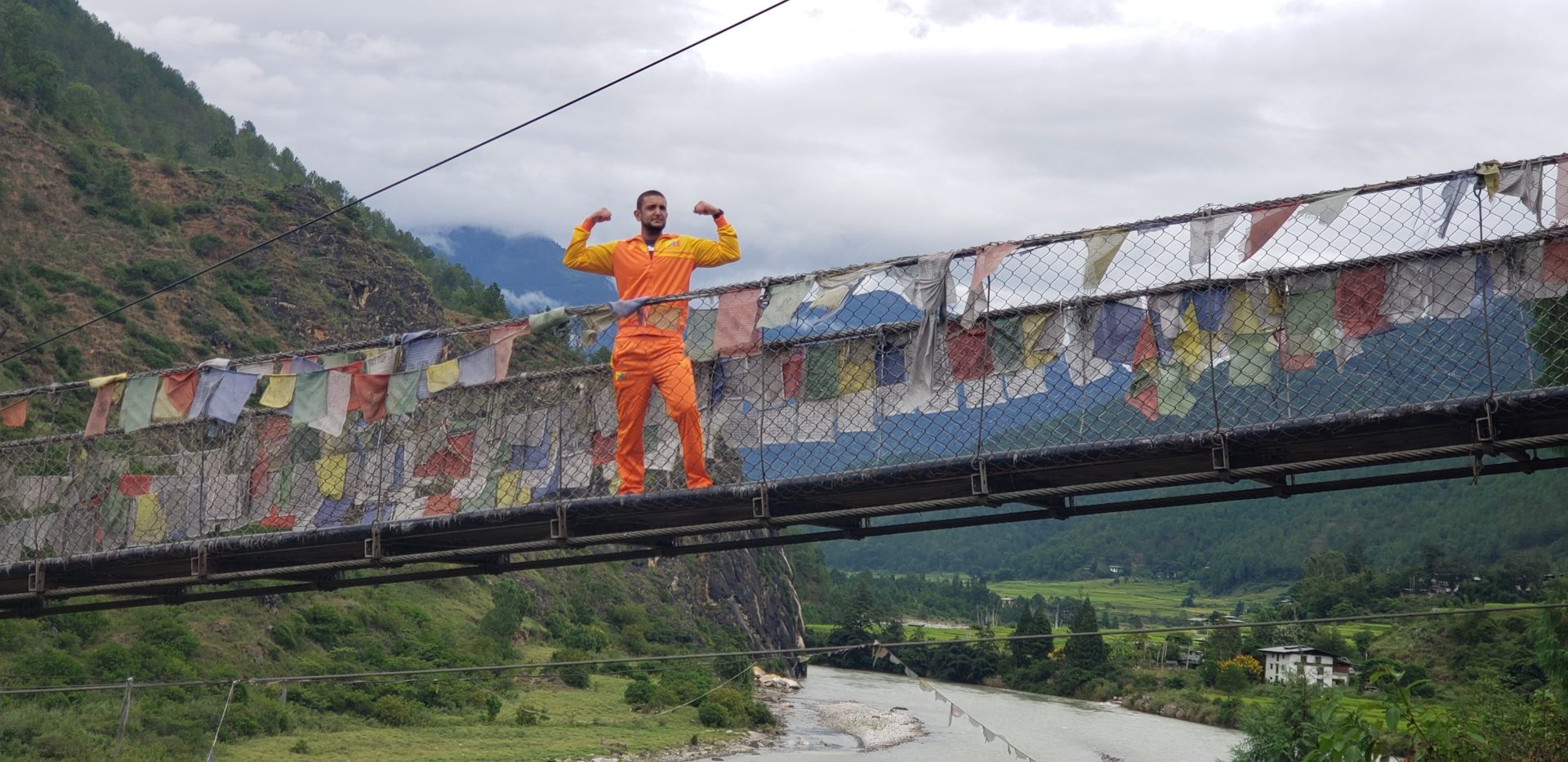
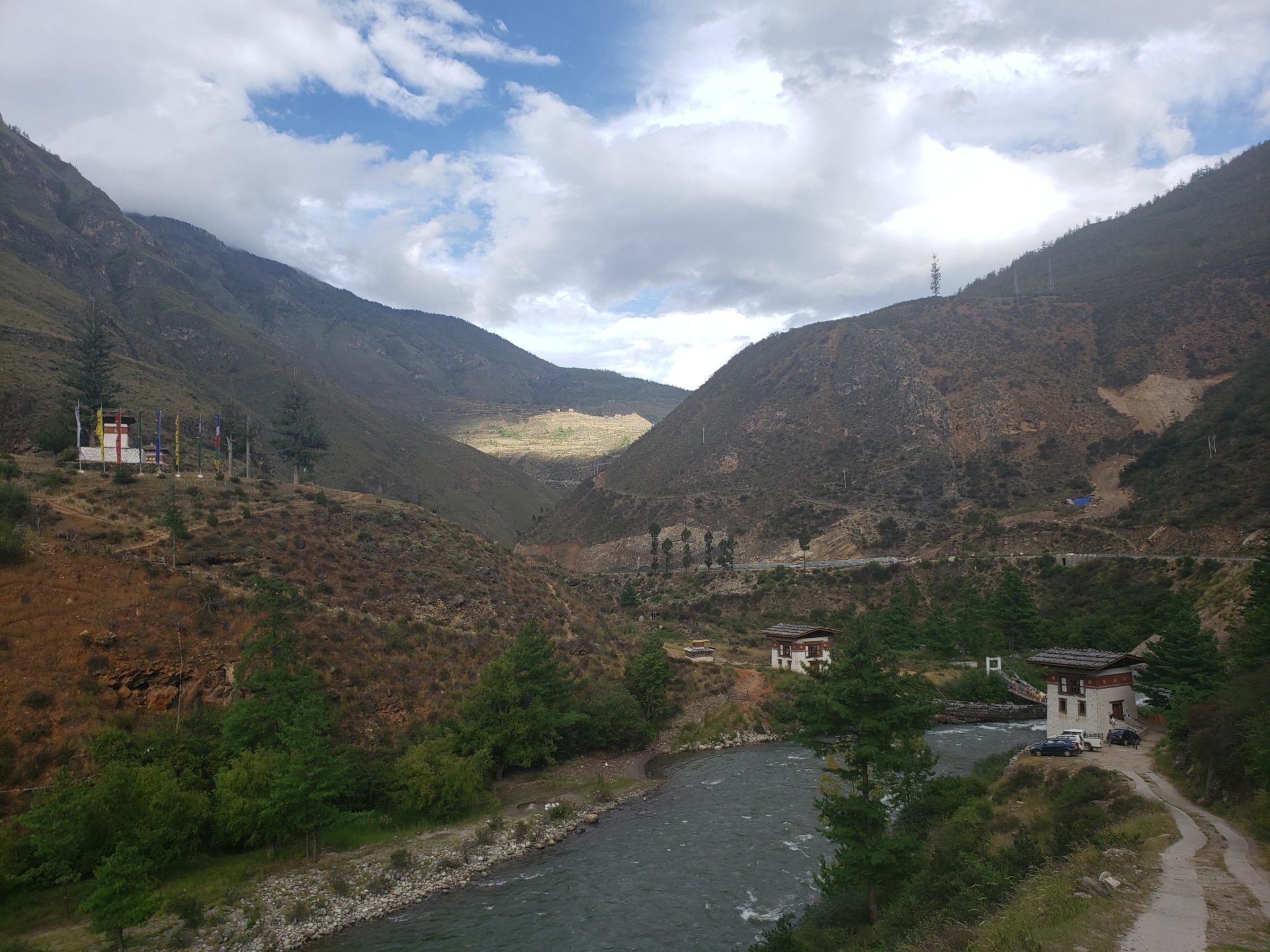
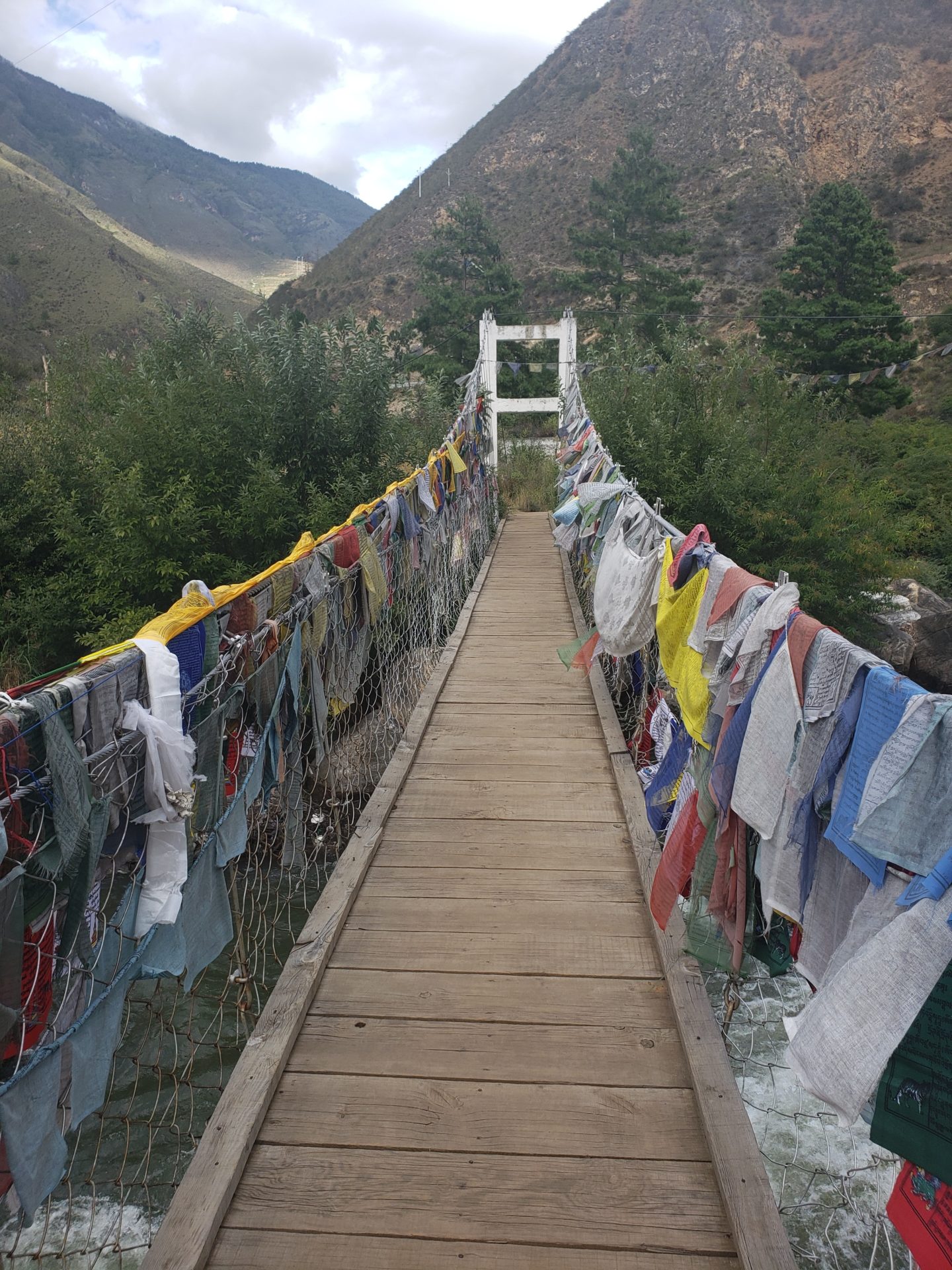
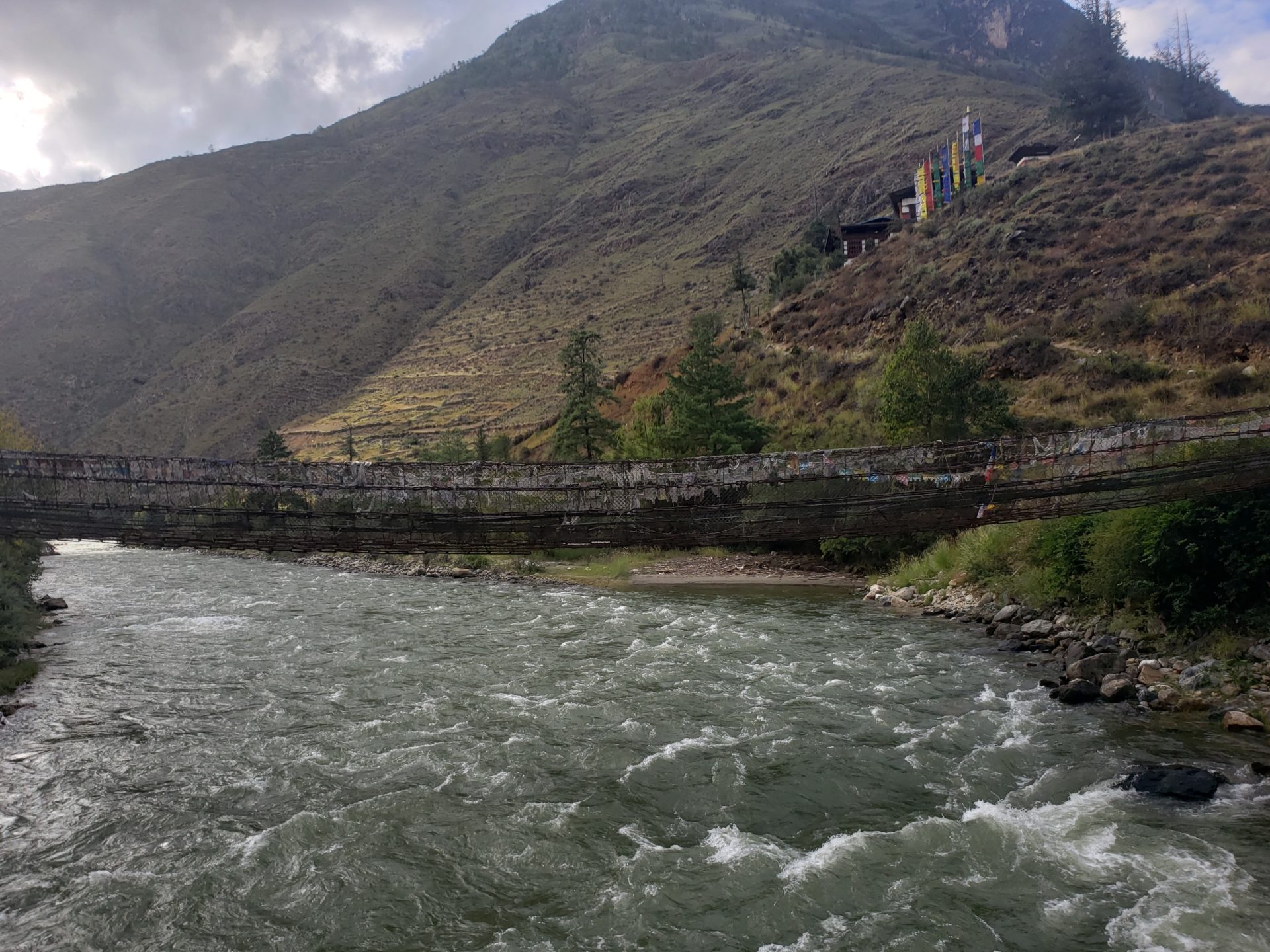
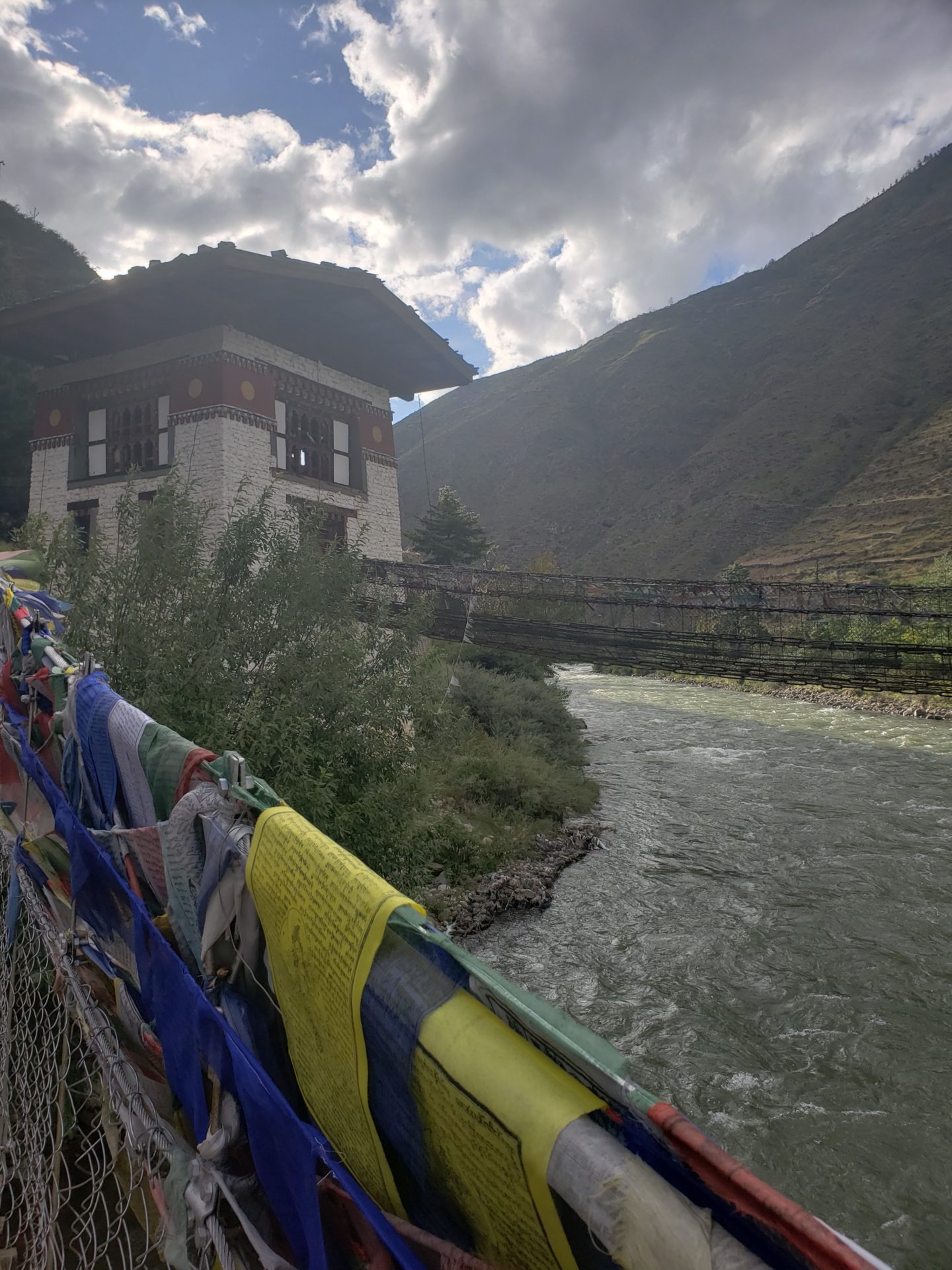
Chain Bridge
Our last stop before Paro was a chain bridge which was being renovated and was un-crossable. Still, look at the views:
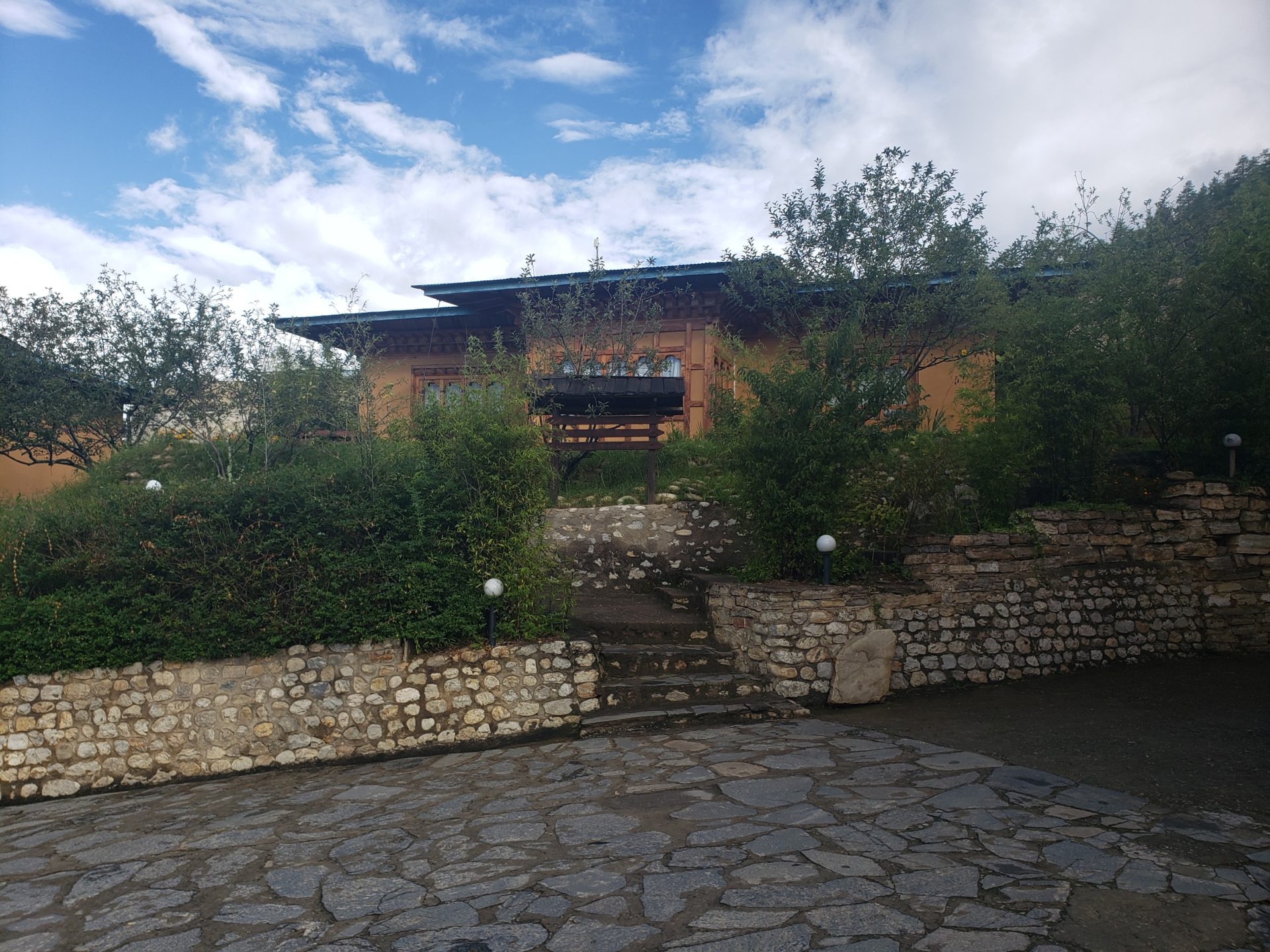
Hotel
The hotel for our final two nights, the Reema Hotel, was the most disappointing. It looked nice from the outside and had a good view, but it had no air conditioning and an uncomfortable bed. I did not sleep at all. The shower, on the other hand, was powerful.
Shopping in Paro
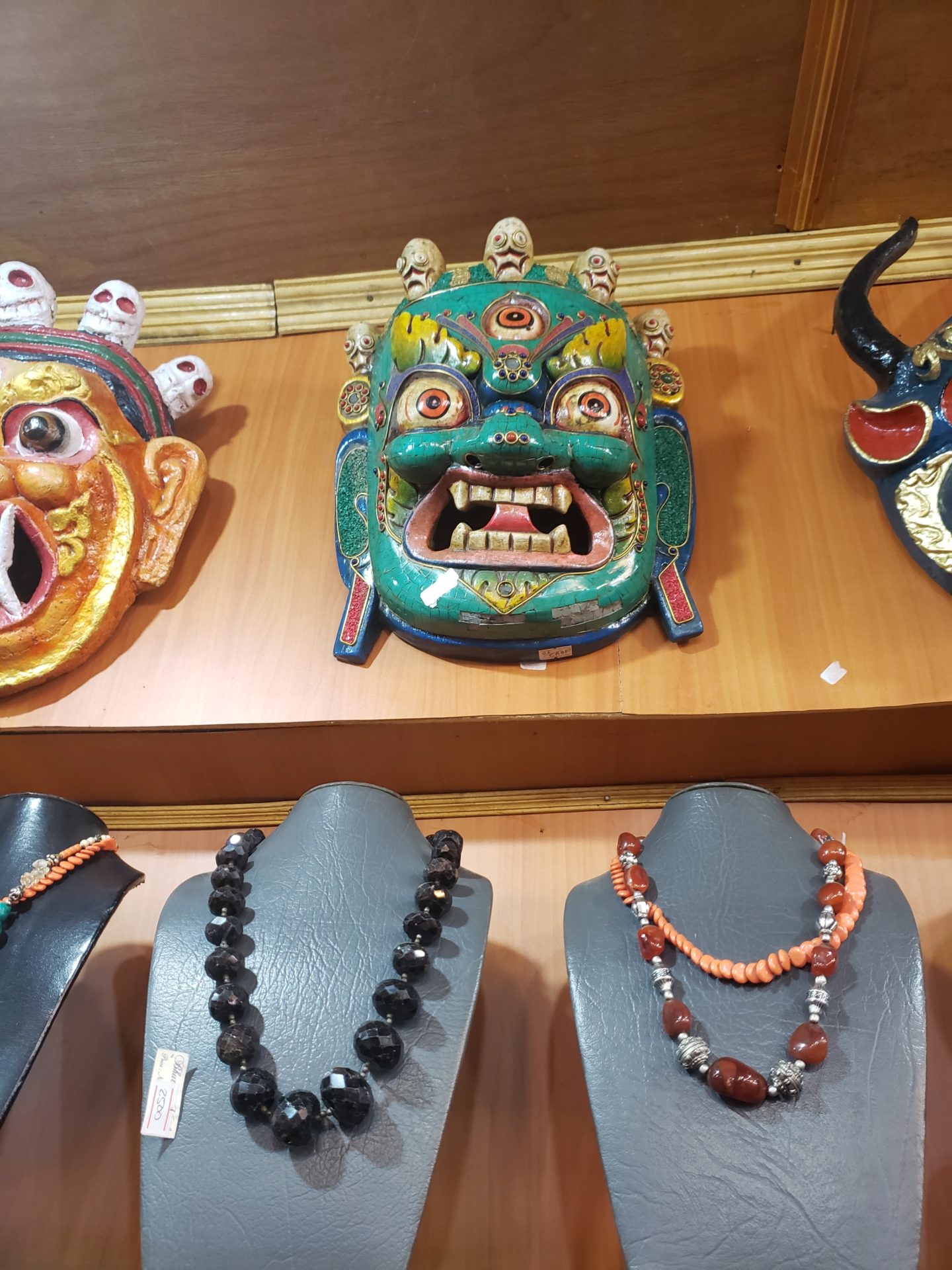
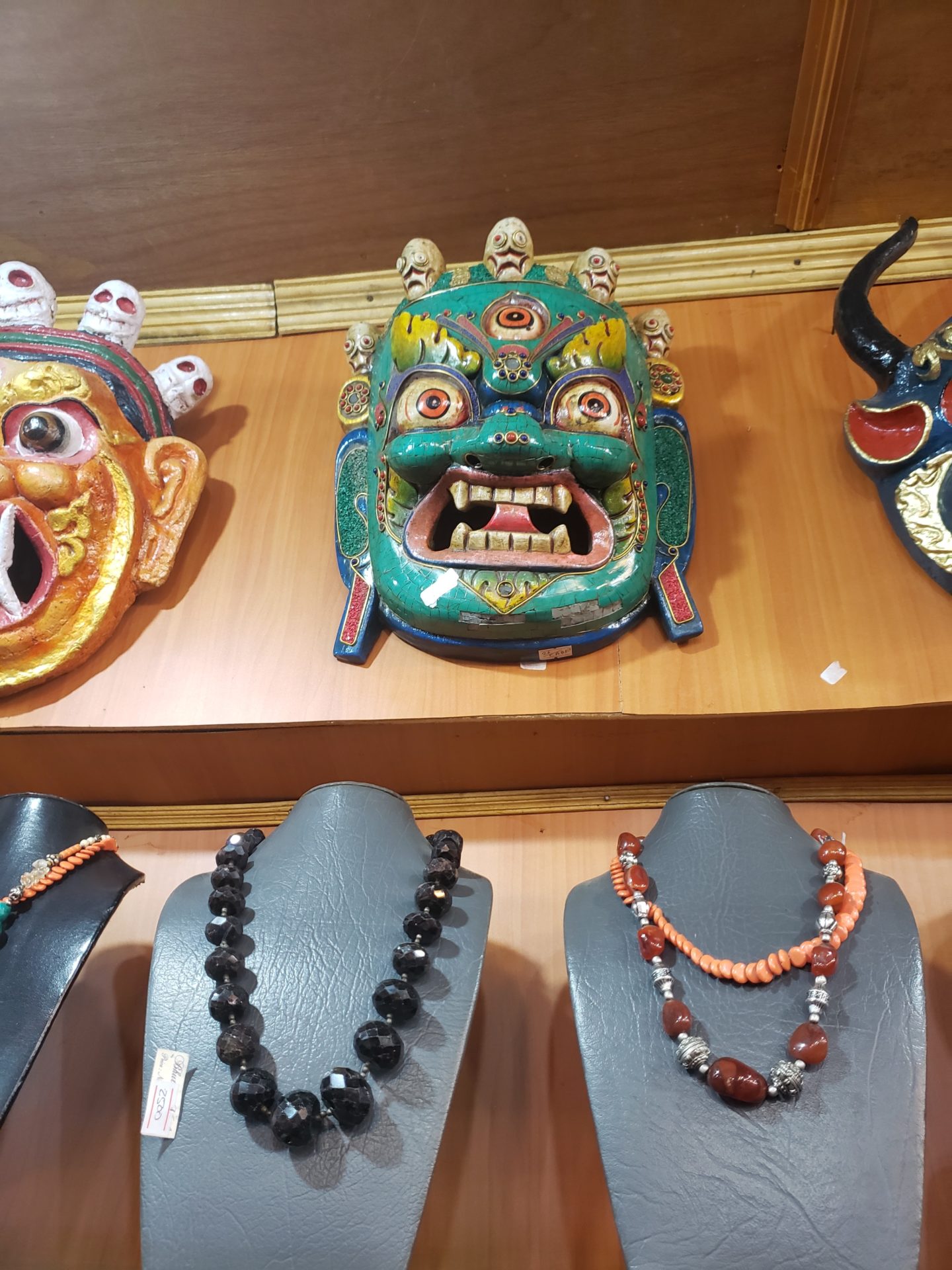
Paro is home to Bhutan’s most famed attraction, the Tiger’s Nest. As such, it is littered with souvenir shops eager to sell everything to doe-eyed tourists. I was one of those tourists. I became captivated with a green mask with stones. I figured I could get it for less than the price of a penis and began going store to store. The prices were unbelievable. One place wanted 55,000 ($772). The best price I could bargain was 20,000 ($282). I questioned how so many stores sell the same mask with the same stones and the same imperfections. If it were made by hand, wouldn’t there be variations?
This seemed like a scam and reminded me of a news program that showed fake Bali being made in China by machine and sold to tourists as authentic. Without enough information, I made the smart decision not to buy (see Souvenir Shopping Kathmandu: Buy Your Mask Here!). I would’ve been angry to go home and have this mask on my wall laughing at me every day for overpaying. This experience reinforces what a great deal I received on the penises.
Dinner
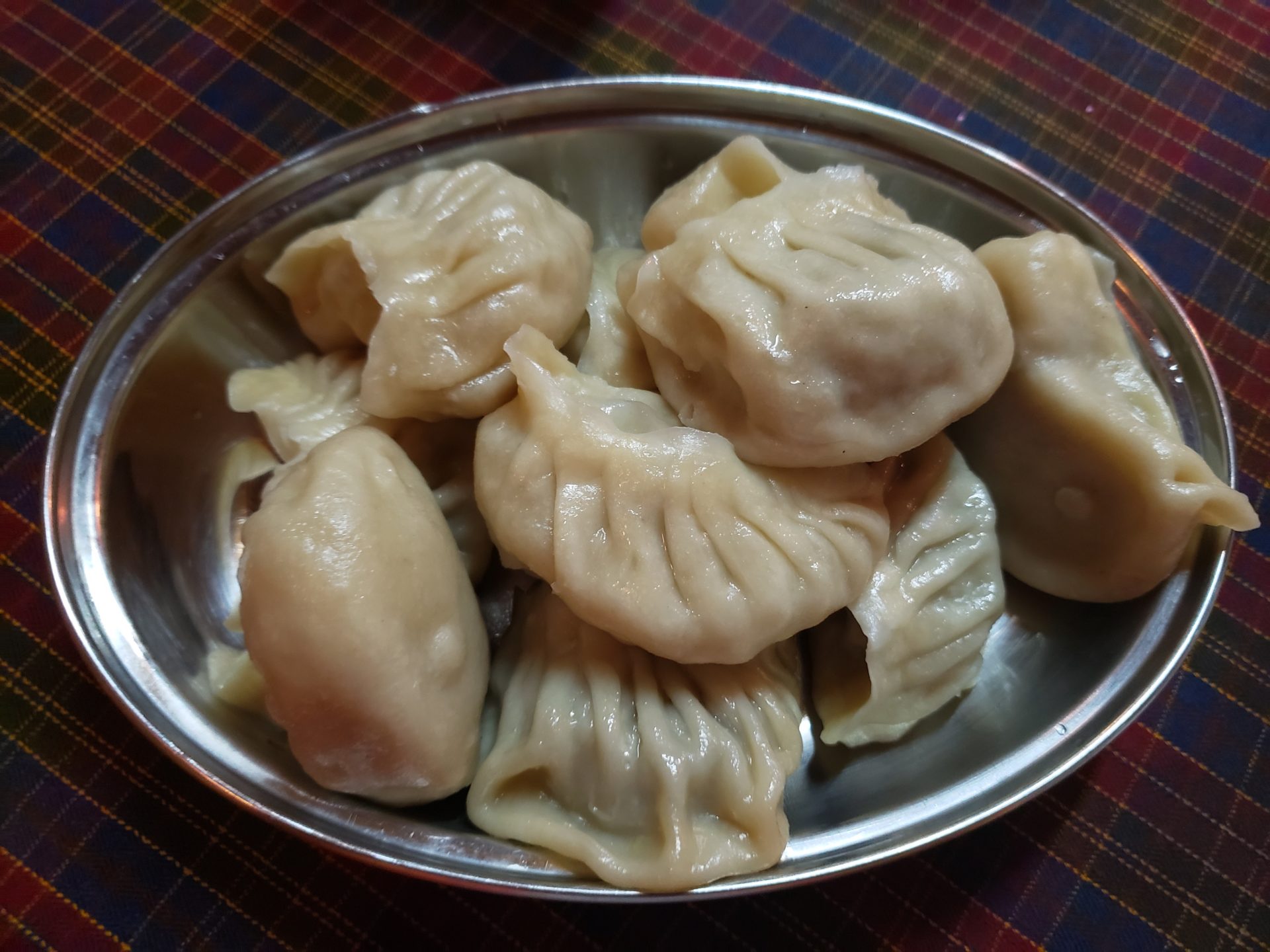
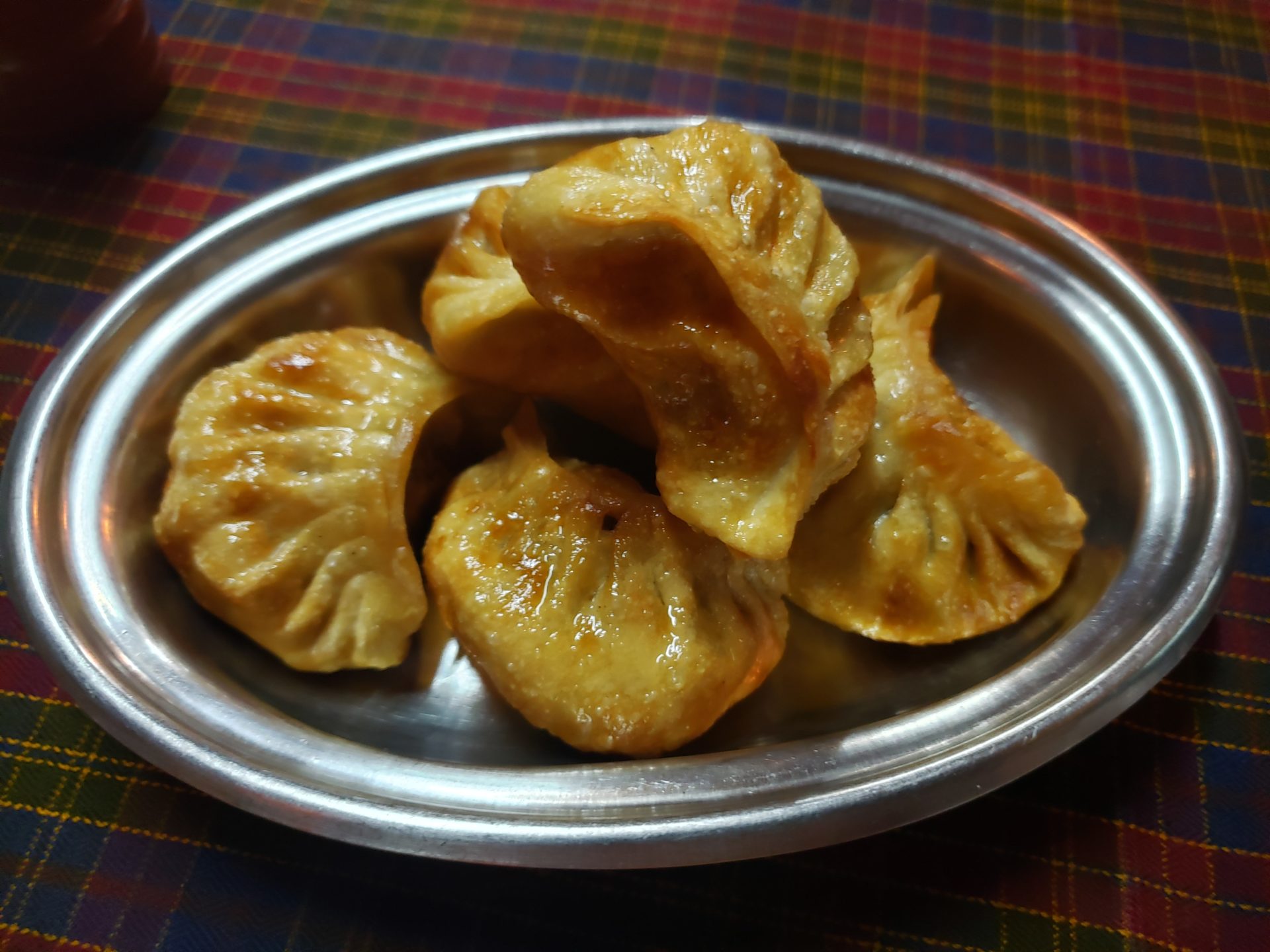
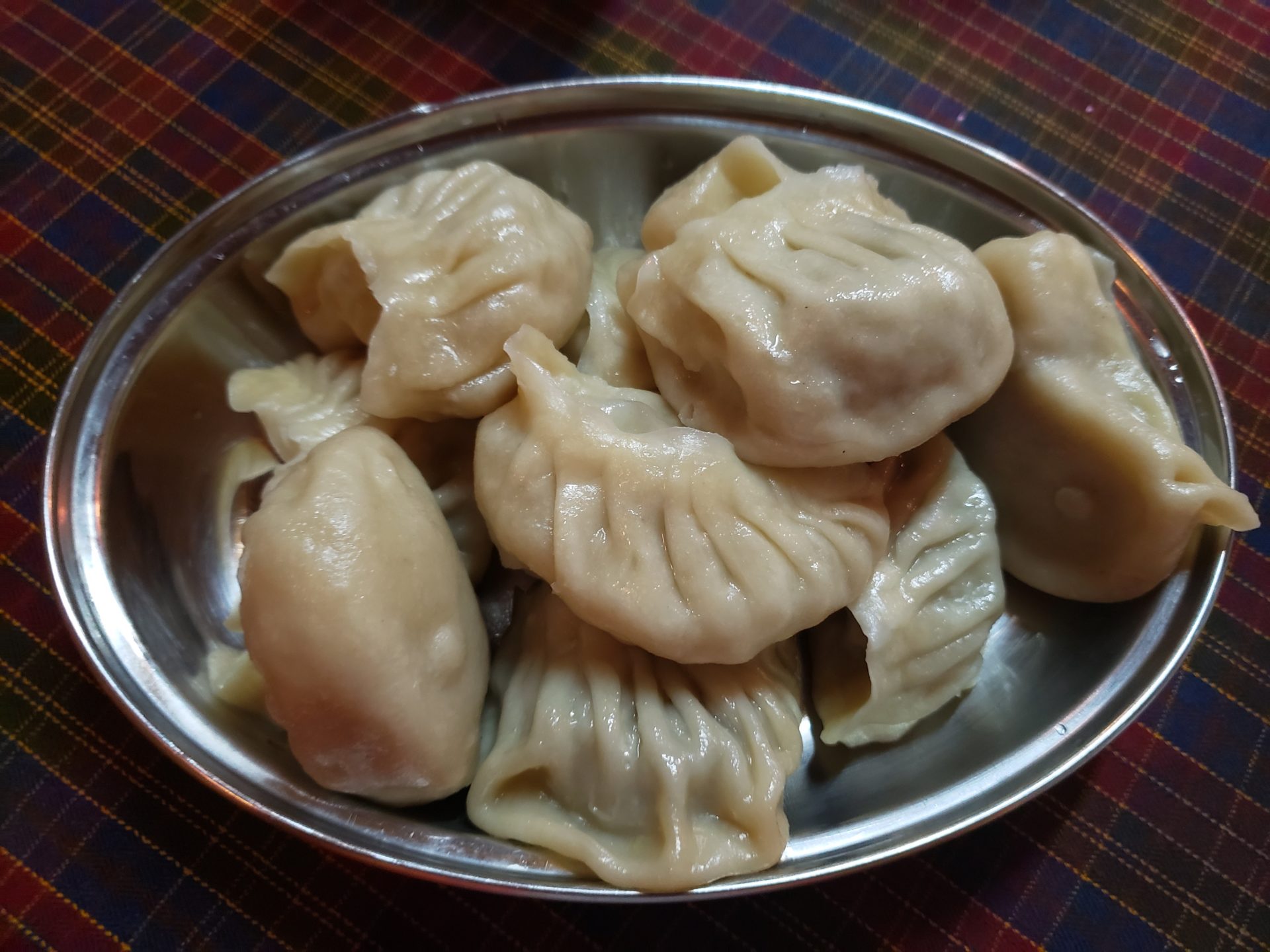
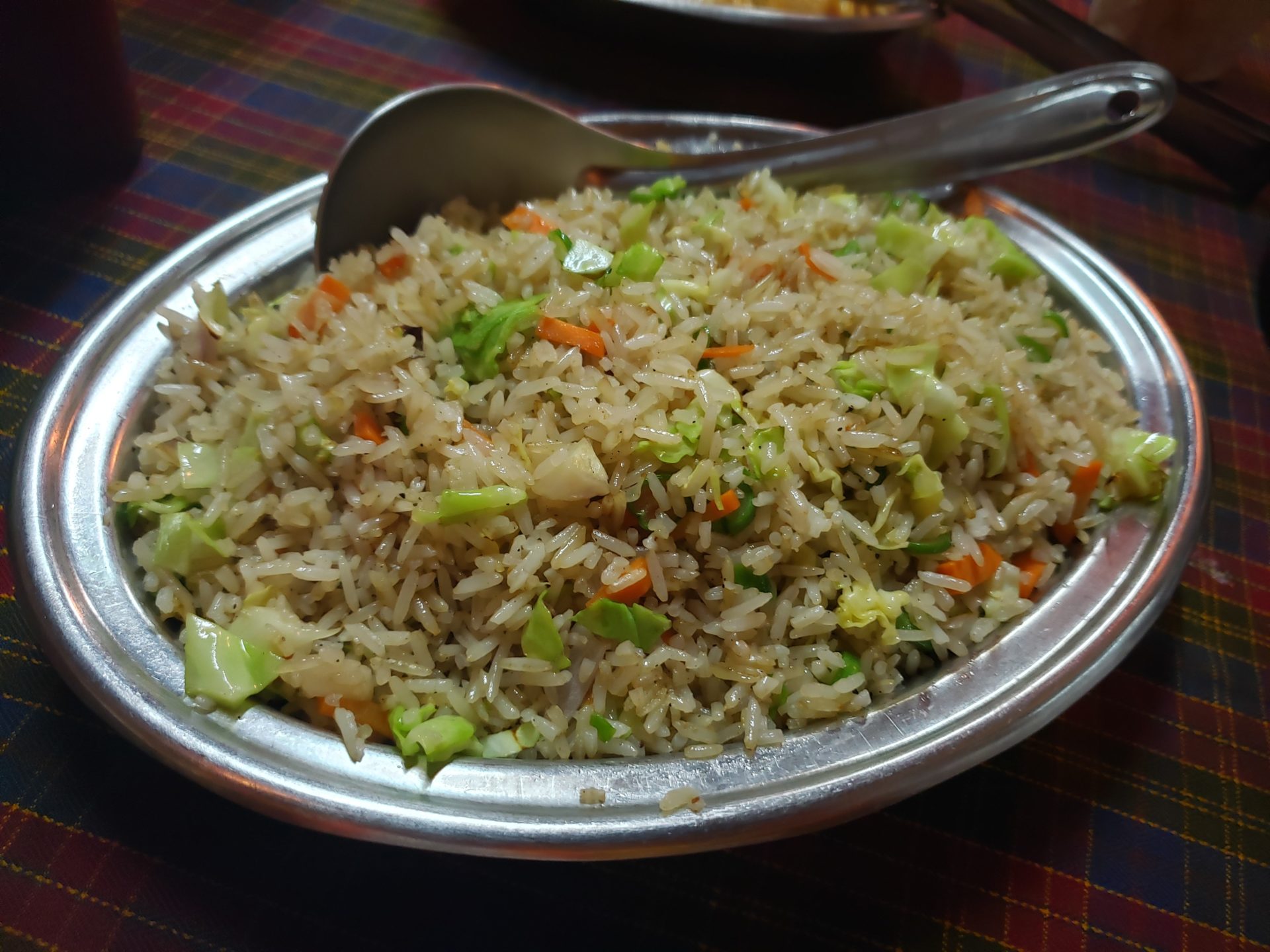
I told my guides, again, no more hotel dinners. They listened and took me to a hole in the wall restaurant instead. It was exactly what I wanted. I ordered momo, fried and steamed, fried rice, and my new favorite dish, chili cheese.
TPOL’s TIP: Chilli cheese comes in many varieties including with potatoes or beef. I prefer it plain. Momo is better steamed.
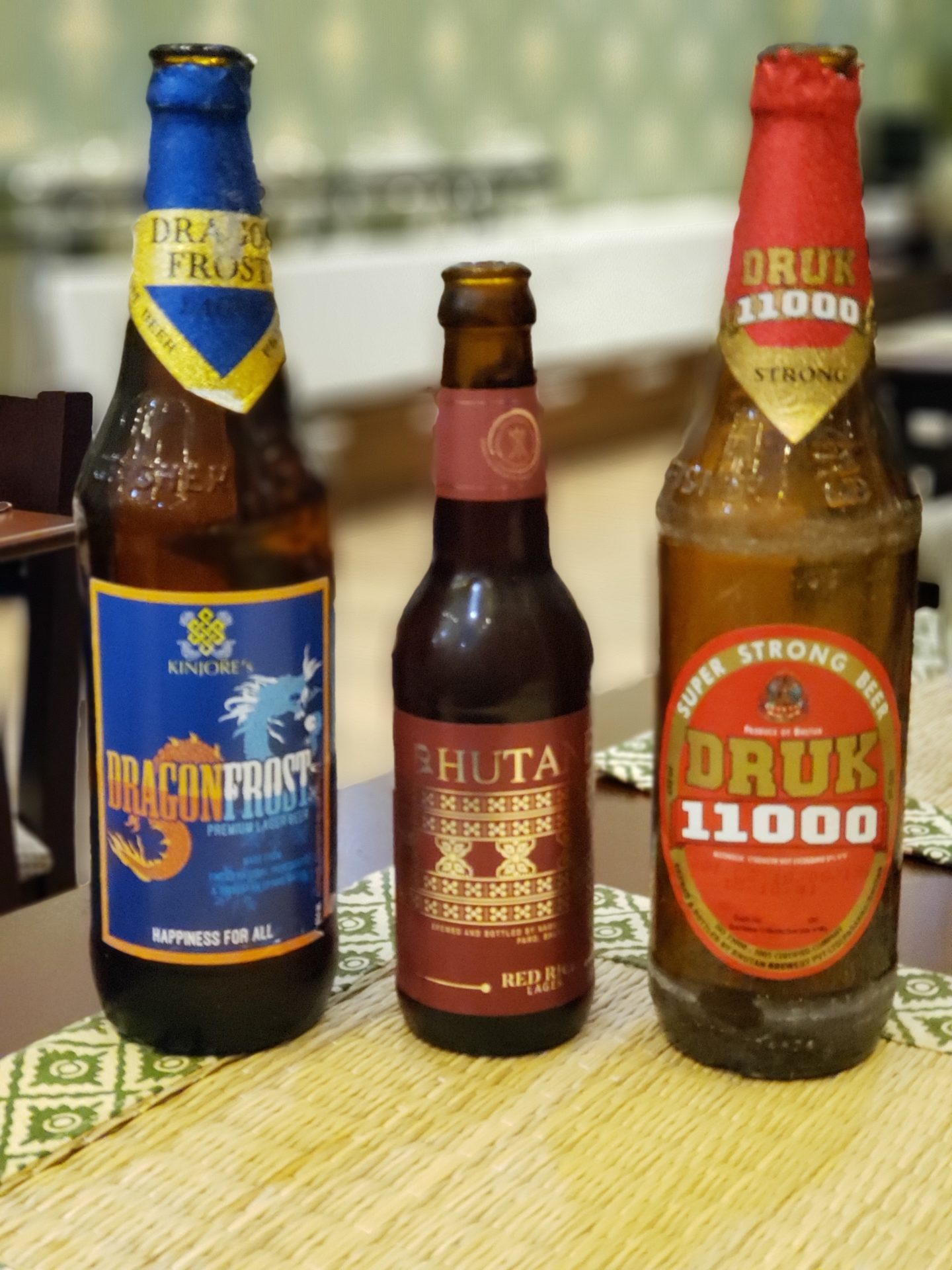
I also had more Bhutan Red Rice beer (see Finding Happiness: Bhutan Day 1). It is the Bhutanese Dunkel Weisse, TPOL’s favorite beer.
Overall
Day 4 was calmer than Day 3, minus the intense penis negotiations.

 #3 White Water Rafting (see